Bluesound Node Icon Streamer Review

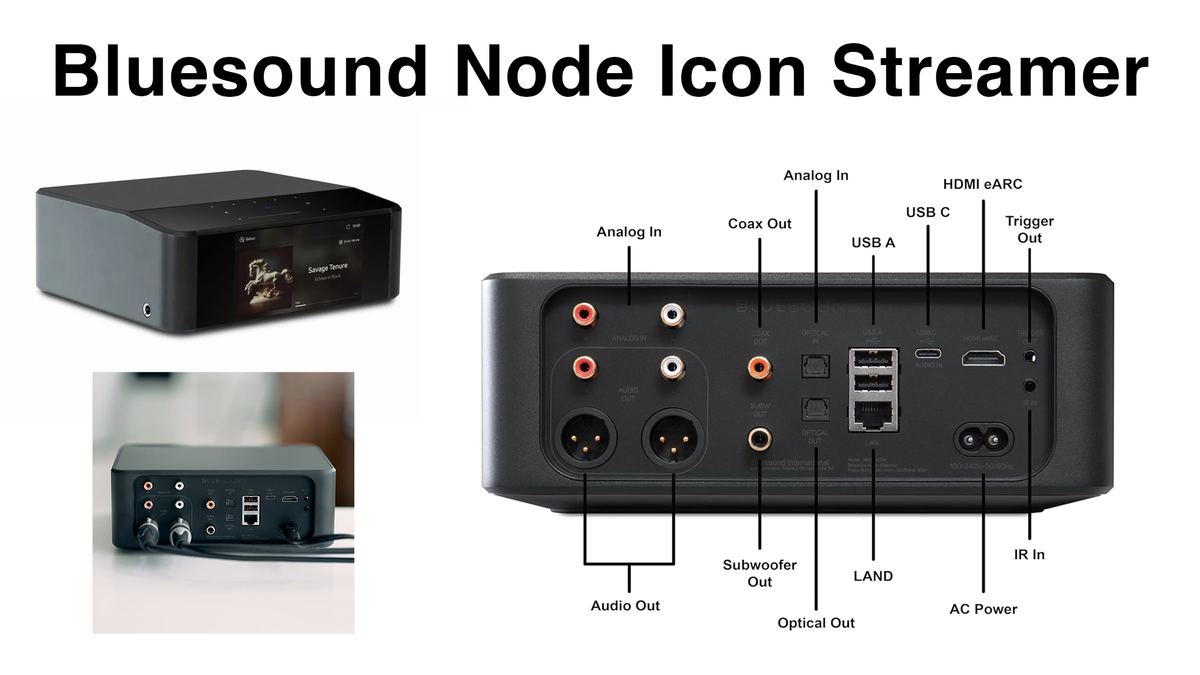
A premium network streaming transport, and built in DAC, that brings high-end detail and versatility to modern systems.
If you have been following Bluesound's evolution from practical streamers to genuine hi-fi components, the Bluesound Node Icon represents the brand's most ambitious statement yet.
This is not just another streaming box with a thrown in DAC. It is a properly thought-out source component that combines comprehensive connectivity, serious sound quality, and the sort of build and features that make it a legitimate centerpiece for a modern hifi system.
At £899, it sits in territory where expectations shift from "does it work well" to "does it genuinely compete with dedicated reference class separates." The answer, for most systems, is yes.
This review breaks down what the Node Icon actually is, how it is built, how it sounds, what makes it different from its smaller sibling, and who it makes the most sense for.
Quick take
The Node Icon is for you if you want a complete digital front end that can stream from every major service, act as a DAC for your TV or other digital sources, includes proper room correction, and delivers refined, detailed sound that punches well above its price.
It is not for you if you need a physical remote, want the smallest possible footprint, want an R2R DAC, or require a linear power supply without external modifications.
What the Node Icon actually is
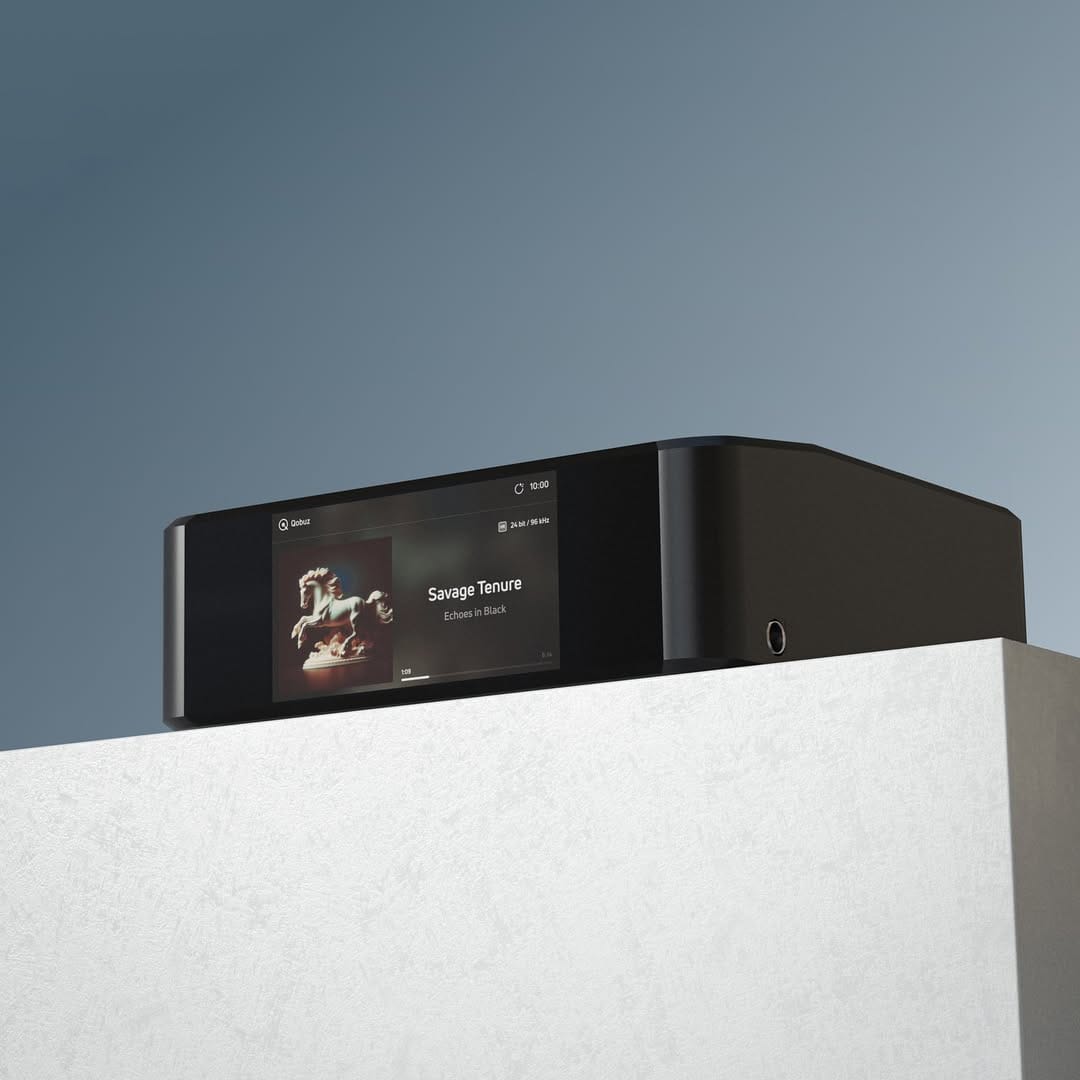
The Node Icon is an all-in-one network streamer (streaming transport), app based digital preamp, DAC, and headphone amplifier. In practical terms: it can pull music from streaming services or your local network, convert digital audio from multiple sources into analog, drive headphones directly, and feed your amplifier or active speakers.
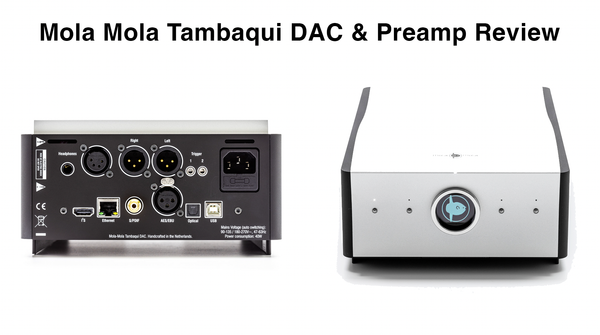
It is also the bigger, more capable sibling of the Bluesound Node Nano. Where the Nano prioritizes compact simplicity, the Icon adds premium build quality, expanded connectivity, headphone outputs, and enhanced sound quality through superior DAC implementation, and the option to combine with a dedicated high end DAC, such as anything from Chord Electronics, Denafrips, Musician Audio, Gustard, Holo Audio, Schiit Audio, and Mola Mola.
DAC design and architecture
Dual ESS9039Q2M chips in dual mono configuration
The Node Icon uses two ESS Sabre 9039Q2M chips, one dedicated to each channel. This dual mono design provides improved channel separation, lower crosstalk, and better overall performance than single-chip implementations.
The 9039Q2M is a high-performance DAC chip known for extremely low distortion and high dynamic range, often found in components costing significantly more.
Qrono D2A timing technology
Bluesound's proprietary "Qrono D2A" and "Qrono DSD" technologies are the seemingly standout features here. This divides reviewers, some of which say is merely the bankrupt MQA technology being rebranded under a new name, whereas others say it adds value to timing accuracy employing essentially a minimum phase style digital filter.
Consumer-grade switch mode power supply
The Node Icon uses a switch mode power supply rather than a linear design. This is a practical compromise that keeps the unit compact and reasonably priced, though audiophiles seeking the last word in clean power delivery may wish to consider aftermarket linear power supply upgrades, which the unit can accommodate with modification.
Build quality and design
Anodized aluminum chassis
Unlike many streamers that rely on plastic enclosures, the Node Icon features a proper anodized aluminum case. It feels substantial, dissipates heat effectively, and looks like a serious piece of hi-fi equipment rather than a tech accessory.
Display and control
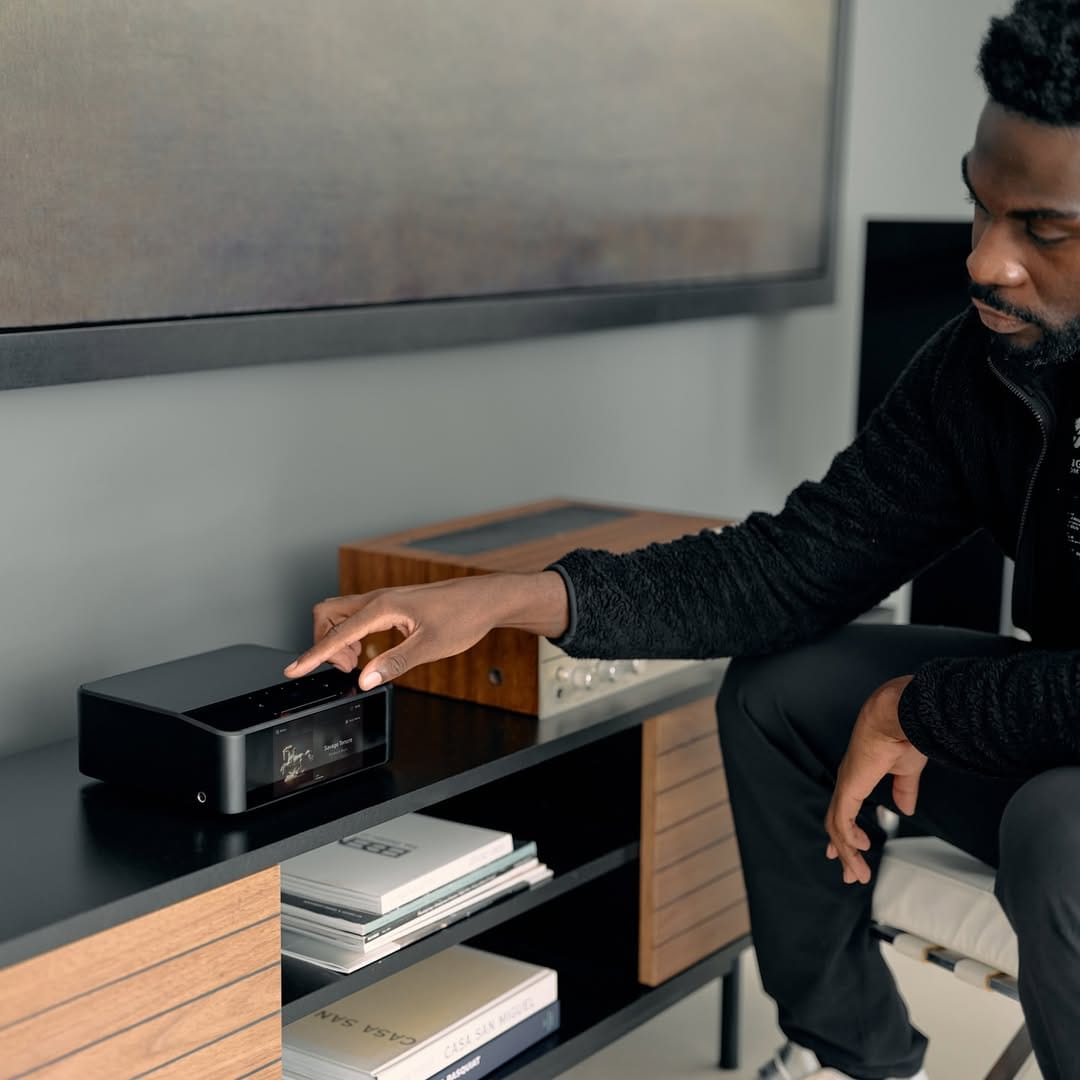
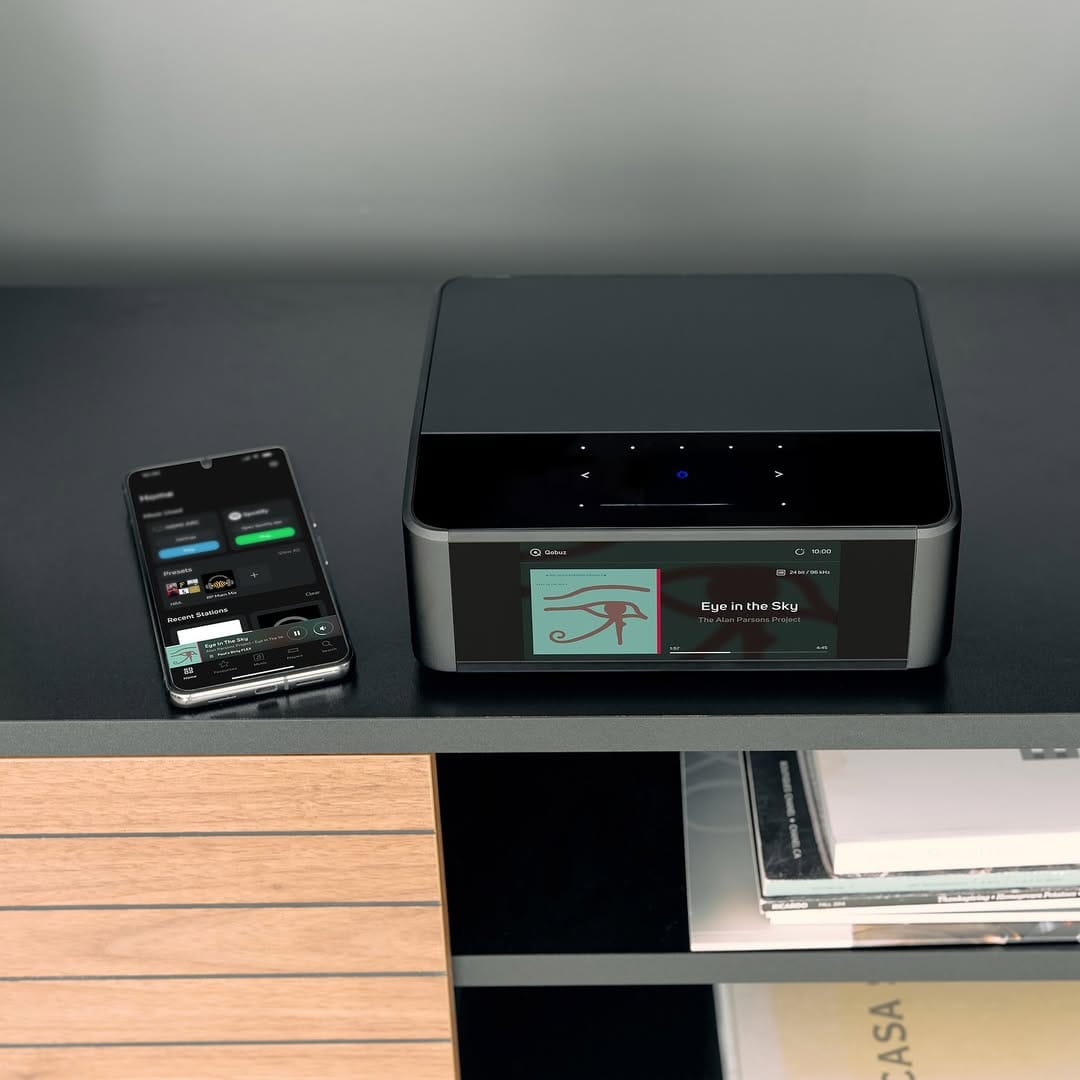
The front panel includes a display that shows album art and the resolution of the current audio file, giving you proper feedback about what you are actually listening to. There is no touchscreen, but physical controls on the top of the unit provide tactile input selection and volume adjustment.
No physical remote, but app control offers digital preamp
The Node Icon does not include a traditional IR remote. Instead, the BluOS app on your phone, tablet, or computer serves as the control interface. The app allows you to set the unit to either variable volume output, functioning as a digital preamp feeding directly into a power amplifier, or active speakers, or a fixed volume output when used with a traditional preamp or integrated amplifier.
Connectivity: genuinely comprehensive
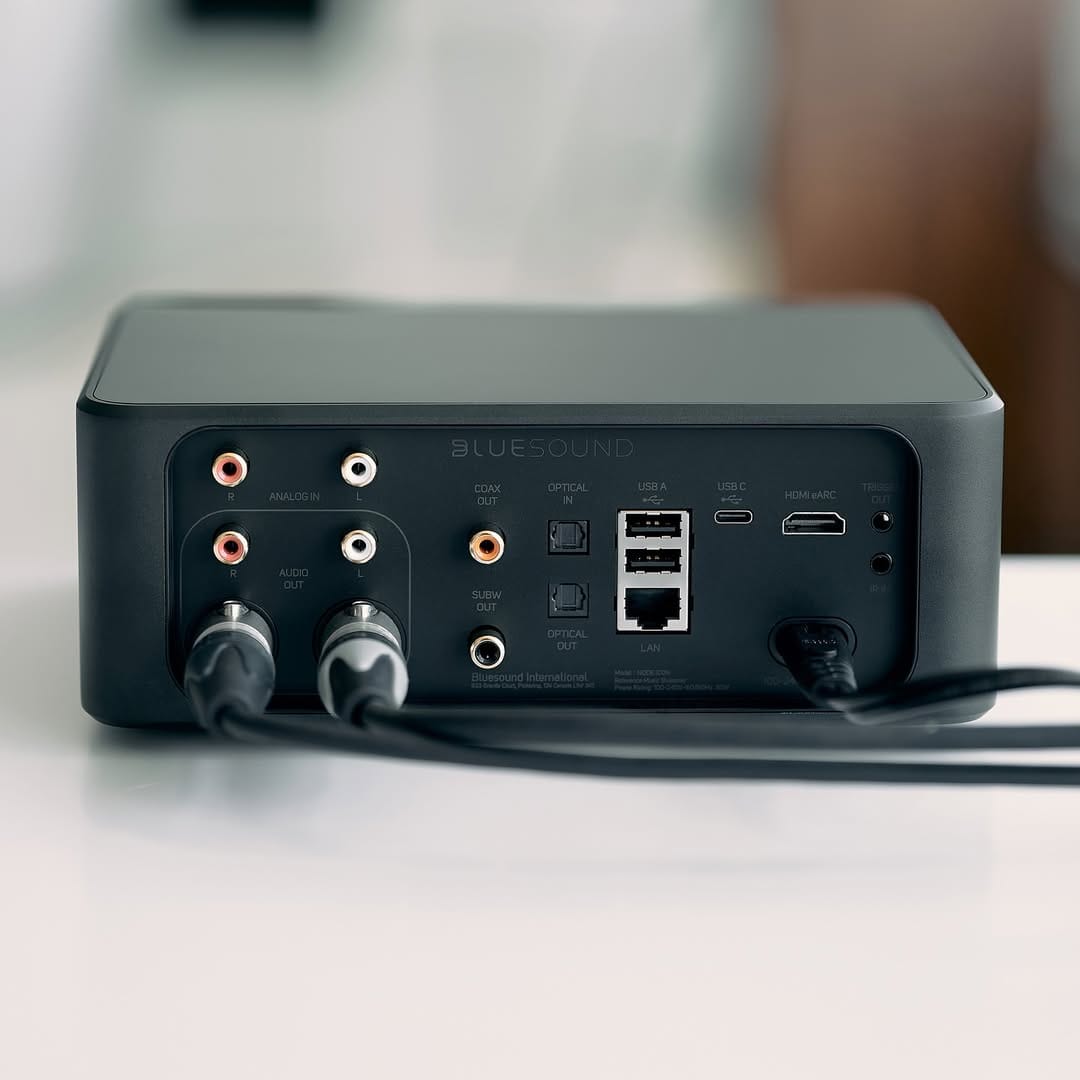
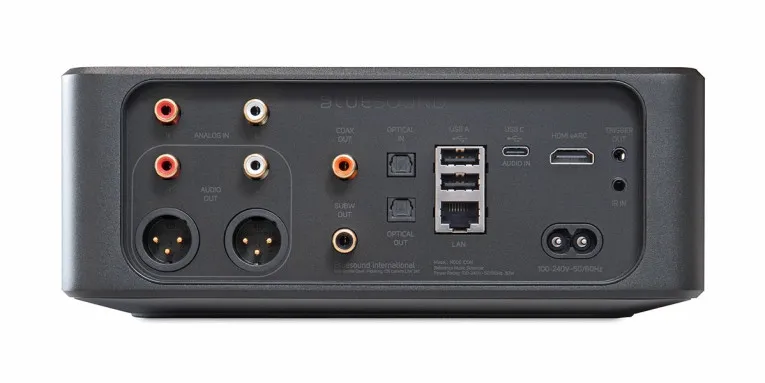
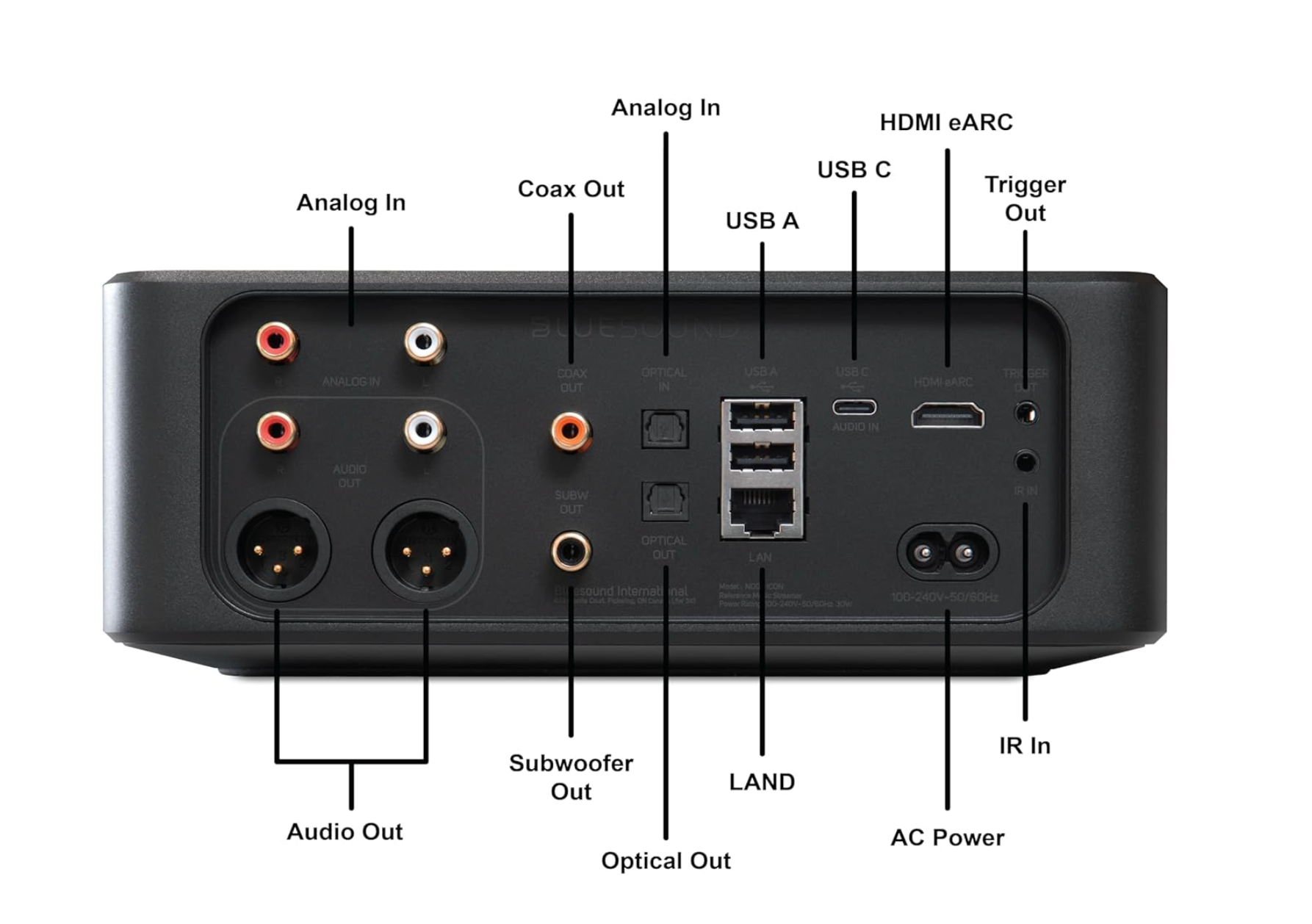
The Node Icon is unusually well-equipped for a component at this price.
Analog input
A single analog input allows you to connect a turntable preamp, CD player, or other line-level source and integrate it into your streaming system. This is rare on modern streamers and makes the Icon a genuine system hub.
Analog outputs
Both single-ended RCA and balanced XLR outputs are provided. The balanced outputs are particularly useful when feeding studio monitors, balanced headphone amplifiers, or longer cable runs to power amplifiers.
Headphone amplifier outputs
Headphone jacks are located on both sides of the unit, making it convenient regardless of where you sit. The headphone amp is more than adequate for efficient headphones and provides a clean, detailed presentation.
Digital inputs
The Node Icon accepts digital audio from multiple sources:
- HDMI eARC for connection to modern televisions, supporting higher bandwidth uncompressed audio codecs compared to standard ARC
- Coaxial S/PDIF
- Optical TOSLINK
- USB for connection to computers or other USB sources
This makes the Icon a proper DAC for your entire system, not just a network streaming transport.
Network connectivity
Wired Ethernet LAN input ensures stable, high-quality streaming without the dropouts and bandwidth limitations that can affect Wi-Fi connections.
Digital outputs
For those who want to use the Icon purely as a streaming transport feeding a separate, higher-end DAC:
- Coaxial S/PDIF output
- Optical TOSLINK output
- USB output
This flexibility means the Icon can grow with your system, starting as an all-in-one solution and transitioning to a dedicated transport as you upgrade.
Subwoofer output
An internally filtered subwoofer output allows proper bass management when using the Icon with bookshelf speakers or desktop systems, removing low frequencies from the main outputs and sending them to the sub.
Streaming features and services
The Node Icon supports essentially every major streaming platform, making it genuinely universal in a way few competitors manage.
Native integrations
- Apple Music and YouTube Music via AirPlay 2
- Spotify Connect
- Amazon Music HD
- Deezer
- Qobuz
- TIDAL Connect
Roon Ready certification
For Roon users, the Icon appears as a certified endpoint, providing seamless integration with Roon's interface and benefiting from Roon's superior metadata and playback management.
BluOS app control
All playback, source selection, and settings are managed through the BluOS app, available for iOS, Android, Windows, and macOS. The app is mature, stable, and provides access to all connected services in one interface.
Room correction and setup
The BluOS app includes room correction options, allowing you to compensate for speaker placement, room acoustics, and listening position. This is particularly valuable in real-world rooms where perfect placement is impossible, and it can make a genuine difference to tonal balance and imaging.
How it sounds
This is where the Node Icon separates itself from competent but uninspiring streamers.
Detail and resolution
The Icon is properly detailed, retrieving low-level information that lesser DACs obscure. Textures in acoustic instruments come through clearly, subtle reverb tails extend naturally, and the difference between good and great recordings becomes obvious.
Refinement in the highs
High frequencies are extended, airy, and refined without crossing into brightness or harshness. Cymbals shimmer with natural decay, string instruments maintain their bite without becoming edgy, and sibilance in vocals stays controlled even on aggressive recordings.
Overall character
The presentation leans detailed and resolving rather than warm and forgiving. This is not a smooth, romantic-sounding DAC. It is clean, articulate, and revealing, which means it will expose weaknesses in poor recordings or mismatched system pairings. In a well-sorted system with quality recordings, this clarity is a strength.
Real-world use: what people actually experience
Owners consistently mention several recurring themes:
- The BluOS app is stable and intuitive after the initial learning curve.
- The combination of streaming, DAC, and headphone amp reduces box count dramatically.
- Room correction makes a noticeable difference in typical domestic rooms.
- The balanced outputs provide a tangible improvement in clarity when used with compatible equipment.
- The HDMI eARC input is genuinely useful, turning the Icon into a proper TV audio upgrade.
The strongest praise tends to focus on how the Icon makes it easy to access and enjoy music without fuss, while still delivering sound quality that holds up against more expensive separates.
Comparisons: where the Node Icon fits
Node Icon vs Node Nano
The Nano is smaller, cheaper, and perfectly adequate for many systems. The Icon adds:
- Premium aluminum build instead of plastic
- Balanced XLR outputs
- Headphone amplifier
- Analog input
- Dual mono DAC implementation
- Superior overall sound quality
If your system can accommodate the larger chassis and you value better sound quality and expanded connectivity, the Icon justifies its higher price.
Node Icon vs Cambridge Audio MXN10
Both are feature-rich network streamers with good sound quality. The MXN10 includes a physical display and more traditional hi-fi aesthetics, while the Icon offers better app integration.
Node Icon vs another dedicated streamer plus external DAC
This is the comparison that matters most. A separate streamer and DAC can deliver superior performance, but you are spending significantly more, adding complexity, and dealing with two boxes, two power supplies, and additional cabling. The Icon makes sense for those who value simplicity and space efficiency without sacrificing serious sound quality.
Who should buy the Node Icon
It is a great fit if you want
- A complete, high-quality digital front end in one box
- Access to every major streaming service plus local network files
- Proper room correction to optimize real-world listening spaces
- A DAC that can handle TV audio, CD players, and other digital sources
- The ability to drive headphones directly without an additional amplifier
- Premium build quality and refined sound at a reasonable price
It is not ideal if you need
- A traditional IR remote control
- The smallest possible footprint (the Nano might be better)
- A linear power supply without modifications
- The warmest, most forgiving presentation possible
Suggested system pairings
Minimal high-quality system
Node Icon into quality bookshelf speakers or studio monitors, using the internal subwoofer output for bass management. Add room correction via the app and you have a complete, optimized system.
Headphone-focused setup
Use the Icon's headphone outputs to drive efficient headphones directly, or feed balanced output to a dedicated headphone amplifier. The clean, detailed character suits analytical listening with quality headphones.
TV and music system
Connect your television via HDMI eARC, music streaming via Ethernet, and a turntable or CD player via the analog input. The Icon becomes the hub for all audio in your living space.
Roon multi-room
If you are already using Roon, the Icon serves as a high-quality endpoint that genuinely competes with far more expensive alternatives while integrating seamlessly into Roon's ecosystem.
Final verdict
The Bluesound Node Icon delivers on its promise to be a serious, versatile, high-quality streaming source that simplifies systems without compromising sound quality. It has received a range of praise from professional reviews who consider it to be one of it not the best source released from any manufacturer in 2025.
The combination of comprehensive connectivity, genuine room correction, dual mono ESS DACs, and premium build quality makes it a compelling choice for anyone building or upgrading a modern system.
At £899, it competes directly with dedicated streamers and streamer DACs that cost significantly more when purchased separately, and in many cases, it holds its own or exceeds their performance.
If your goal is a clean, detailed, versatile digital front end that handles everything from Spotify to high-resolution local files, accepts input from your TV and turntable, and delivers refined sound quality, the Node Icon is an exceptionally strong option.
Amazon Link to buy (Helps support the reviews)
Richer Sounds Link (to bu)