Chord Mojo 2 (2025 Version) Review

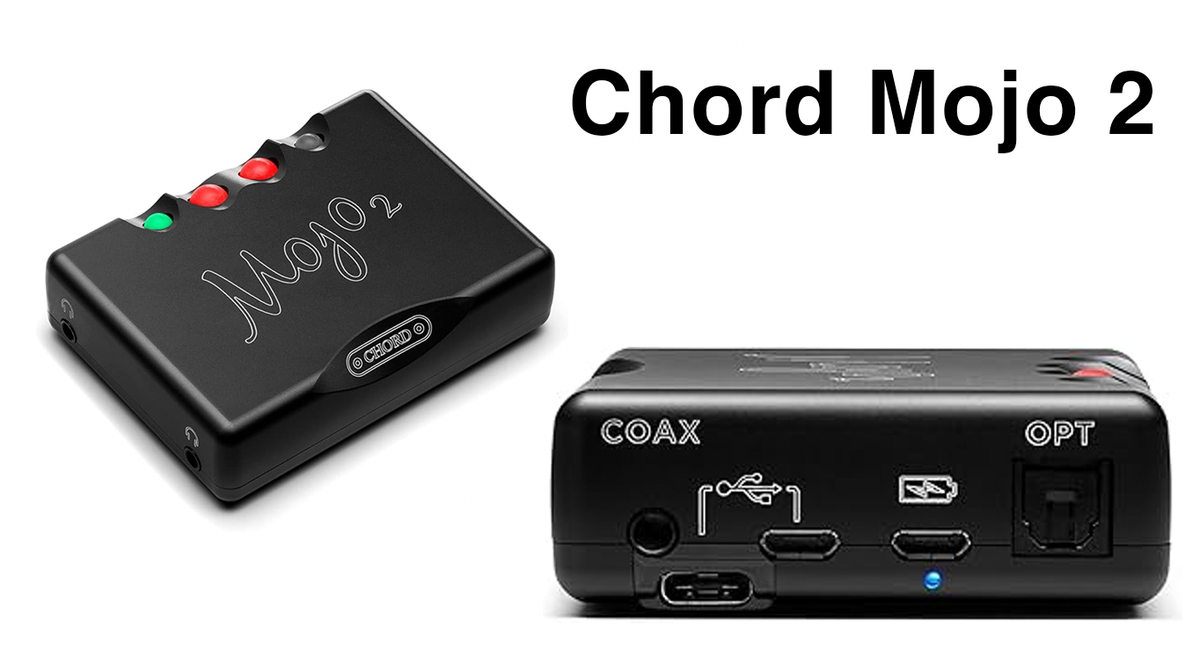
The Chord Mojo 2 is a portable DAC/headphone amplifier, from British audio engineering company Chord Electronics, that brings desktop-level technical performance and Chord's unique design philosophy to mobile listening. In plain English: this takes a digital signal from your phone, computer, or digital audio player and converts it to analog while also providing enough power to drive demanding headphones directly, now with the addition of a 4.4mm Pentaconn balanced output (2025 Version)
 Van de auteur
This review breaks down what the Chord Mojo 2 is, how it is built, how it sounds, what owners are saying, and who it makes the most sense for.
The Mojo 2 balanced edition is for you if you want genuinely portable high-performance audio with both single-ended and balanced headphone connectivity, need long battery life for mobile use, want independent customizable EQ profiles, could benefit from crossfeed processing for headphone listening, own headphones with 4.4mm balanced terminations, and appreciate unique British engineering aesthetics.
It is not for you if you need true balanced internal signal paths (this is pseudo-balanced at the connector only), want a minimalist interface without learning curves, are looking for a purely desktop solution with multiple line outputs, need absolute maximum power for extremely demanding planars, or prefer traditional measurement-first engineering approaches over subjective voicing.
What Is The Chord Mojo 2 (2025 Version)?
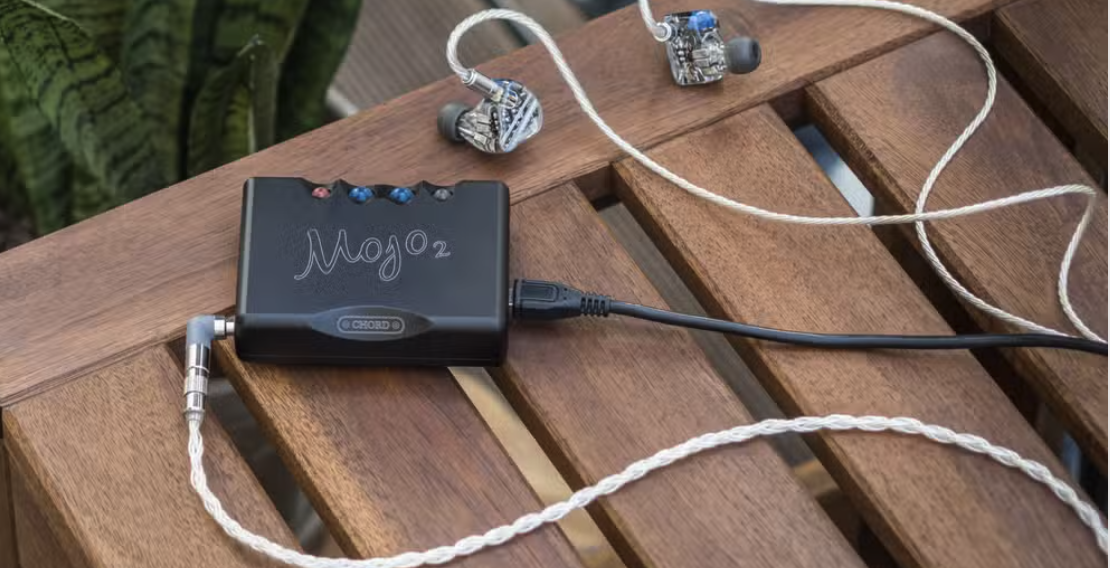
The Mojo 2 balanced edition is an updated version of Chord's groundbreaking portable DAC/amp, now incorporating a 4.4mm Pentaconn balanced headphone output that replaces one of the original dual 3.5mm outputs. The implementation remains quintessentially Chord, using an FPGA-based custom DAC architecture programmed with Rob Watts' proprietary WTA (Watts Transient Aligned) filtering rather than off-the-shelf DAC chips.
This is not delta-sigma or R-2R territory—this is pulse array conversion executed through a Xilinx Artix 7 FPGA running custom code that Chord claims offers superior transient response and more taps than traditional oversampling filters. The Mojo 2 uses a 40,960-tap WTA filter for 44.1kHz material and scales appropriately for higher sample rates, which Chord argues provides better pre-ringing suppression and more natural sound than conventional implementations.
The amplifier section delivers 600mW into 30Ω and 90mW into 300Ω on both the 3.5mm and 4.4mm outputs. Output impedance remains exceptionally low at 0.06Ω—which matters when driving sensitive IEMs or demanding planar magnetic headphones without impedance mismatch colorations. It is important to note that while the 4.4mm socket provides balanced cable compatibility, the Mojo 2's internal signal path remains single-ended, with the balanced output created at the connector itself rather than through fully differential internal circuitry.
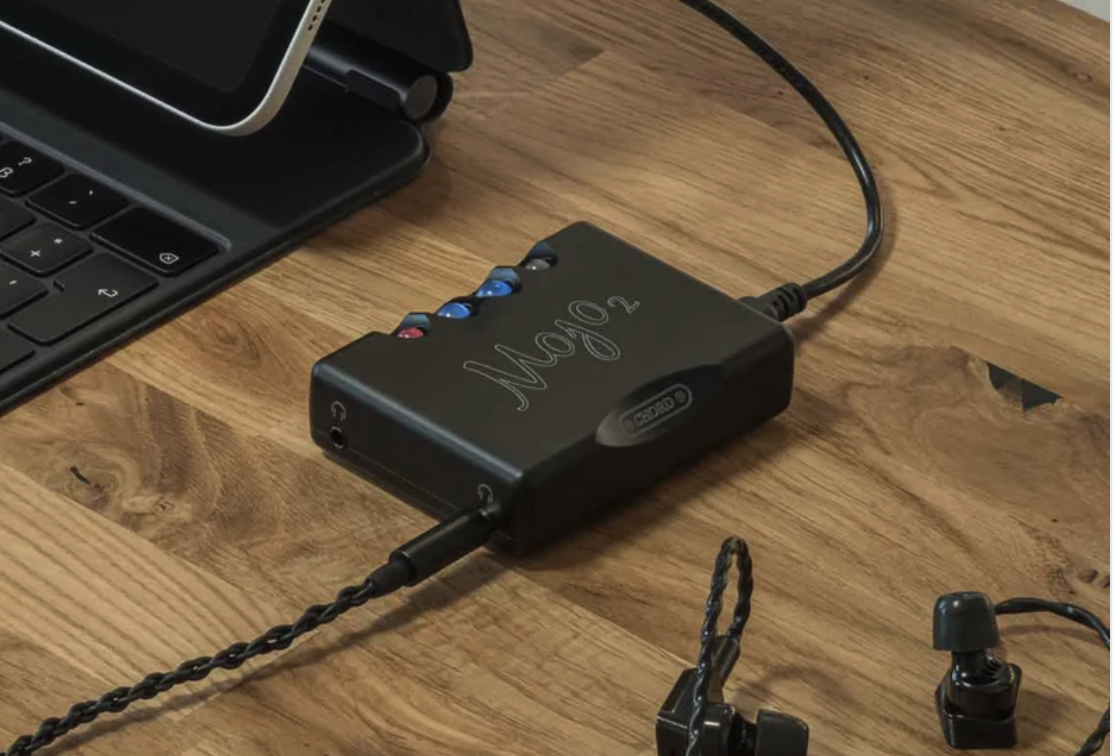
New features in the Mojo 2 balanced edition include:
- 4.4mm Pentaconn balanced output (pseudo-balanced at connector, replacing one 3.5mm jack)
- Independent volume memory for each output allowing preset levels for different headphones
- Switchable USB-C charging and data through a single port, eliminating charging cable clutter (or user can use the micro usb and usb-c/micro usb separated power and audio data ports)
- Four customizable 18-band EQ profiles accessible via menu system or smartphone app
- Two Headphone output ports that can be used simultaneously
- UHD DSP mode offering enhanced processing with lossless digital signal processing
- Coaxial and Optical inputs, unusual in a portable DAC
- Crossfeed processing with four levels designed to reduce listener fatigue during extended headphone sessions
- Enhanced Intelligent Desktop Mode for battery-free operation without sonic compromise
Why people care: Portable audio at this performance level traditionally required separating the DAC and amplifier, carrying multiple devices, and managing complex signal chains. The Mojo 2 balanced edition delivers genuinely transparent conversion, flexible EQ capabilities, and sufficient amplification for most headphones—including those with 4.4mm balanced terminations—in a package small enough to pocket alongside a smartphone at a £395 price point.
Build Quality and Design
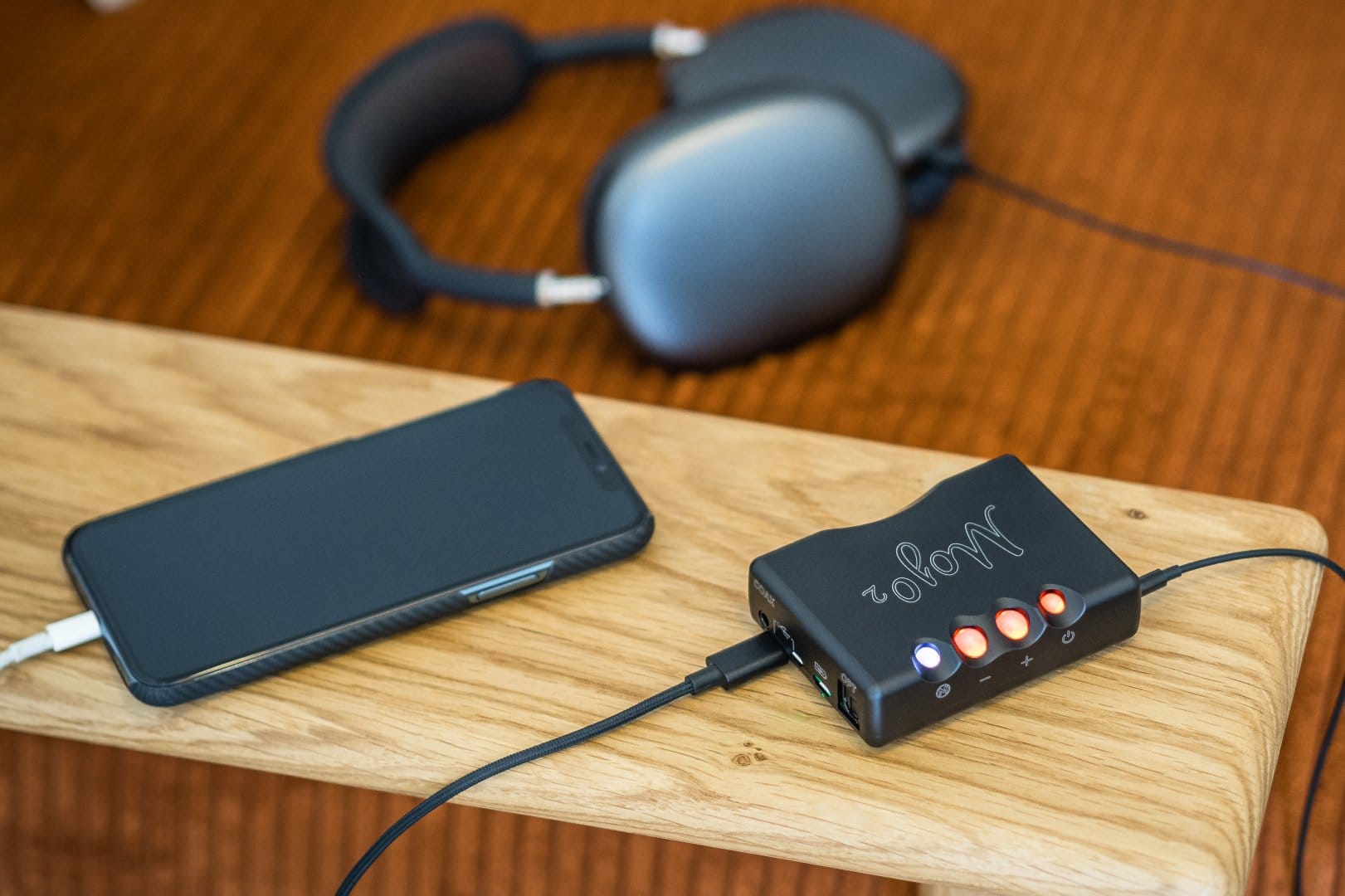
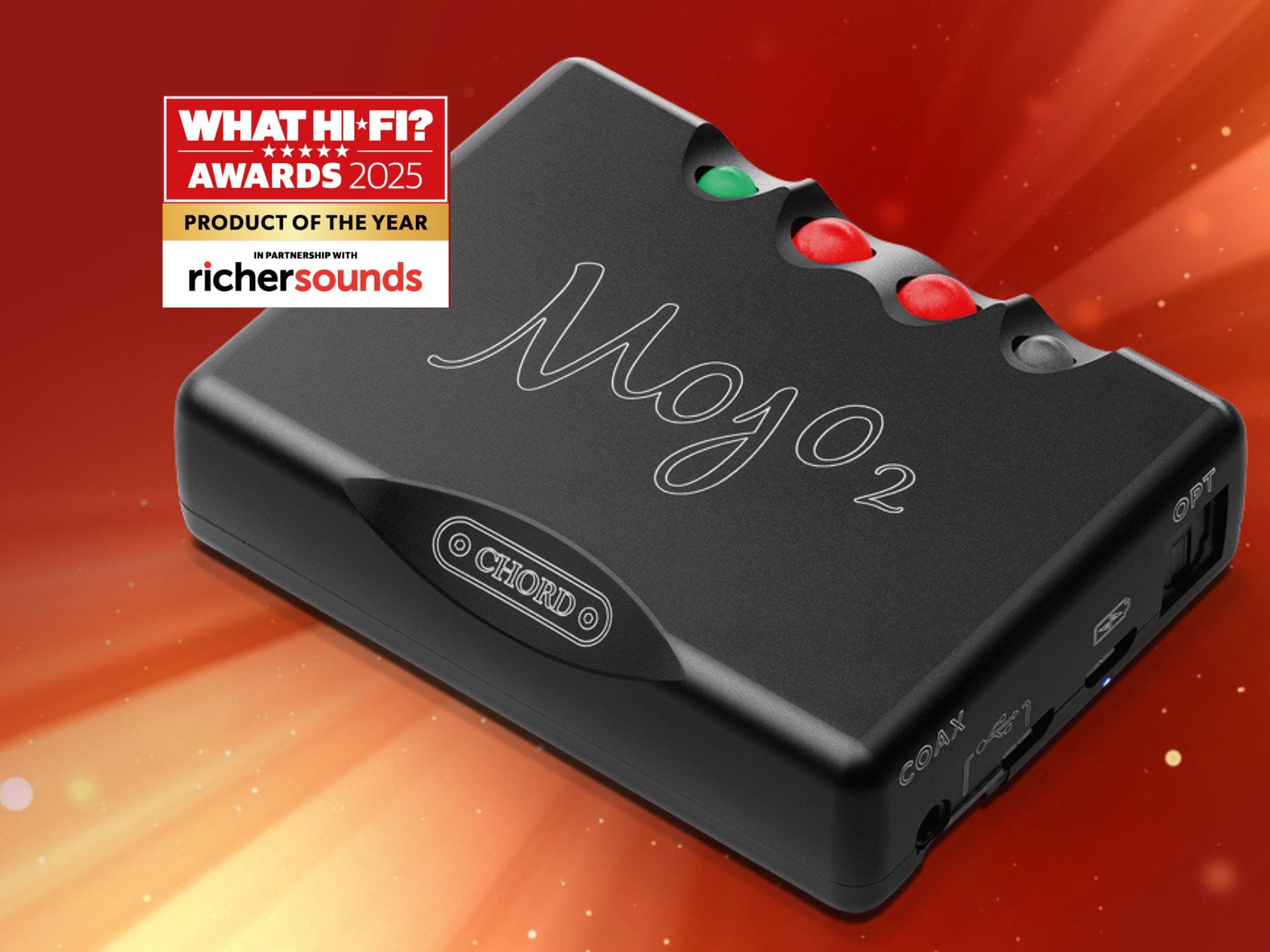
The Mojo 2 maintains Chord's distinctive industrial aesthetic: precision-machined aluminum chassis, aerospace-grade construction, unconventional spherical control surfaces. The unit features illuminated polychromatic spherical buttons that serve multiple functions—volume control, input selection, battery indication—with colour-coded LED feedback indicating operational status. The overall feel is exceptionally solid, though the unique interface requires acclimatization.
Available in black, the unit measures 82 x 60 x 22mm and weighs approximately 185g. It fits easily in a pocket or bag without commanding excessive space. The build quality feels genuinely premium—this is jewelry-grade machining executed to exacting tolerances. The spherical buttons are polycarbonate set into precision-milled housings, providing tactile feedback while maintaining visual distinctiveness. The 2025 update adds a small lightning bolt icon above the USB-C port to indicate its charging capability.
The front panel provides comprehensive connectivity: one 3.5mm headphone output and one 4.4mm balanced output, both gold-plated with independent volume memory. Digital inputs include USB Type-C (now switchable for data and charging), Micro-USB (for Poly compatibility), coaxial (3.5mm), and optical (TOSLINK). The USB implementation supports up to 32-bit/768kHz PCM and native DSD256, covering all current streaming formats and high-resolution downloads. The separate Micro-USB charging port remains for backwards compatibility with the Poly streaming module, though the new USB-C port can handle both data and charging through menu-selectable modes.

Power Supply and Performance
The Mojo 2 uses an internal lithium-polymer battery with increased capacity over the original, rated at over 8 hours continuous playback. Chord has implemented extensive FPGA-controlled battery management ensuring clean power delivery throughout the discharge cycle, with 75% reduced power loss during charging for cooler, more efficient operation. The unit includes sophisticated regulation maintaining stable voltage rails regardless of charge state, preventing sonic degradation as battery depletes.
The measured performance is exceptional: THD+N of 0.0003% at 2.5V/300Ω, signal-to-noise ratio exceeding 125dB, dynamic range of 125.7dB, and jitter performance that Chord claims is extraordinarily low thanks to the pulse array architecture's inherent jitter immunity. These figures place the Mojo 2 among the best-measuring portable devices regardless of price, though Chord's FPGA approach means measurements don't tell the complete story.
Connectivity and Setup
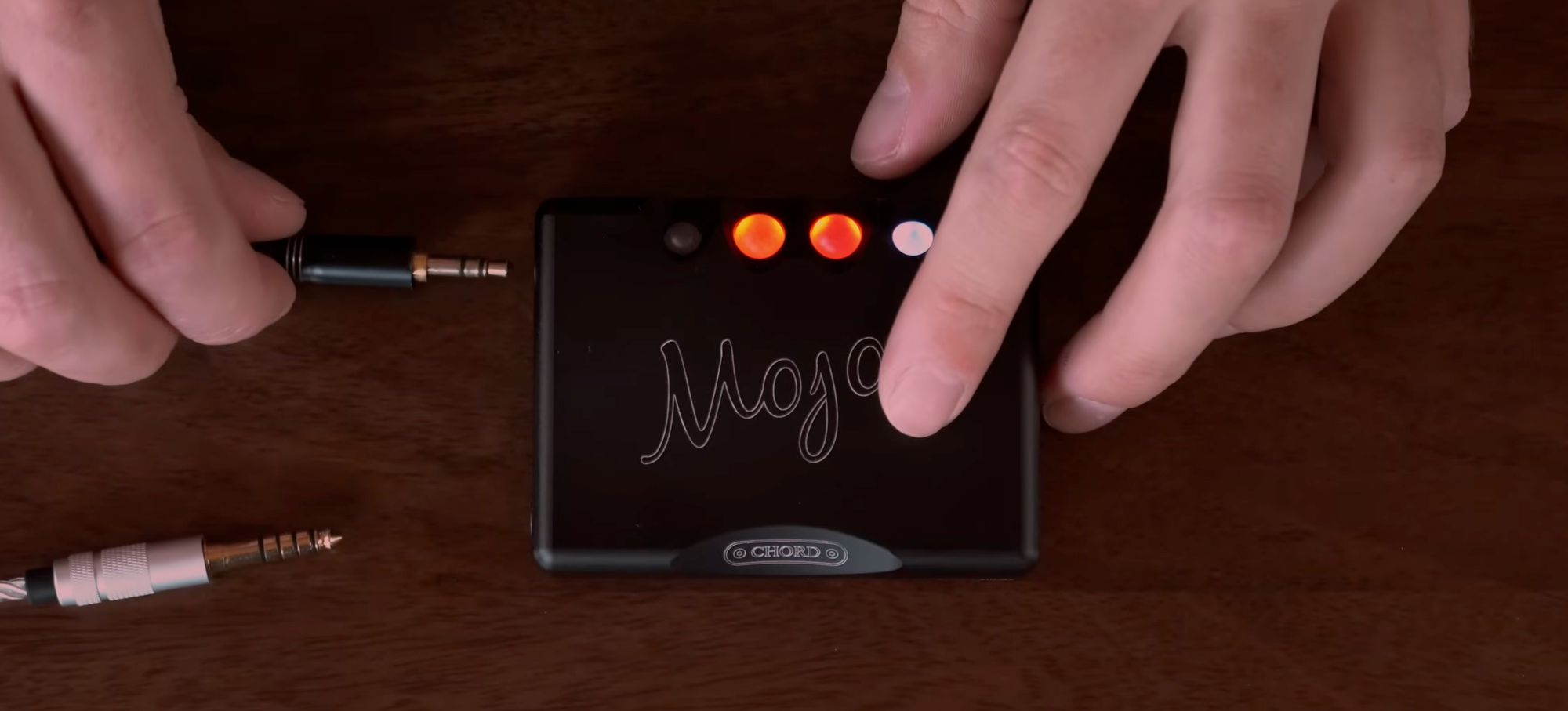
Plug-and-play with iOS, Android, Mac, Windows, and Linux via USB. The custom USB implementation operates as a UAC2 class-compliant device and works driverless on modern operating systems. iOS users require a Lightning to USB adapter (Camera Connection Kit) or an Apple compatible OTG cable; Android users also need USB OTG support. Sample rate switching is automatic, with the LED buttons changing color to confirm incoming format—white for 44.1kHz, red for 48kHz, yellow for 88.2kHz, green for 96kHz, blue for 176.4kHz, and purple for 192kHz and above.
The 18-band parametric EQ system offers four independently stored profiles with adjustment at 20Hz, 125Hz, 3kHz, and 20kHz in ±9dB increments. Each frequency band provides 18 levels of adjustment in 1dB steps, configured via the menu button and spherical controls or through the Chord smartphone app. Users can create room correction curves, personal preference voicing, or headphone-specific compensations. The EQ operates through Chord's proprietary 104-bit UHD DSP core running at 705/768kHz with extensive noise-shaping, maintaining signal integrity without the artifacts typically associated with conventional digital equalizers.
The crossfeed feature implements a custom algorithm with four intensity levels (off, red, green, blue) designed to reduce the unnatural stereo separation of headphone listening. This processes the signal to simulate the acoustic crosstalk that occurs in loudspeaker listening, reducing listener fatigue during extended sessions. The implementation is adjustable via the menu system, allowing users to dial in their preferred crossfeed strength or disable it entirely. Some users report this makes long listening sessions more comfortable; others prefer the standard stereo presentation.
The Intelligent Desktop Mode has been enhanced over the original Mojo, released in late 2015, with improved PSU design and isolated battery management. When connected to power, the device trickle charges the battery before disconnecting it entirely, allowing continuous desktop operation without battery degradation. The amplifier is now fed by regulators rather than battery power directly, ensuring low PSU noise and improving measured crosstalk performance to 118dB.
Many users run the Mojo 2 directly from smartphones via USB and report excellent results. The coaxial and optical inputs provide compatibility with digital audio players, CD transports, and other devices lacking USB output. The dual-data coaxial input allows connection to the Chord M Scaler for enhanced upsampling to PCM705/768kHz. Battery life proves sufficient for international flights or full-day portable use, with the new USB-C charging simplifying power management significantly compared to the original's separate charging port.
Sound Quality
Here is where Chord's FPGA approach becomes relevant. The Mojo 2 measures exceptionally well—SINAD exceeding 120dB, THD+N below -115dB, dynamic range approaching 126dB. These specifications rival desktop equipment costing substantially more. However, Chord's engineering philosophy prioritizes subjective performance alongside objective measurements.
The WTA filtering implementation represents a different approach to digital reconstruction than conventional oversampling. Rob Watts argues that increasing tap count (40,960 taps using 40 DSP cores) and optimizing filter response in the time domain produces more natural transient reproduction than frequency-domain optimized filters. The pulse array DAC implementation is discrete, avoiding the substrate noise issues that affect conventional chip-based designs. Whether this translates to audible differences in controlled testing remains debated, but many experienced listeners report the Mojo 2 sounds distinctly more natural than specification-matched competitors.
In practice, the Mojo 2 balanced edition demonstrates exceptional technical capability. The 4.4mm output provides convenient compatibility with modern balanced-terminated headphones, though the pseudo-balanced implementation means you're not gaining the theoretical advantages of true differential drive. The sonic presentation maintains Chord's house sound: detailed without brightness, extended without harshness, dynamic without compression. The removal of coupling capacitors in the Mojo 2's design contributes to tighter bass response and greater neutrality compared to the original.
The amplifier section handles difficult loads gracefully. Low-impedance IEMs remain dead quiet with no audible hiss thanks to the 0.06Ω output impedance, while high-impedance dynamics receive sufficient voltage swing for proper control. The measured power output of 600mW into 30Ω and 90mW into 300Ω proves adequate for most portable headphones.
Some listeners report the Mojo 2 sounds more refined than competing portable DAC/amps, with superior micro-detail retrieval and more convincing spatial presentation. Whether this reflects Chord's unique filtering approach, excellent implementation throughout the analog stages, or confirmation bias is difficult to isolate. What is clear is that the Mojo 2 performs exceptionally well in objective testing and receives consistently positive subjective feedback from experienced listeners.Written Review from
What Hifi Magazine - https://www.whathifi.com/reviews/chord-mojo-2
Written Review from John Darko - https://darko.audio/2022/12/the-chord-mojo-2-is-2022s-best-dac-and-heres-why/
Written Review From Trusted Reviews - https://www.trustedreviews.com/reviews/chord-mojo-2
Written Review From Tech Radar - https://www.techradar.com/reviews/chord-mojo-2
Owner Impressions
Multiple owners on Head-Fi and various audio forums report excellent experiences with the Mojo 2 balanced edition. Common themes include:
- Exceptional sound quality rivaling desktop equipment in portable form
- Convenient 4.4mm output compatibility with modern balanced headphones
- Excellent build quality with premium materials and construction
- Useful EQ functionality allowing headphone-specific tuning
- Outstanding battery life for genuinely portable operation
- Simplified charging with USB-C handling both data and power
- Versatile connectivity supporting smartphones, computers, and dedicated players
- Unique aesthetic that stands out from generic black boxes
Some users have noted that the spherical button interface requires acclimatization, with the unconventional control scheme proving initially confusing. The menu system, while functional, lacks the intuitive accessibility of touchscreen interfaces. The pseudo-balanced output implementation has drawn mixed reactions—some appreciate the 4.4mm connector compatibility, while purists note this isn't true balanced drive and offers no sonic advantage over the 3.5mm output beyond convenience.
The independent volume memory for each output receives particular praise from owners who regularly switch between IEMs and full-size headphones. This quality-of-life improvement eliminates the need for constant volume adjustment when changing headphones.
SoundNews Video Review
Darko Video Video Review
Is It Worth It (IIWI) Video Review
Who Should Buy This?
The Chord Mojo 2 balanced edition makes sense for listeners who want desktop-level DAC and Head Amplifier performance in genuinely portable form, own headphones with 4.4mm balanced terminations requiring compatible connectivity, value customizable EQ capabilities, and appreciate distinctive British engineering aesthetics. It is particularly well-suited for:
- Mobile listeners requiring high-quality audio away from home
- Headphone enthusiasts with 4.4mm balanced-terminated headphones
- Users wanting integrated EQ for headphone correction or personal voicing
- Travelers needing sufficient battery life for international flights
- Audiophiles appreciating FPGA-based conversion approaches
- Those seeking robust build quality and distinctive industrial design
- Listeners who value comprehensive connectivity options
- Users wanting simplified USB-C charging without separate cables
It is less appropriate for:
- Users demanding true balanced differential drive throughout the signal path
- Those needing absolute maximum power for exceptionally demanding headphones
- Listeners preferring minimalist interfaces without learning curves
- Budget-conscious buyers seeking maximum measured performance per dollar
- Users prioritizing measurement-first engineering over subjective voicing philosophy
- Those wanting purely desktop solutions with comprehensive line outputs
Final Thoughts
The Chord Mojo 2 balanced edition represents a thoughtful refinement of an already excellent portable DAC/amp. It delivers exceptional measured performance, comprehensive connectivity including the new 4.4mm output and USB-C charging, sophisticated EQ capabilities, and Chord's distinctive FPGA-based conversion approach in a genuinely portable package. This is transparent conversion with sufficient amplification for most headphones, executed to exceptionally high standards and loved by many users.
The 2025 updates address the most common user complaints without touching the core audio architecture that made the original Mojo 2 successful. The 4.4mm output provides convenient compatibility with modern balanced headphones (though the pseudo-balanced implementation offers no sonic advantages over the 3.5mm output), while USB-C charging simplifies cable management significantly. Independent volume memory for each output proves genuinely useful in daily operation.
If you value technical excellence, need genuine portability with modern balanced headphone compatibility,, appreciate customizable EQ functionality, and enjoy distinctive British engineering aesthetics, the Chord Mojo 2 balanced edition delivers everything required. It will not compromise sonic quality for portability, it will simply provide desktop-level performance wherever you need it, now with the connectivity options users have been requesting since launch.See also the poly to add streamer capability to this portable DAC Amp.
Peter Tyson Link (To Buy) - https://petertyson.co.uk/chord-electronics-mojo-2-v2-2025-version
Richer Sounds Link (To Buy) - https://www.richersounds.com/chord-electronics-mojo-2-4-4
Amazon Link (To Buy 2024 Unbalanced Version) - https://amzn.to/4a6DXRs ( helps support our blog)