Douk U2 Pro DDC (2025 Version) Review

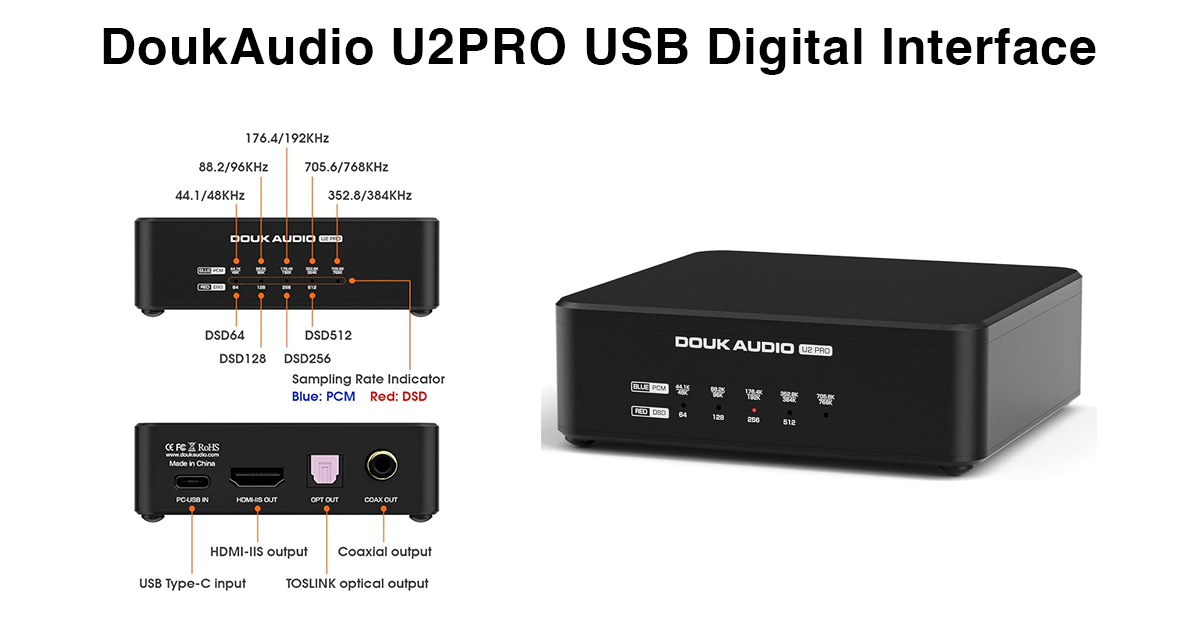
A precision digital-to-digital converter that transforms USB audio into high-quality S/PDIF and I²S signals, bringing proper digital transmission and clock management to budget-conscious systems.
If you have been following the evolution of budget hi-fi components from Chinese manufacturers, the Douk U2 Pro (2025 Version) represents a significant refinement of what was already a surprisingly capable digital interface solution.
This is not just another USB-to-S/PDIF converter with basic functionality. It is a properly implemented digital-to-digital converter that combines dual independent clocks, comprehensive output options, an excellent form factor, and the sort of build and sound quality that make it a legitimate tool for addressing USB audio limitations in systems where proper digital signal integrity matters.
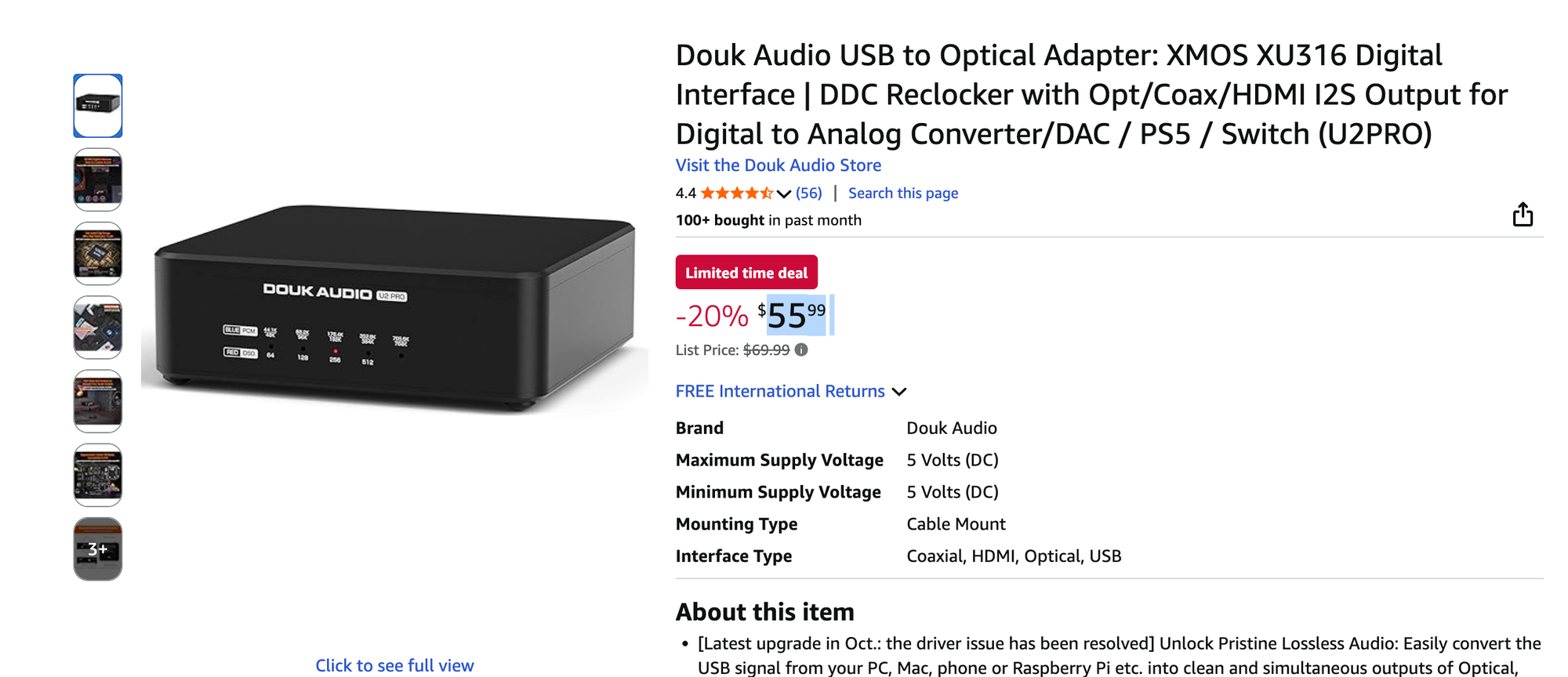
At around $55, it sits in territory where expectations shift from "does it work at all" to "does it genuinely improve my system's digital chain." The answer, for most setups involving external DACs, is yes.
This review breaks down what the U2 Pro actually is, how it is built, how it performs, how it differs from DACs, what makes it different from basic USB interfaces, and who it makes the most sense for.
Quick take
The U2 Pro is for you if you want to bypass potentially compromised USB implementations in your DAC, need or want to convert USB audio to S/PDIF or I²S, value proper clock management and jitter reduction, want multiple simultaneous digital outputs, appreciate OLED display feedback showing sample rates and input status, and want to improve digital signal quality without spending hundreds on premium interfaces like the Singxer SU-6 DDC, or Denafrips Iris DDC.
It is not for you if you have a DAC with excellent USB implementation that you are already satisfied with, require battery operation or portability, or prefer integrated solutions that combine DAC and DDC functions in a single unit.
What the Douk U2 Pro actually is..
The Douk U2 Pro is a digital-to-digital converter, often abbreviated as DDC. In practical terms: it accepts digital audio from USB sources and converts it to S/PDIF coaxial, S/PDIF optical, or I²S signals using independent clock management and signal regeneration. It is bus powered and takes power via the USB, from the source.
It is also Douk Audio's answer to the question of whether proper digital interface functionality can be delivered at genuinely accessible pricing. Where brands like Singxer, Denafrips and Matrix Audio start well above £300, the U2 Pro brings the core benefits of dedicated DDC implementation to a much wider audience.
The 2025 version brings meaningful improvements over the original U2 Pro: the most significant upgrade is the XMOS XU-316 USB receiver chip, a flagship-grade component that enables support for PCM up to 32-bit/768 kHz and native DSD512 (via i2S), alongside dramatically improved compatibility and lower latency. Additional refinements include improved power supply filtering, refined clock circuitry for reduced phase noise, a much improved form factor, and updated firmware that resolves various compatibility issues that affected the original release.
Sound Sample/
DDC Architecture & Design
Dual independent 75 picosecond clocks
Unlike basic USB interfaces that rely on computer-generated timing signals, the U2 Pro employs two separate ultra-low phase noise 75 picosecond crystal oscillators: one at 22.5792 MHz for 44.1 kHz family sample rates, and another at 24.576 MHz for 48 kHz family rates.
This dual-clock architecture is critical to the design. When you play a 44.1 kHz or 88.2 kHz file, the 22.5792 MHz clock handles the conversion. When playing 48 kHz, 96 kHz, or 192 kHz material, the 24.576 MHz clock takes over. This ensures the output signal is always derived from a mathematically perfect multiple of the original sample rate, eliminating the timing errors and jitter that occur when resampling or clock conversion is involved.
The result is a fundamentally cleaner digital signal with significantly reduced jitter compared to direct USB connections, particularly noticeable with DACs that lack sophisticated USB input implementations or suffer from poor internal clock quality.
XMOS XU-316 USB receiver - flagship-grade performance
The headline feature of the 2025 version is the XMOS XU-316 chip, XMOS's flagship asynchronous USB audio receiver that represents a dramatic leap forward from the XU-208 used in earlier DDC designs. This is the same chip found in DDCs costing several times the U2 Pro's price, and its inclusion here is genuinely impressive.
The XU-316 brings comprehensive format support that exceeds what many users will ever need: PCM up to 32-bit/768 kHz and native DSD512. This is not theoretical capability - the chip genuinely handles these ultra-high-resolution formats with stability and precision, future-proofing the unit against format evolution for years to come.
Beyond raw specifications, the XU-316 offers measurably superior jitter performance compared to earlier XMOS generations, with lower phase noise and tighter clock synchronization. Driver compatibility across Windows, macOS, and Linux is excellent, with plug-and-play operation on modern systems and stable performance even with challenging USB hosts like older laptops or single-board computers that might struggle with lesser implementations.
The asynchronous USB implementation means the U2 Pro controls the data flow rather than the computer, allowing the precision 75 picosecond clocks to dictate timing rather than accepting potentially jittery signals from the USB bus. This is the same fundamental approach used in far more expensive interfaces, but the XU-316's advanced architecture delivers it with greater refinement than previous-generation chips could achieve at any price point.
For a DDC at this price to include XMOS's flagship USB receiver is exceptional, and it represents one of the U2 Pro's strongest value propositions.
Comprehensive output options
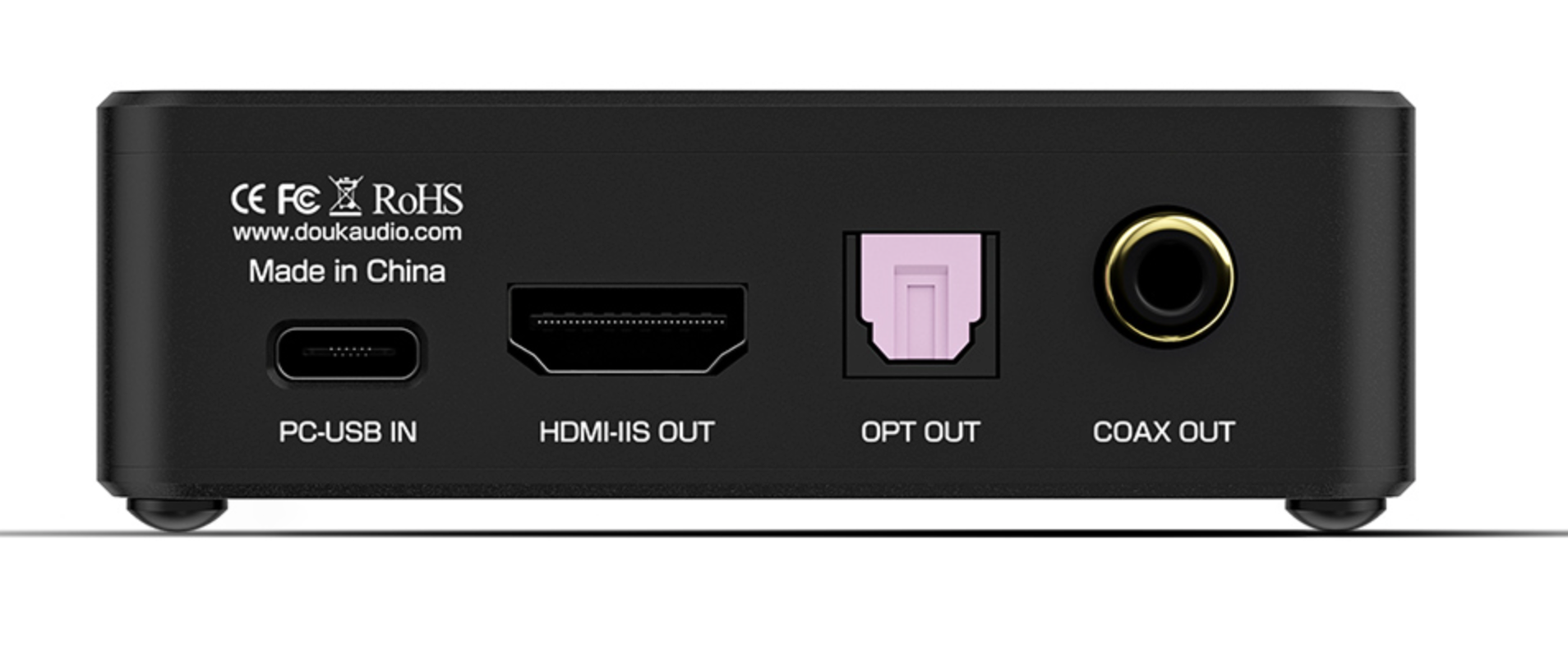
The U2 Pro provides three simultaneous digital outputs, which can all be active at once:
- Coaxial S/PDIF (RCA) - 75-ohm output, up to PCM 192 kHz or DSD64
- Optical S/PDIF (TOSLINK) - Up to PCM 192 kHz or DSD64
- I²S (HDMI connector) - Full capability up to PCM 32-bit/768 kHz and DSD512, supporting multiple pinout configurations
The I²S output is particularly interesting, as it uses HDMI physical connectors (though it is not actual HDMI and will not work with HDMI devices) and supports multiple pinout configurations including Gustard/Audio-GD, PS Audio, and HiFiBerry standards. Crucially, I²S bypasses the bandwidth limitations of S/PDIF entirely, allowing the full PCM 32-bit/768 kHz and DSD512 capability of the XU-316 chip to reach compatible DACs. This makes it the preferred output whenever available, rivalling USB, offering both superior signal integrity and complete format support, assuming your DAC has a I²S input.
Having all three outputs active simultaneously means you can feed multiple DACs at once or use the optical output for system monitoring while sending the primary signal via coaxial or I²S.
The Douk U2 Pro DDC also features USB Output mode switching, from UAC 1.0/UAC 2.0 for use with a variety of devices/consoles.
Build quality and design
Compact aluminum chassis
The U2 Pro features a full aluminum enclosure with a compact desktop footprint roughly the size of a large smartphone. The build feels solid and well-damped, with no flex or resonance. The finish is typically clean machining with either black or silver anodizing depending on version.
The compact size makes it easy to integrate into desktop systems or stack with other components, though the rear-mounted connectors mean you need adequate space for cable management.
Front panel controls and indicators
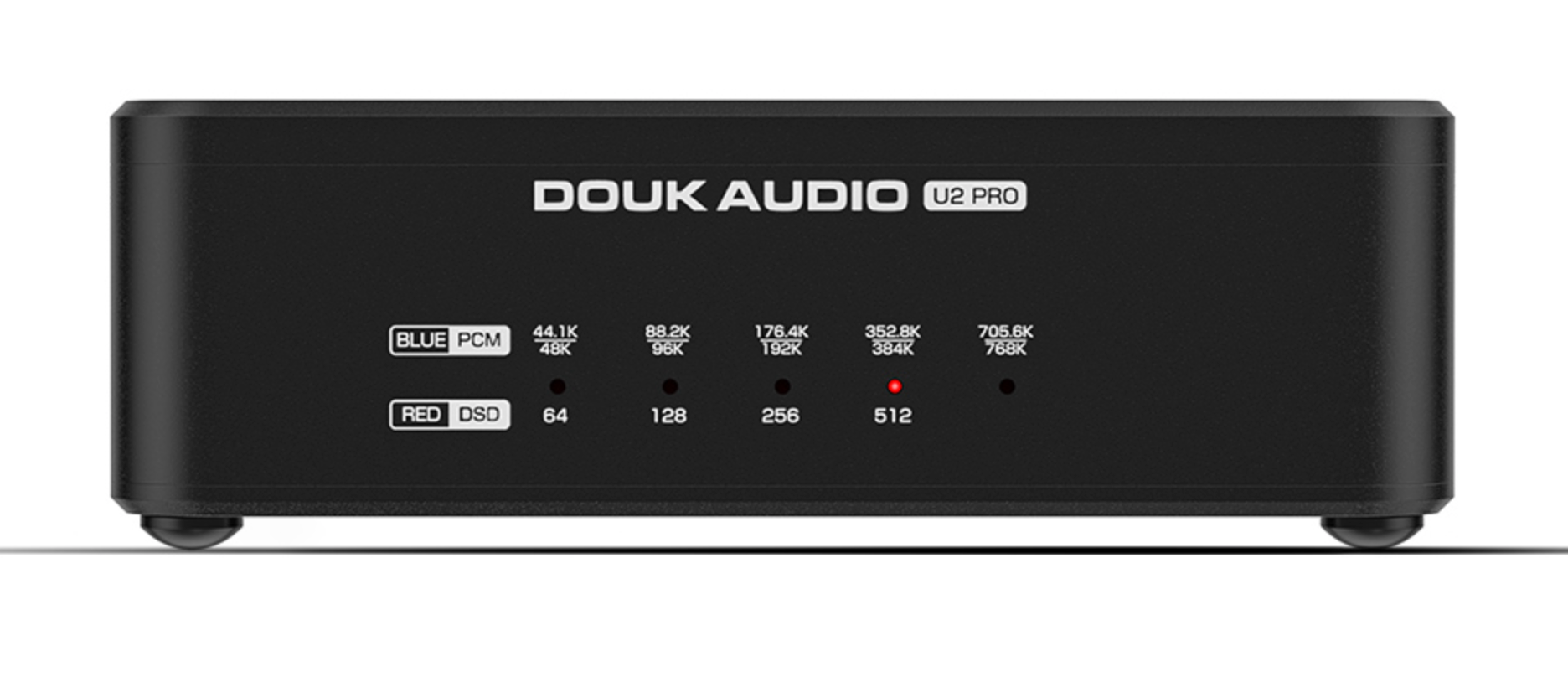
The front panel includes clear resolution indicators with the colour of the light indicating PCM or DSD.DIY Modifiable
The DDC has a soldered oscillator clock that can be upgraded for further improving jitter performance, for those that enjoy modding their audio equipment.
Connectivity: focused on digital conversion
The U2 Pro is deliberately simple, providing exactly what a DDC needs and nothing more.
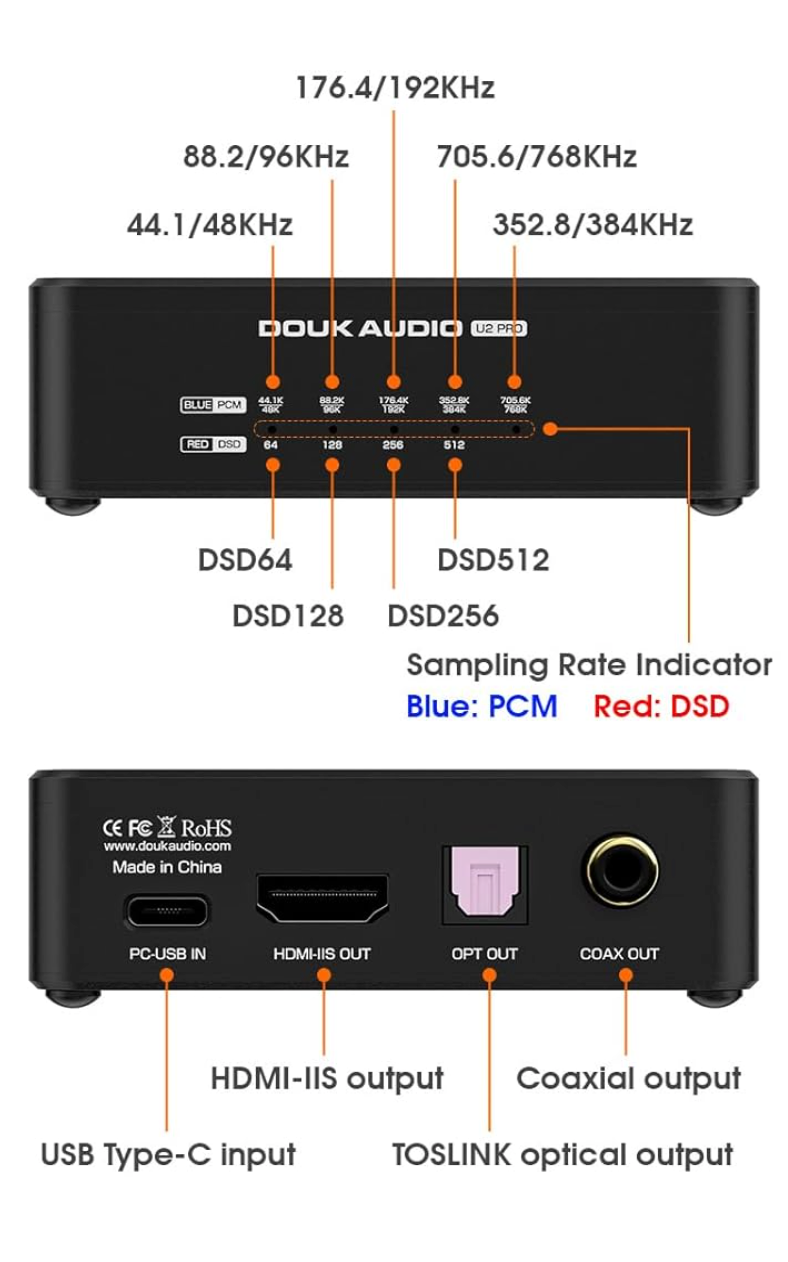
Digital inputs
The U2 Pro accepts digital audio from a single source:
- USB Type-C - Asynchronous USB Audio Class 1.0 or 2.0 via XMOS XU-316
This covers the primary use case of converting computer-based digital audio to formats suitable for external DACs. The lack of S/PDIF or optical inputs is intentional, as the device is specifically designed as a USB interface solution rather than a general-purpose digital converter.
Digital outputs
Three simultaneous outputs are provided, all active at once:
- Coaxial S/PDIF (RCA) - 75-ohm, up to PCM 192 kHz (S/PDIF spec limit) & DSD64
- Optical S/PDIF (TOSLINK) - up to PCM 192 kHz (S/PDIF spec limit) & DSD64
- I²S (HDMI connector) - Up to PCM 32-bit/768 kHz and DSD512,
No analog outputs or volume control
The U2 Pro is a pure DDC. There are no analog outputs, no volume control, no headphone amplifier. This is deliberate, focusing design and budget entirely on digital signal quality rather than feature accumulation that could compromise the core function.
How it performs
This is where the U2 Pro separates itself from basic USB-to-S/PDIF adapters and demonstrates genuine value. Firstly it measures very well for the money with a THD+N value of 0.000008%.
Audible improvements with compatible DACs
The performance benefits of the U2 Pro are most noticeable with DACs that either lack USB inputs entirely or have USB implementations that suffer from poor jitter performance, inadequate isolation from computer noise, or compatibility issues with certain operating systems or music players.
Users consistently report improvements in several areas: reduced background noise floor revealing more low-level detail, tighter bass response with better pitch definition and control, cleaner high frequencies with less grain or digital edge, improved soundstage focus and image specificity, and greater overall sense of ease and musicality rather than digital harshness.
The magnitude of these improvements varies significantly depending on the quality of the DAC's existing USB input. With a well-implemented modern DAC like the Topping D90 or RME ADI-2, the differences may be subtle or even inaudible. With older DACs, budget units with basic USB receivers, or vintage converters that only have S/PDIF inputs, the U2 Pro can transform the digital chain completely.
I²S output quality
For DACs equipped with I²S inputs, this output typically provides the best results. The separated clock and data transmission eliminates the jitter and timing uncertainties inherent in S/PDIF's single-cable design, and the differential signaling offers superior noise immunity compared to single-ended coaxial connections.
The improvement is most noticeable in soundstage precision, with instruments occupying more stable, clearly defined positions in space, and in the sense of blackness between notes, where the lower noise floor allows subtler ambient information to emerge.
Compatibility and stability
The 2025 version's flagship XMOS XU-316 chip provides exceptional compatibility across Windows, macOS, and Linux systems. This is not merely adequate functionality - the XU-316 represents XMOS's most advanced USB audio implementation, with refined drivers and rock-solid stability that matches or exceeds what you would find in DDCs costing several times as much.
Driver installation is automatic on macOS and Linux, while Windows requires a simple driver download for full functionality beyond basic USB Audio Class 1.0 operation. Once configured, the unit proves remarkably reliable and stable, maintaining lock through sample rate changes and handling transitions between PCM and DSD without dropouts or glitches. The XU-316's advanced buffering and error correction mean it remains stable even with challenging USB hosts that might cause lesser chips to stumble. Windows driver reportedly much improved to earlier versions that were problematic.
The multiple I²S pinout options, displayed on this DDC itself, ensure compatibility with the major DAC manufacturers using this interface, though you may need to open the case and adjust internal jumpers to match your specific DAC's requirements. This is a one-time setup process clearly documented in the manual.
Real-world use: what people actually experience
Owners consistently mention several recurring themes:
- The flagship XMOS XU-316 chip provides format support and stability matching DDCs costing far more.
- The improvement over direct USB connection is immediately noticeable with older or budget DACs.
- The I²S output provides the cleanest, most refined sound when used with compatible equipment, and is the only way to access the full 768 kHz/DSD512 capability.
- The Toslink output is often preferred as smoothest, most laid back sound
- The compact size and form factor makes it easy to integrate into existing systems without rearranging equipment.
- The unit runs cool and silent with no fan noise or heat concerns.
- Build quality feels appropriate for the price and inspires confidence in long-term reliability.
The strongest praise tends to focus on how the U2 Pro unlocks the full potential of DACs that were being held back by poor USB implementations or computer noise, effectively providing a significant upgrade for the cost of a few premium digital cables.
Rick Ruiz Audio Video Review
Old Guy Hifi Video Review
Who should buy the Douk U2 Pro
It is a great fit if you want
- To improve USB audio quality without replacing your existing DAC
- To add USB capability to a DAC that only has S/PDIF or I²S inputs
- To isolate your DAC from computer noise and USB-related interference
- To utilize your DAC's I²S input for superior signal transmission
- Precise clock management and jitter reduction at an accessible price
- Real-time sample rate display and format confirmation
- Multiple simultaneous digital outputs for flexible system configurations
- A clear upgrade path through power supply improvements
- Budget-friendly entry to the benefits of dedicated DDC functionality
It is not ideal if you need
- Multiple digital input options beyond USB
- Built-in DAC functionality in the same unit
- Portable or battery-powered operation
- Your DAC already has excellent USB implementation you are satisfied with
Suggested system pairings
Vintage DAC resurrection
Pair the U2 Pro with classic 1990s or early 2000s DACs that lack USB inputs entirely but remain sonically excellent. Units like the Musical Fidelity TriVista, older Theta Digital converters, or vintage Meridian DACs can be brought into the modern era with full high-resolution file support through the U2 Pro's S/PDIF or I²S outputs.
Budget DAC upgrade path
Use the U2 Pro to improve the digital input quality of budget DACs like the SMSL Sanskrit, Topping E30, or similar units whose USB implementations represent their weakest link. The improvement in soundstage focus and noise floor often exceeds what you would gain by upgrading to a more expensive DAC.
Computer audio system optimization
In desktop systems where the computer serves as the digital source, the U2 Pro provides crucial isolation between the electrically noisy PC environment and the sensitive DAC input, while simultaneously offering superior clock quality compared to motherboard-generated USB audio timing.
I²S-equipped DAC matching
For owners of DACs from Gustard, Audio-GD, Musician Audio, Holo Audio, or other manufacturers that include I²S inputs, the U2 Pro provides the ideal digital interface. The I²S connection allows you to bypass S/PDIF's bandwidth limitations entirely, delivering the full PCM 768 kHz and DSD512 capability that the flagship XMOS XU-316 chip provides. This is simply impossible over coaxial or optical connections, making the U2 Pro an essential component for anyone with an I²S-equipped DAC who wants to explore ultra-high-resolution formats.
Final verdict
The Douk U2 Pro (2025 Version) delivers on its promise to provide meaningful improvements in digital audio transmission at a price point where most enthusiasts can justify the addition to their systems.
The combination of flagship XMOS XU-316 USB receiver with full PCM 768 kHz and DSD512 support, dual 75 picosecond clocks, comprehensive output options including I²S, compact build quality, and genuinely audible performance improvements makes it a compelling solution for anyone whose DAC is being held back by USB implementation weaknesses or computer-generated noise.
The inclusion of the XU-316 chip is particularly noteworthy - this is the same USB receiver found in DDCs costing several times as much, and it represents a significant technology trickle-down that benefits budget-conscious enthusiasts who want flagship-grade format support and USB performance without the premium price tag.
At around £60-80, it competes directly with basic USB-to-S/PDIF adapters and entry-level interfaces, but offers a fundamentally superior approach to digital audio conversion that many listeners will clearly appreciate. For those who want to maximize their existing DAC's performance, add USB capability to vintage converters, or explore the benefits of I²S transmission without the expense of premium DDCs from Singxer or Denafrips, the U2 Pro is an exceptional starting point.
If your goal is to extract better performance from an existing DAC, reduce jitter and noise in your digital chain, add modern USB capability to older equipment, or simply ensure that your high-resolution files are being transmitted with proper signal integrity, the Douk U2 Pro (2025 Version) is an exceptionally cost-effective solution that punches well above its modest price point.
Amazon Link (to buy) - https://amzn.to/4r2C4vV (Using the link helps support our site reviews for other users)