Audalytic (by Gustard) DR70 R2R Streaming DAC Review

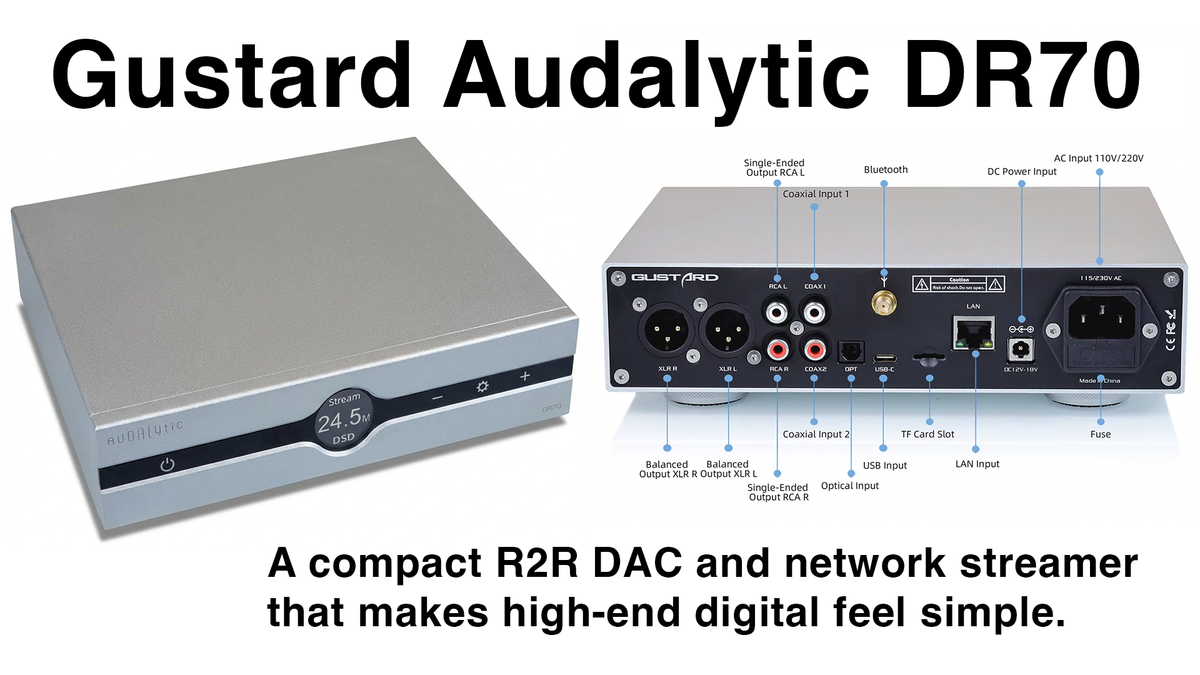
A compact R2R DAC and network streamer that makes high-end digital feel simple.
If you have ever looked at R2R ladder DACs and thought: this is the sound I want, but the price is a bit mad, the Gustard Audalytic DR70 is exactly the kind of product that changes your shortlist.
It is a small, desktop-friendly DAC that combines three important things:
- A true discrete R2R ladder DAC for PCM
- A native 1-bit conversion path for DSD
- A built-in wired network streamer (Roon Bridge, AirPlay, UPnP, NAA)
All at a price that sits around the "budget to mid-tier DAC” zone.
This post breaks down what the DR70 is, how it is built, how it sounds, what owners are saying, how it compares to popular alternatives, and who it makes the most sense for.
Quick take:
The DR70 is for you if you want an easy, musical, slightly warm-leaning source that can act as both streamer and DAC, and you would rather listen than chase measurement bragging rights.
It is not for you if you need Wi-Fi built-in, want MQA decoding, or you are looking for the most clinically neutral DAC possible.
What the DR70 actually is
The DR70 is an all-in-one digital front end. In plain English: it can sit in your system, pull music from your network (or take a USB/Bluetooth/SPDIF Coaxial or Optical signal), convert it to analog, and feed your amplifier or active speakers.
It is not a “streamer with a basic DAC tacked on.” The conversion stage is the headline here.
DAC design and architecture
Discrete R2R ladder for PCM
Most DACs in this price range are delta-sigma chip designs. The DR70 instead uses a discrete resistor ladder design for PCM, built around a high-bit complementary resistor network.
Why people care: R2R designs are often chosen for how they present tone, texture, and flow. Listeners frequently describe them as more natural, more “there,” more "musical" and less etched.
Separate native 1-bit path for DSD
DSD is handled differently. The DR70 includes a native 1-bit DSD conversion stage, rather than simply converting DSD into PCM first.
That matters if you play DSD libraries and want DSD to stay DSD.
Femtosecond CK-01 grade clock module
Extremely accurate clocks helps the DAC achieve precise and natural sound reproduction
Low noise switching power supply included
Plus option to connect an external linear power supply (12-18v) via DC barrel connection
FPGA control, and why it matters
A custom FPGA handles the heavy lifting: filters, oversampling options, DSD processing, and mode switching. The unit also uses a high precision clock design intended to reduce jitter and keep timing tight, which is often linked to better imaging and cleaner transients.
Formats and connectivity
The DR70 is unusually stacked for the money.
High-res support
- PCM up to 768 kHz / 32-bit (USB and network)
- DSD up to DSD512 (native and DoP)
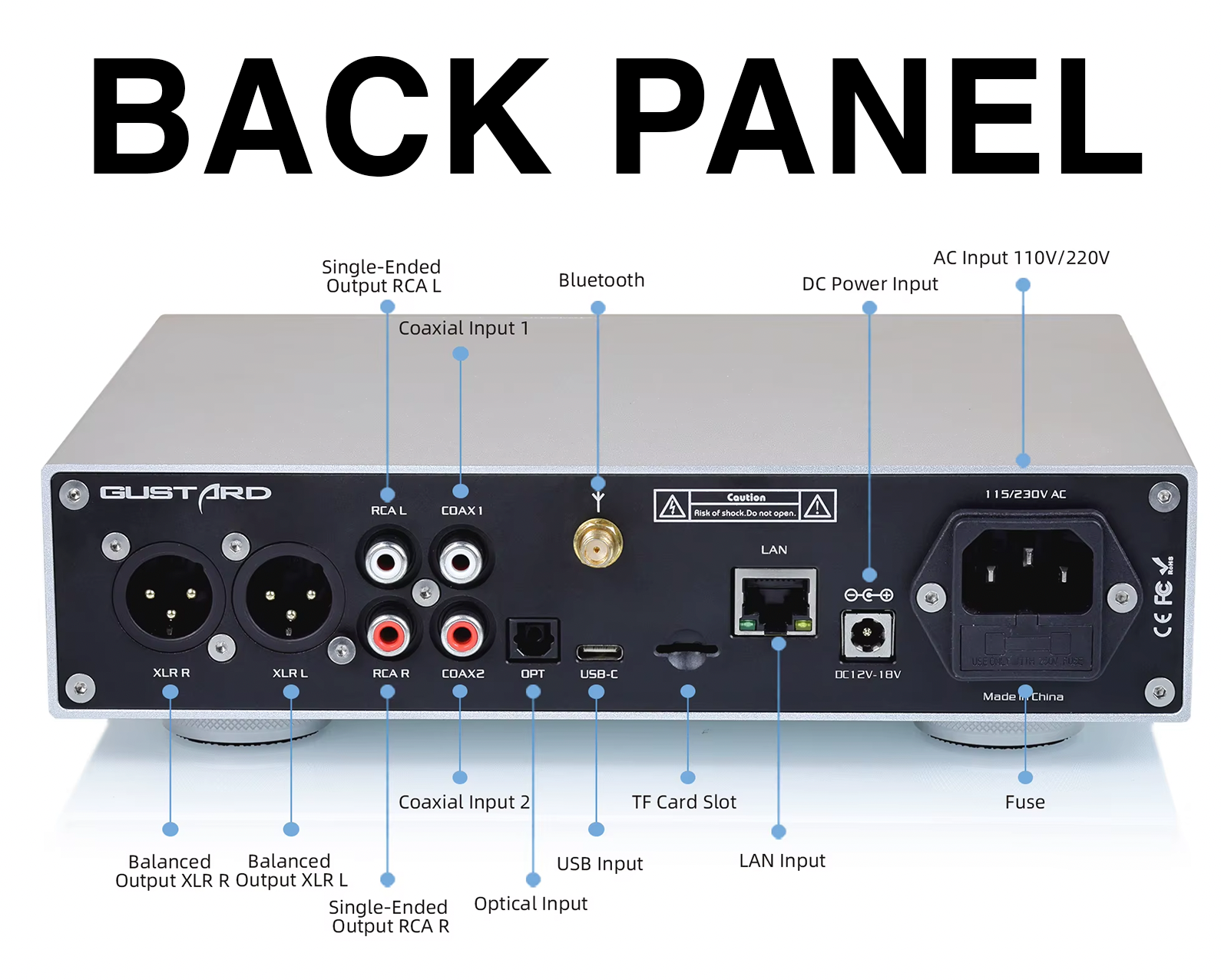
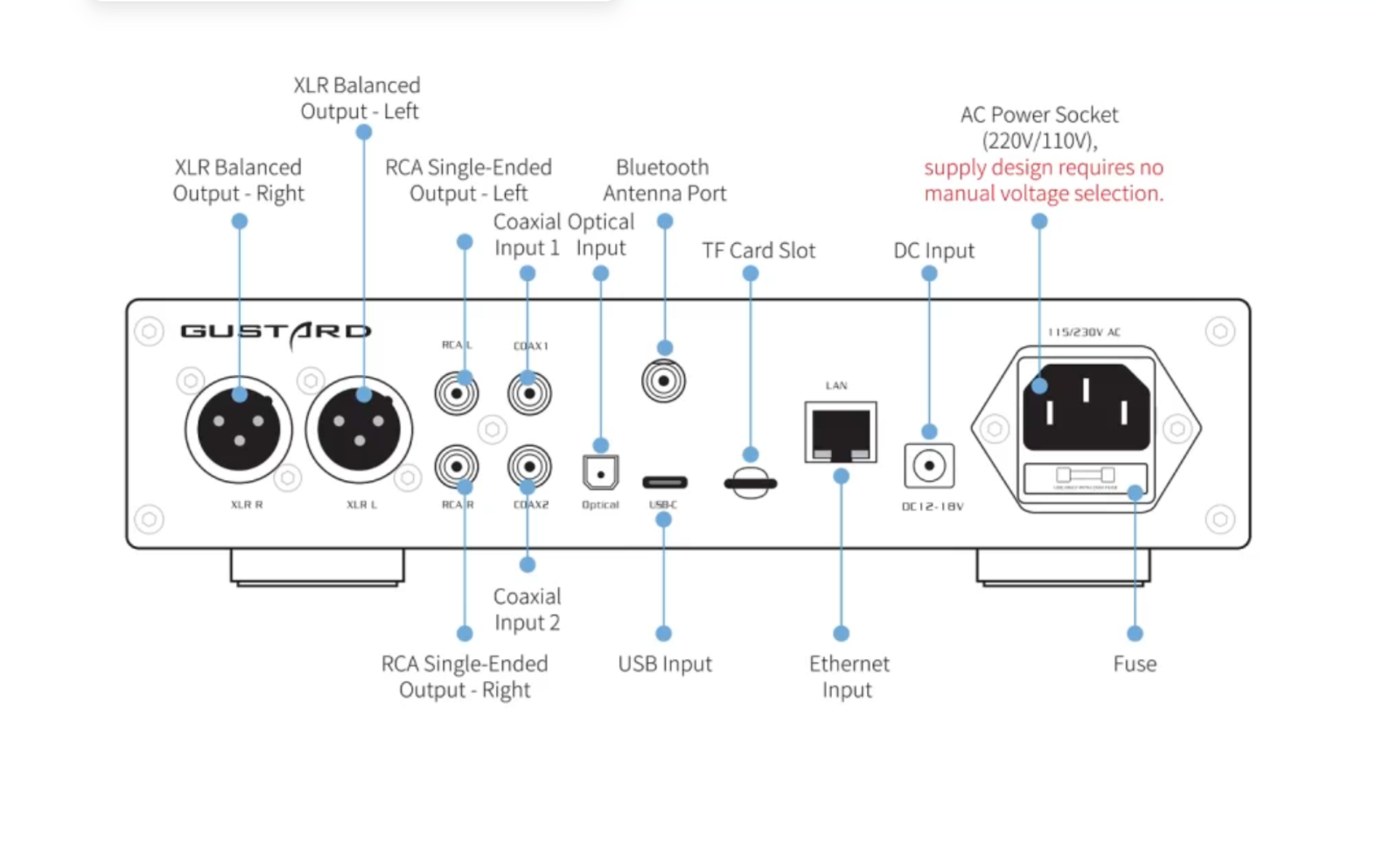
Inputs
- USB-C
- Optical (TOSLINK)
- Coaxial SPDIF x2
- Ethernet LAN (wired streaming)
- Bluetooth 5.0 (including LDAC support)
Outputs
- Balanced XLR (line level)
- Single-ended RCA (line level)
Both outputs can be active simultaneously, which is handy if you run XLR to an amp and RCA to a sub, recorder, or second system.
Streaming features
This is where the DR70 becomes a system simplifier.
Built-in network playback
Over Ethernet, the DR70 can act as:
- Roon Bridge endpoint
- AirPlay receiver
- UPnP renderer
- NAA endpoint (for HQPlayer-style setups)
There is a simple web interface you can access on your network for toggling modes and handling firmware updates.
No Wi-Fi
Important: it is wired Ethernet only. If your rack is nowhere near a router, you will need a powerline adapter or a Wi-Fi-to-Ethernet bridge.
Build, UI, and daily use
Physical design
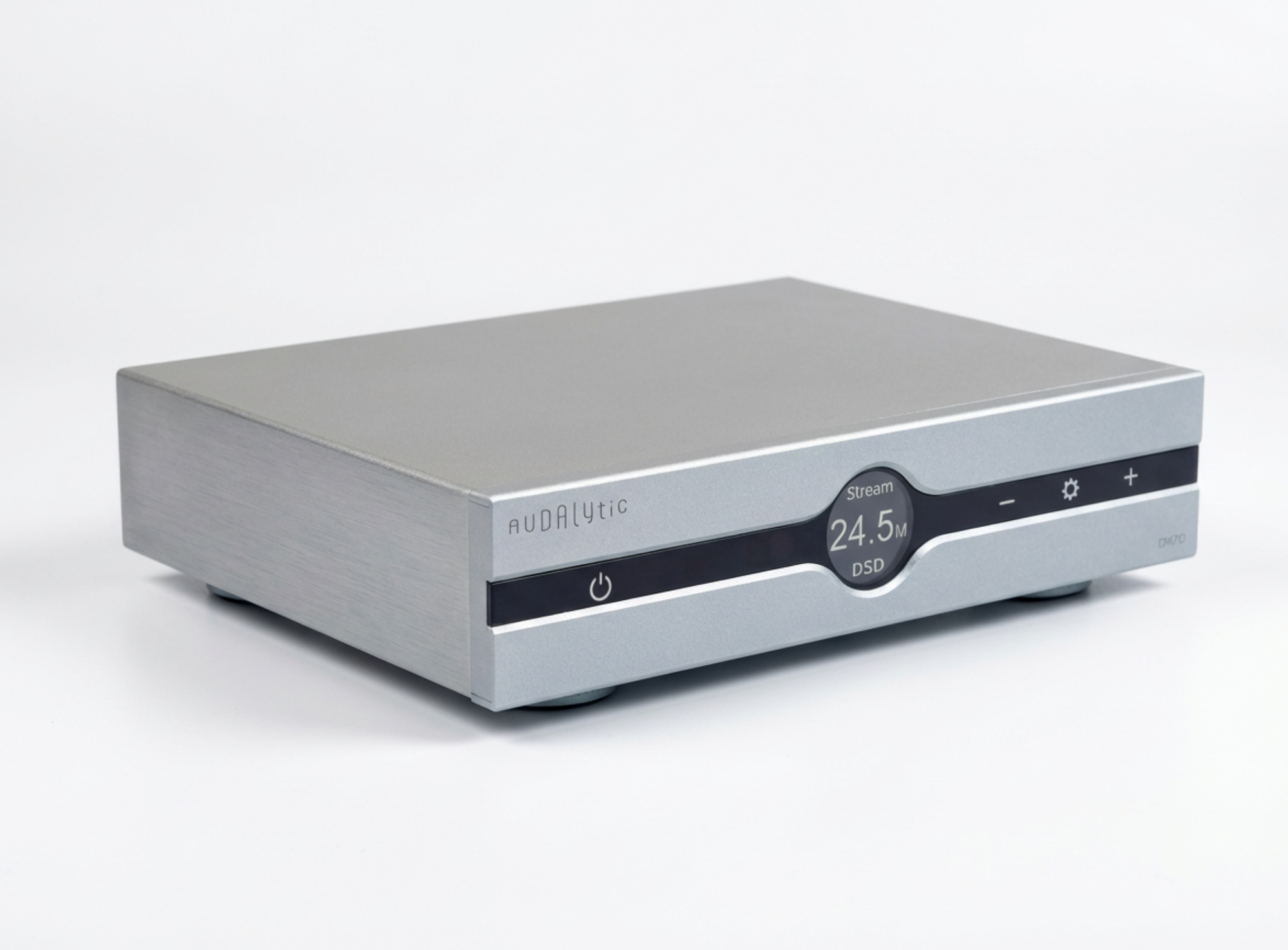
It is compact, all-aluminum, and feels like a “real” piece of hi-fi kit, not a plastic box. Front display shows input, sample rate, and mode.
Remote control
A remote is included and, in practice, you will want it.
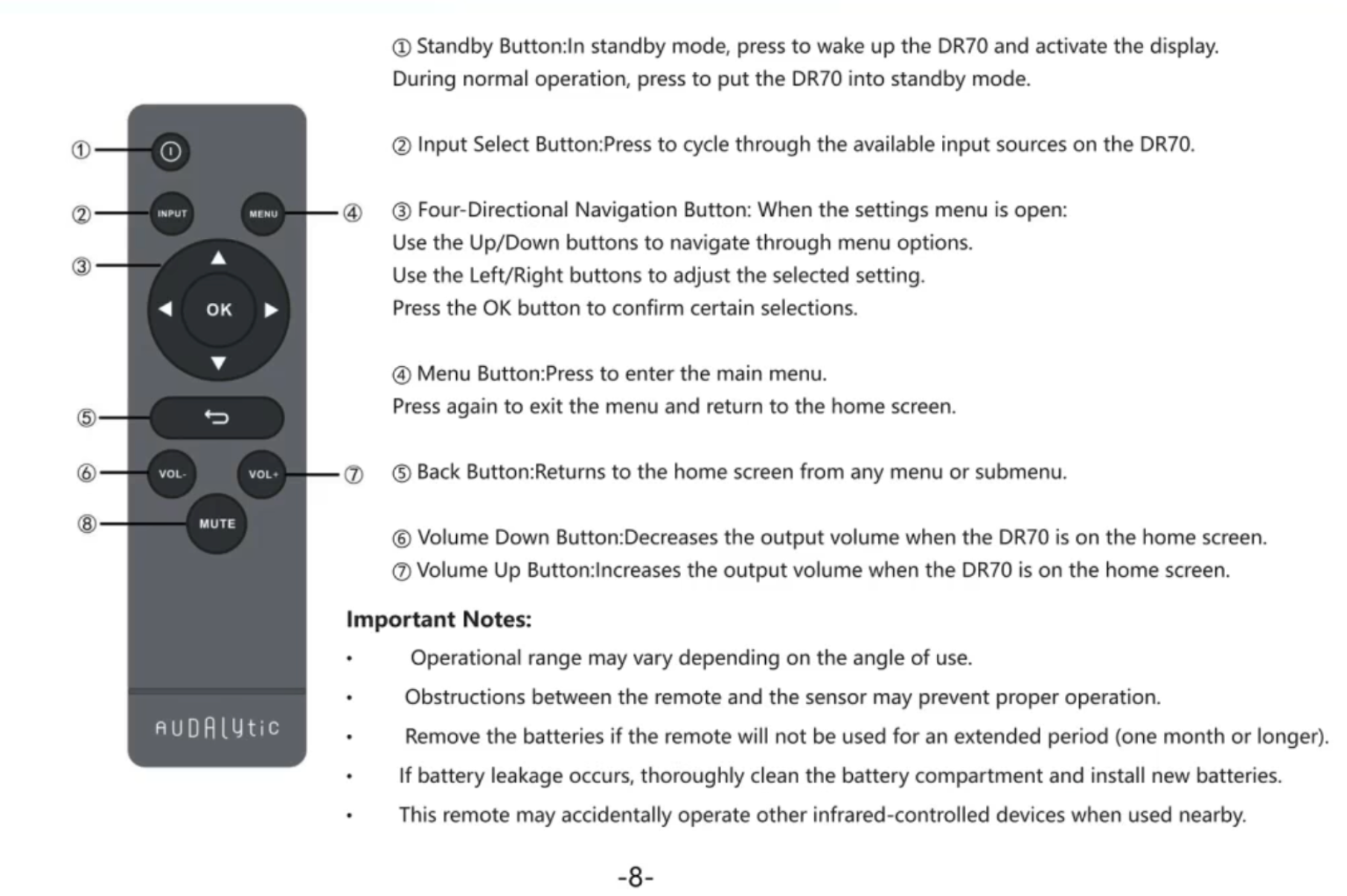
Volume control
The DR70 can run variable output, but owners commonly recommend treating it as a DAC and controlling volume at your integrated amp or preamp. The front touch volume controls are not everyone’s favourite. Remote volume is generally the better experience if you do use the DR70 as a preamp.
How it sounds
This is the part that makes the DR70 interesting, because it is not trying to win a lab trophy. It is trying to sound good in real systems.
Tonality
The overall voicing is best described as warm-neutral.
- Not syrupy.
- Not dark.
- Not bright or sharp.
- Slightly richer than many Sabre-style chip DACs in the same price range.
Vocals tend to have body. Acoustic instruments feel less “digital.” The presentation leans smooth without blunting detail.
Soundstage and imaging
A consistent theme in owner feedback is soundstage width and layering. The DR70 often gets described as:
- wider than expected
- more separated, less congested
- better center focus (vocals lock in)
Bass
Owners comparing it to common streamer DACs (like the Node’s internal DAC) mention improved bass weight and control, with less “one-note” feeling.
Filters and the “NOS effect”
The DR70 includes multiple filter modes, including NOS (No Oversampling). If you are sensitive to upper-mid glare or want a more relaxed presentation, NOS is often the favoured setting.
It is worth experimenting because the filter choice can shift the overall feel of the DAC more than you might expect.
One practical note
Some users report occasional pops when switching formats or sample rates in certain DSD-direct configurations. If you encounter this, the typical fix is to change the relevant DSD mode setting.
Real-world user impressions (what people actually say)
Across forum discussions and owner groups, the vibe is consistent:
- “This is a genuine upgrade from built-in DACs in streamers.”
- “R2R texture and vocal realism for far less money than usual.”
- “The streamer side just works, especially with Roon.”
- “Use the remote, the front volume controls are not great.”
The strongest praise is usually about musical enjoyment: the DR70 makes people stop comparing gear and start listening to albums.
Tharbamar Audio Equipment Review (Dec 2025)
Comparisons: where the DR70 fits
Here is the simplest way to think about it.
DR70 vs Topping D70 Pro (or similar measurement kings)
- Topping-style DACs are typically more neutral and more “microscope” in presentation.
- They often have more inputs (AES, I2S) and chase ultra-low distortion figures.
- They do not usually include network streaming.
If you want a reference, studio-clean sound and you already have a streamer, those can be great. If you want one box and a more organic feel, the DR70 is the obvious swing.
DR70 vs Denafrips Ares II
- Ares II is a classic R2R option with a bigger reputation and usually a higher price.
- It can deliver a deeper, more “analog” style, depending on system and taste.
- It does not include streaming, so you are adding another box.
The DR70 is the value move. The Ares II is the “spend more for that last bit of magic” move.
DR70 vs SMSL SU-10
- SU-10 is a high-end delta-sigma DAC with a very clean, neutral signature.
- Great features, strong measurements, still no network streaming.
- Costs much more.
If you want a neutral reference DAC and have streaming covered, SU-10 can be excellent. If you want a complete front end at a fraction of the price, DR70 is hard to ignore.
Who should buy the DR70
It is a great fit if you want
- A one-box streamer plus DAC to feed an amp or active speakers
- A more natural, musical presentation than many budget chip DACs
- Roon endpoint capability without buying a separate streamer
- A serious DAC for a desktop headphone stack or small living room system
It is not ideal if you need
- Wi-Fi built-in
- MQA decoding
- The most analytically neutral and best measuring DAC possible
- A fully featured “preamp replacement” with perfect tactile controls
Suggested system pairings
Desktop headphone setup
DR70 into a clean headphone amp (balanced if you can). Great for vocals, acoustic, jazz, ambient, and long sessions where fatigue matters.
Minimal living room rig
DR70 into an integrated amp or directly into active speakers. Use Ethernet and you have a tidy, modern system without extra boxes.
Roon multi-room
If you are already in Roon, the DR70 makes an easy endpoint that sounds more “hi-fi” than the built-in DACs in many streamers.
Final verdict
The Audalytic DR70 (by Gustard) is one of those rare products that makes sense on paper and still delivers in the listening chair.
You get R2R character, high-res support, balanced outputs, Bluetooth, and real network streaming, in a compact chassis at a price that usually buys you a good chip DAC and not much else.
If your goal is a clean, digestible digital front end that leans warm and musical and reduces box count, the DR70 is a seriously strong option.