Mola Mola Tambaqui DAC & Preamp Review

A flagship DAC that brings Respected Audio Engineer Bruno Putzeys' revolutionary discrete PWM conversion architecture to those seeking the absolute pinnacle of digital audio performance.
If you have ever wondered what lies beyond the world of off-the-shelf DAC chips, where conventional delta-sigma modulators and resistor to resistor ladders give way to entirely custom discrete implementations, the Mola Mola Tambaqui is exactly the kind of product that redefines your understanding of what digital audio can be.
It is a statement-level DAC that combines three extraordinary things:
- Entirely proprietary PWM-based conversion using a discrete 32-stage FIR (Finite Impulse Response) DAC — no off-the-shelf chips from ESS, AKM, ROHM, Cirrus Logic, or any other manufacturer.
- FPGA-based hardware upsampling to 32-bit/3.125MHz with custom algorithms designed specifically for musical accuracy.
- Built-in network streaming via Ethernet (Roon Ready), eliminating the need for external streamers in many systems.
- Balanced XLR outputs with optional headphone amplification and outputs, all housed in a beautifully machined luxurious aluminum chassis.
The headline story here is the conversion technology itself. Bruno Putzeys, the legendary designer behind Hypex Ncore amplifier modules and co-founder of Mola Mola, has created a DAC that operates on fundamentally different principles than every conventional design on the market.
This is not another ESS Sabre implementation with excellent measurements. This is not a boutique R2R ladder DAC trading transparency for musical warmth. This is an entirely new approach to digital-to-analog conversion, built from scratch to deliver both measurable perfection and musical engagement without compromise.
This review breaks down what the Tambaqui is, how it is built, how it sounds, what owners are saying, how it compares to other flagship DACs, and who it makes the most sense for.
Quick take
The Tambaqui is for you if you want state-of-the-art DAC performance with revolutionary conversion technology, need streaming capability built in, or you are building a no-compromise reference system where absolute performance matters most.
It is not for you if your budget is under £10,000, you need unbalanced RCA outputs (adapters required), or you believe expensive DACs cannot sound meaningfully better than budget options.
What the Tambaqui actually is
The Tambaqui is a flagship DAC with built-in network streaming capability. It takes digital signals from your network, computer, CD transport, or other digital sources, converts them to analog using Bruno Putzeys' revolutionary discrete PWM architecture, and feeds your preamplifier, integrated amplifier or active speakers directly.
But this is categorically not just another high-end DAC. The conversion technology represents a fundamental departure from conventional design.
For decades, DAC design has meant choosing between two established camps: delta-sigma chips from ESS, AKM, or similar manufacturers, or boutique R2R ladder implementations. Both approaches have been refined to extraordinary levels, but both carry fundamental compromises.
The Tambaqui rejects this binary choice entirely. Instead of using off-the-shelf conversion chips or traditional resistor ladders, Bruno Putzeys has created a completely proprietary PWM-based conversion architecture implemented through FPGA processing and a discrete 32-stage FIR DAC.
The result is a DAC that measures better than almost anything else on the market while simultaneously delivering organic, effortless musicality. This achievement is genuinely unprecedented.
DAC design and architecture
The discrete PWM converter: a revolutionary approach
The conversion technology in the Tambaqui deserves detailed explanation because it represents one of the most significant innovations in DAC design in decades.
According to Mola Mola's technical description, the Tambaqui uses a two-board stack architecture. On the first board, all incoming digital audio is upsampled to 32-bit/3.125MHz using FPGA-based processing with custom algorithms. The signal is then converted to noise-shaped PWM (Pulse Width Modulation).
On the second board are two mono DAC channels. Here, a discrete 32-stage FIR (Finite Impulse Response) DAC and a single-stage 4th order filtering I/V converter convert the PWM signal into analog with a breathtaking 130dB signal-to-noise ratio.
Why this matters: Traditional delta-sigma DACs work by oversampling and using noise shaping, but they require complex digital filtering that can introduce time-domain artifacts. Multibit R2R DACs avoid these artifacts but face challenges with component matching and low-level linearity.
Putzeys' PWM approach combines elements of both while avoiding their traditional weaknesses. The discrete 32-stage FIR implementation provides the linearity and accuracy of multibit designs while the PWM conversion delivers the inherent simplicity and low distortion of well-executed digital switching. The FPGA allows complete control over the upsampling and filtering algorithms without being constrained by off-the-shelf chip limitations.
As Stereophile's John Atkinson discovered in his measurements, the Tambaqui delivers almost 22 bits of actual resolution — "the highest I have encountered" — which approaches the theoretical limit for 24-bit files and exceeds even quad-speed DSD.
Critically, this is NOT a traditional delta-sigma implementation, and it is NOT a simple R2R ladder. It is a unique hybrid approach that delivers measured performance exceeding conventional delta-sigma designs while maintaining the organic musicality typically associated with multibit architectures.
What makes it truly discrete
Unlike DACs that use integrated DAC chips (even expensive ones from ESS or AKM), the Tambaqui's conversion is performed by discrete components implementing Putzeys' custom PWM algorithm. The 32-stage FIR DAC means there are literally 32 individual stages of analog processing, each precisely designed and implemented.
This level of custom design is extraordinarily rare. Most manufacturers, even at high price points, use off-the-shelf DAC chips because developing proprietary conversion architecture requires massive engineering resources and deep expertise.
FPGA-based upsampling
The FPGA (Field Programmable Gate Array) allows Mola Mola to implement custom upsampling and filtering algorithms that would be impossible with fixed-function chips. Each input sample rate has an optimized upsampling filter chain designed specifically for that rate.
The upsampling to 3.125MHz is asynchronous, meaning incoming data is completely reclocked and the signal's frequency stability becomes wholly determined by the Tambaqui's internal clock. This provides excellent jitter rejection across all inputs.
Analog output stage
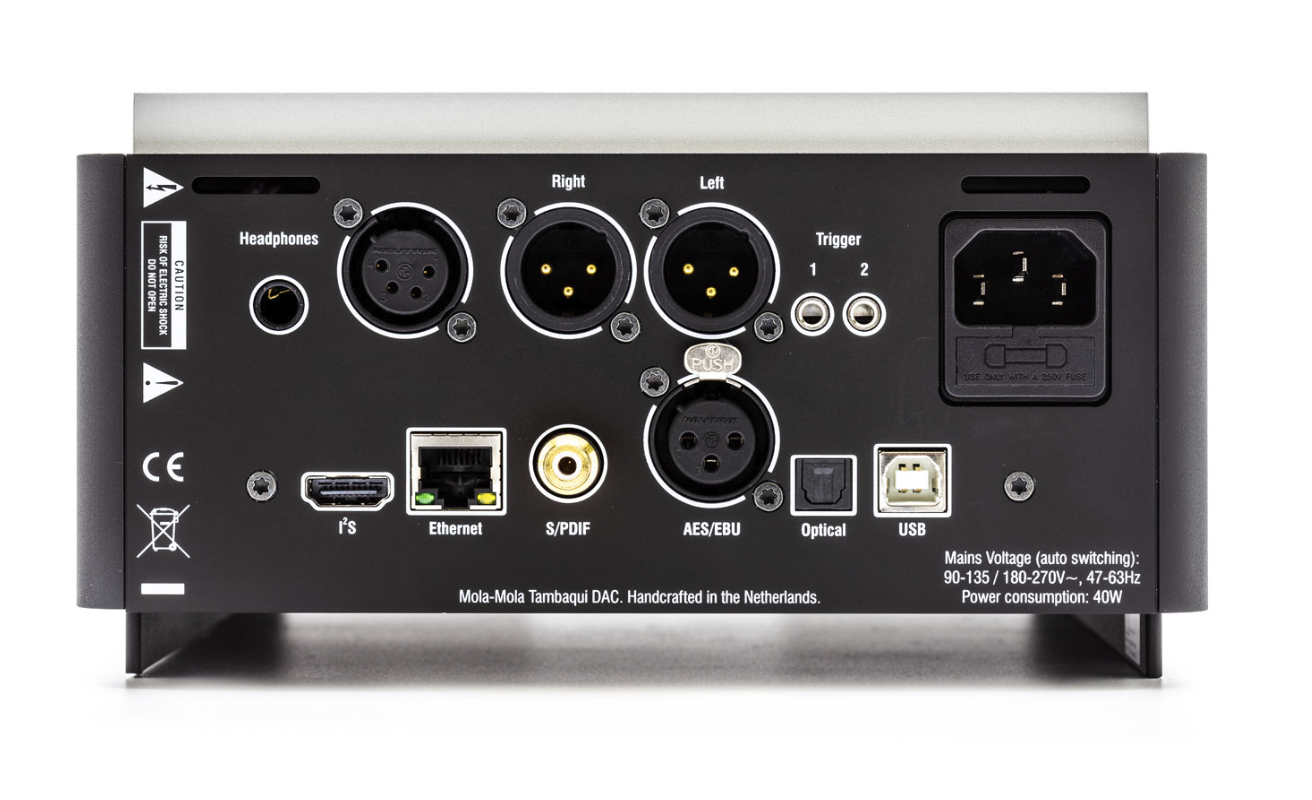
The output stage uses balanced line drivers with very low output impedance (44 ohms at the main outputs). The outputs are transformer-coupled for complete galvanic isolation from ground loops and noise.
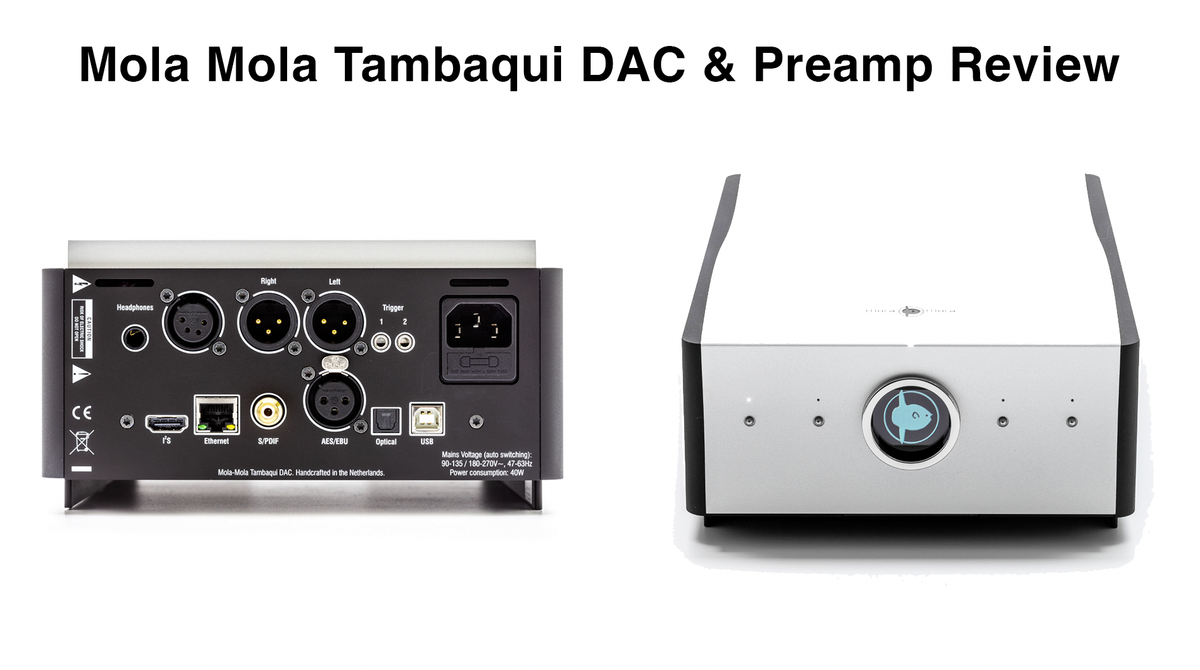
Critical specification note: The Tambaqui has ONLY balanced XLR outputs on its line-level connections. There are NO unbalanced RCA outputs. Users requiring single-ended connections need XLR-to-RCA adapters (often included with review samples).
The headphone outputs (both 6.3mm single-ended and XLR 4-pin balanced) are located on the rear panel and use a straightforward IC amplifier implementation with the RFI filter placed inside the feedback loop for consistent performance.
Power supply
The power supply is substantial and thoroughly designed for clean, stable power delivery. The Tambaqui runs warm in use, with the top panel stabilizing around 40°C (104°F), indicating the power supply and conversion circuitry are working hard.
Formats and connectivity
The Tambaqui supports comprehensive digital input options with Bruno Putzeys' philosophy of doing what matters exceptionally well.
Format support
- PCM up to 24-bit/192kHz via S/PDIF inputs (optical, coaxial, AES/EBU)
- PCM up to 24-bit/384kHz via USB
- PCM up to 24-bit/384kHz via Ethernet (network input)
- DSD64, DSD128, DSD256 via USB and Network input (Native and DoP)
- No MQA support (Mola Mola's definitive answer when asked: "Nope!")
The network input is Roon Ready certified and provides a complete streaming endpoint, making external streamers optional for many users.
Inputs
- USB Type-B (asynchronous, UAC2 compliant, up to 768kHz sample rate capability)
- S/PDIF optical (TOSLINK)
- S/PDIF coaxial (RCA)
- AES/EBU (XLR)
- Ethernet (Roon Ready network streaming)
- I2S over HDMI
- Bluetooth (SBC, AAC, aptX, LDAC)
The USB implementation is completely galvanically isolated and operates in optimal isochronous asynchronous mode. Multiple owners report the Tambaqui sounds essentially identical whether fed by a basic laptop or an expensive audiophile streamer, demonstrating the effectiveness of the isolation and jitter rejection.
Outputs
- Balanced XLR only (main line outputs)
- Headphone outputs: 6.3mm (single-ended) and XLR 4-pin (balanced), both on rear panel
- Output voltage: selectable 6V, 2V, or 0.6V maximum
- Two programmable trigger outputs (3.5mm)
John Atkinson's measurements confirmed output levels of 6.11V, 1.93V, or 611mV at the main balanced output depending on the selected setting, with output impedance of 44 ohms — exactly as specified.
Audioscience Review Independent Measurements - https://www.audiosciencereview.com/forum/index.php?threads/mola-mola-tambaqui-dac-and-streamer-review.10770/
Build, UI, and daily use
Physical design
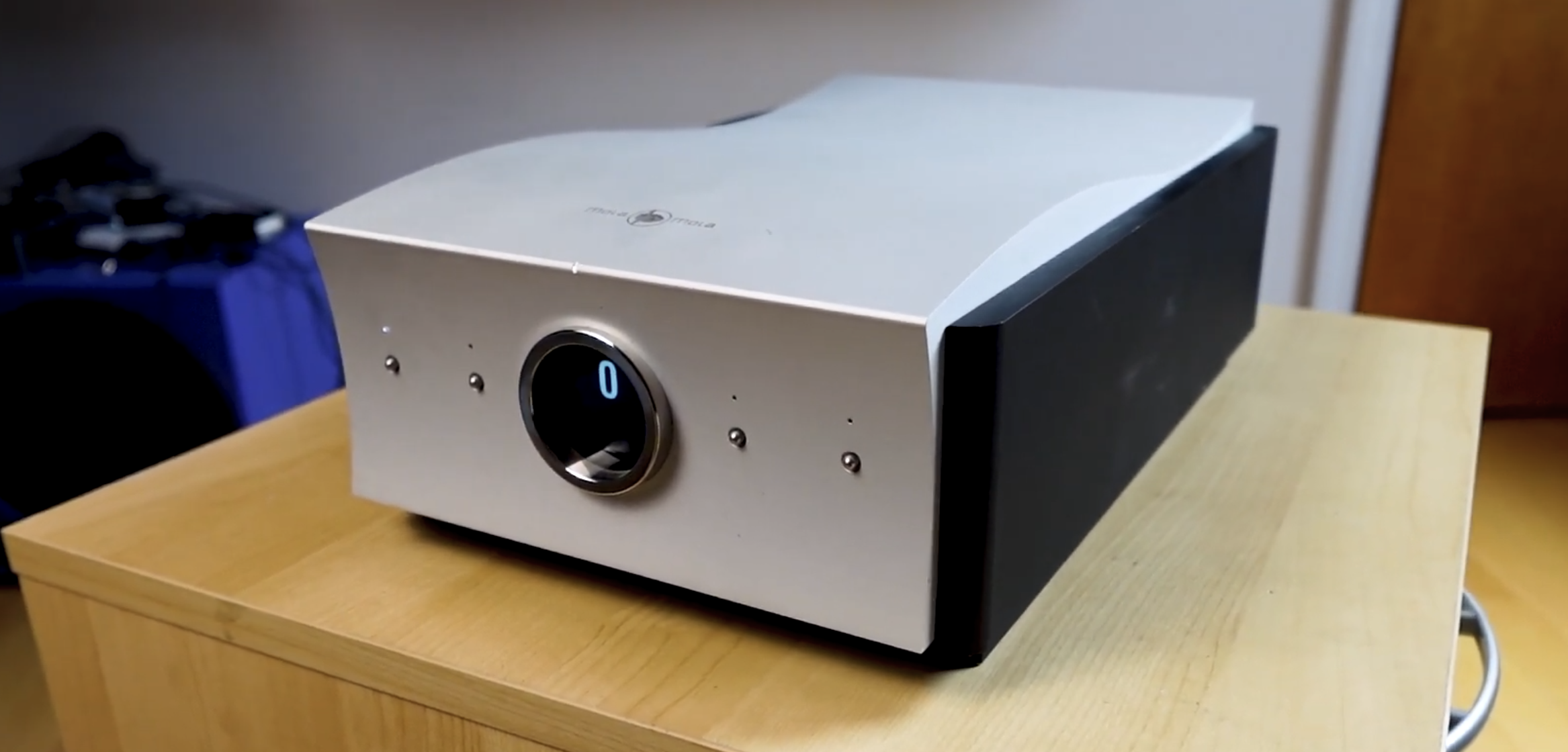
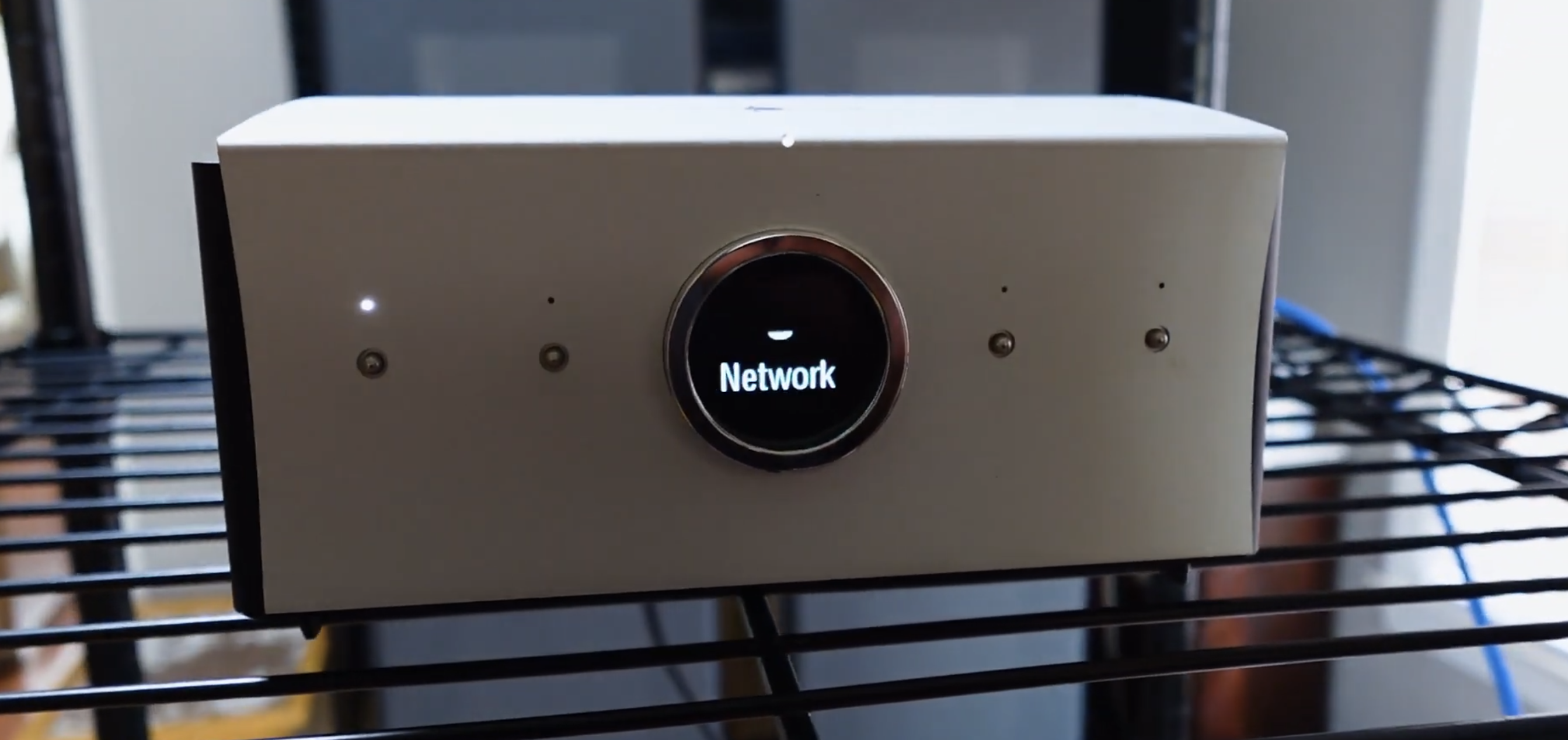
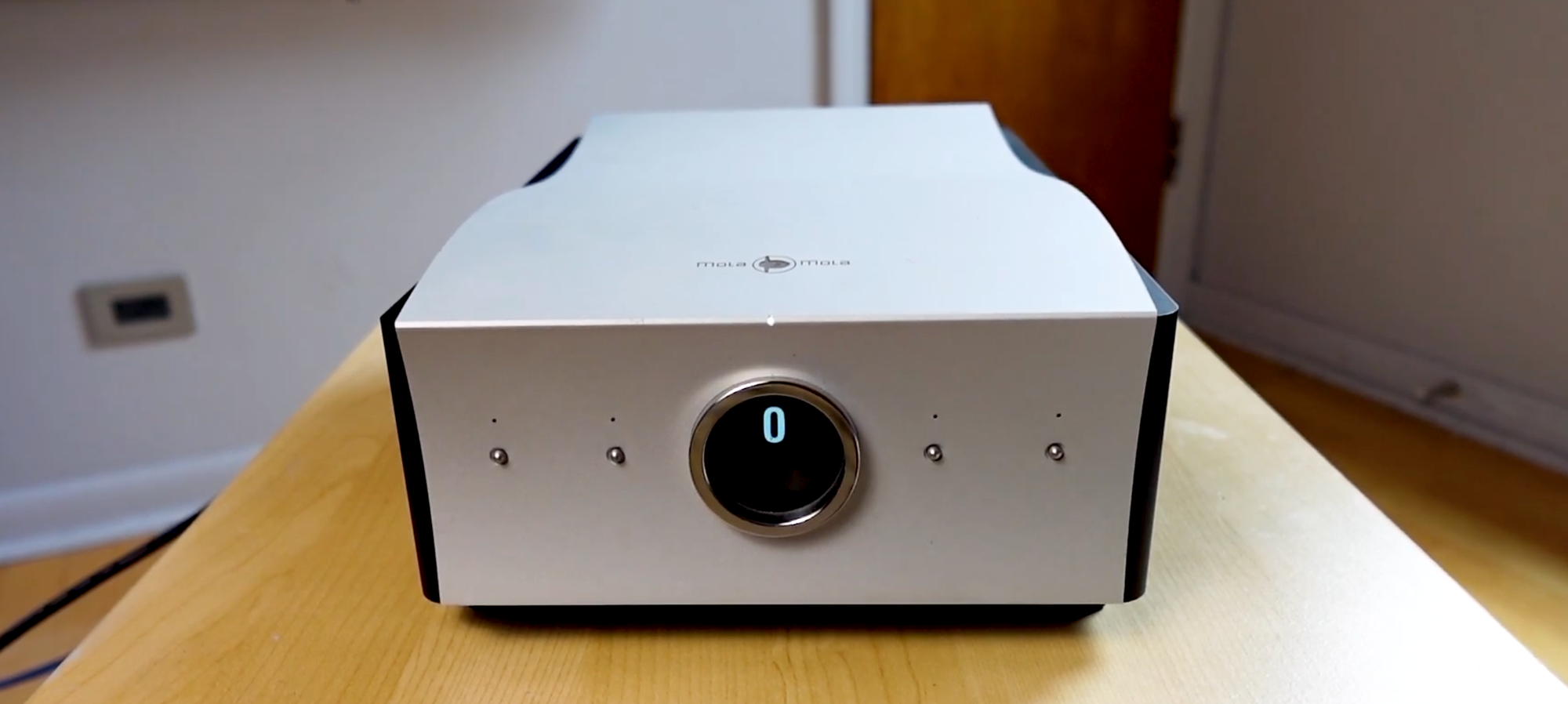
The Tambaqui is compact (7.9" W × 4.3" H × 12.6" D) and remarkably light at just 11.5 pounds. The aluminum chassis features Mola Mola's distinctive "rolling wave" profile with a curved, concave faceplate and a porthole-style circular display.
As Herb Reichert described in Stereophile, "The Tambaqui's Greek-temple proportions, rolling-wave profile, concave face, and Nemo-esque porthole display made every other component in the bunker look boring and conventional."
The unit ships in a foam-lined Pelican case, making transport and storage secure and straightforward. Build quality is exceptional — this is precision Dutch engineering designed to last decades.
Available in natural aluminum or black anodized finish.
Setup and compatibility
The Tambaqui is plug-and-play with Mac, Windows, and Linux via USB. The asynchronous USB implementation works flawlessly without driver installation on modern operating systems.
There is no traditional power switch. You turn the Tambaqui on by pressing any front-panel button, and put it in standby by pressing and holding the same button.
The four front-panel buttons can be configured for input selection, or when running in Direct Mode (fixed output), buttons 3 and 4 become volume up/down controls while button 2 becomes the input selector. These buttons also function as mute buttons for the active input.
Setup is genuinely straightforward: connect digital sources, connect balanced outputs to your preamplifier or integrated amplifier, select input, and enjoy music. There are no digital filter choices to agonize over, no upsampling modes to configure, no endless tweaking required. Putzeys' design philosophy is that the DAC should simply work perfectly without user intervention.
Control options
The Tambaqui can be controlled three ways:
- Front panel buttons — functional but minimal
- Remote control — an Apple remote is included, or you can purchase Mola Mola's own aluminum "rolling wave" remote at extra cost
- Mola Mola iOS/Android app — the most elegant solution, straightforward to use, and connects via Bluetooth for rock-solid connection
The app allows you to name inputs, select input sources, choose routing (Line, Headphones, Direct), configure phase settings, adjust balance, set display brightness, select output level (6V, 2V, or 0.6V), and check for firmware updates over the Internet.
Roon integration
The Tambaqui is Roon Ready certified. When connected via Ethernet to your network, it appears as a Roon endpoint and can be controlled entirely through Roon's interface. For Roon users, this makes the Tambaqui an elegant single-box solution.
How it sounds
This is where the Tambaqui transcends technical achievement and becomes genuinely remarkable.
Tonality
The overall character is best described as completely neutral and utterly transparent, but in a way that feels organic and alive rather than analytical or sterile.
This is the discrete PWM conversion doing exactly what it was designed to do: present music without imposing any character whatsoever. The Tambaqui does not warm things up, does not add sparkle to the treble, does not enhance bass weight. It simply presents exactly what is in the recording with no editorialization.
- Completely neutral tonal balance from deep bass through extended treble
- Zero sense of electronic or digital artifacts
- Natural timbre on acoustic instruments
- Bright, evenly illuminated clarity without harshness or fatigue
As Herb Reichert described in Stereophile: "During my first days of listening, the Mola Mola's most conspicuous sonic trait was a bright, evenly illuminated clarity... Mola Mola's Tambaqui did not whisper—it declares loudly: 'See! The truth is more beautiful than you thought it would be!'"
The Tambaqui presents what reviewers describe as "intense, raw clarity" — music that sounds unprocessed and direct, more like live performance than typical digital reproduction.
Soundstage and imaging
The soundstaging and imaging capabilities are extraordinary and represent one of the Tambaqui's most immediately impressive qualities.
Reviewers and owners consistently describe:
- Massive, voluminous soundstage that extends well beyond the speakers
- Exceptional depth layering with clear front-to-back positioning
- Dense, solid imaging with performers occupying specific three-dimensional locations
- Natural sense of acoustic space and venue ambiance
As one reviewer noted, "The Mola Mola stretched the soundstage around my room" and created "the most voluminous wall of rock I've ever heard."
Herb Reichert's comparison with the dCS Bartók is instructive: "The Mola Mola Tambaqui focused my attention on the dense bodies of the performers and their instruments. The spaces surrounding them were radically clear... The Tambaqui and the Bartók sound more alike than different. Both DACs admit users to an elite level of digital audio playback."
Resolution and detail
The resolution and low-level detail retrieval are essentially limitless, matching what you would expect from a DAC delivering almost 22 bits of actual measured resolution.
Listeners report hearing:
- Texture in violin bows and guitar strings
- Breath sounds from woodwind players
- The distinctive character of different recording venues
- Subtle production details previously completely inaudible
- In one striking example: "the flup-flup-flupping of giant insect wings" buried in synth layers
Critically, this detail is presented naturally and organically. There is no sense of detail being spotlit or artificially emphasized. The information is simply there, revealed effortlessly.
Bass performance
The bass performance is consistently singled out as exceptional, even compared to other flagship DACs.
One European reviewer stated unequivocally: "The superiority of the Mola Mola Tambaqui's bass (and I mean its superiority over any other DAC or digital player I ever had in my room) was unquestionable."
Characteristics include:
- Deep, accurate, dynamically clean bass extension
- Massive kick drums and bass lines with proper weight
- Perfect pitch definition and timing
- Taut and full-fledged simultaneously, down to the lowest octaves
On AC/DC's "For Those About to Rock," one reviewer described Phil Rudd's bass drum as "a very large, resonant wooden barrel with air inside and natural studio decay around it."
Treble and high frequencies
The treble is extended, refined, and completely free from grain or digital harshness. Cymbals shimmer naturally, violins have appropriate bite without edginess, and high-frequency percussion has air and delicacy.
Even listeners typically sensitive to treble brightness report the Tambaqui can be played for hours without fatigue. The treble is smooth and natural without being softened or rolled off.
Dynamics and physicality
The Tambaqui's dynamic capabilities and sense of physical presence are exceptional and set it apart from many competitors.
Reviewers consistently note:
- "Extra-forceful pluck and bite" on violin with "rosin-on-the-bowhair descriptiveness"
- "Meaty corporeality" and lifelike dynamics
- "Analog-like physicality" despite being an all-digital design
- Both micro-dynamics and macro-dynamics presented with complete authority
As Herb Reichert observed: "The Tambaqui was providing some things that I've always told people digital can't provide: lifelike dynamics and meaty corporeality... I've been waiting impatiently since 1983 for digital to sound this raw and unprocessed."
The question of preamps
Multiple reviewers tested the Tambaqui both with and without preamplifiers. The consensus is nuanced:
Direct mode (no preamp): More transparent, more micro-detailed, less dynamically restrained. Works brilliantly into power amplifiers.
With analog preamp: Some reviewers found it added slight richness and "color saturation" that prevented the Tambaqui from becoming "too lean and clean." One HiFi Advice reviewer noted: "The Tambaqui is an excellent DAC, but it sounds best when used with an analog preamp."
The Tambaqui works exceptionally well in direct mode, especially at the 6V output setting, but system matching matters. In some systems, an analog preamp provides the final touch of tonal richness.
Real-world user impressions
Across professional reviews, owner reports, and direct comparisons, the themes are remarkably consistent.
Professional reviews
Stereophile's John Atkinson measured the Tambaqui and found performance that exceeded his test equipment's capabilities in several areas. His conclusion was unequivocal: "The Tambaqui offers almost 22 bits of resolution, the highest I have encountered... The Mola Mola Tambaqui offers state-of-the-digital-art measured performance. I am not surprised HR liked its sound."
Stereophile's Herb Reichert called it a landmark achievement, stating: "With the Tambaqui, Putzeys seems to be punching away at the fundamentals of digital conversion... The longer I listened, the more convinced I was that the Mola Mola was clearer and more physical-sounding than any DAC in my previous experience."
AudioKey Reviews gave the Tambaqui its highest honors and stated: "How could it be possible, in a digital product, to experience analog musicality, not analog-like, and a transparency associated with the best-of-the-best digital processors? I had long believed this a give-and-take arrangement... And then confidently strides into my review life the Mola Mola Tambaqui."
Twittering Machines concluded: "After spending real time with the Mola Mola Tambaqui DAC, it is easy to conclude that it is among the most engaging and full-bodied DACs I've had the pleasure to live with."
Twittering Machines Written Review
 Michael Lavorgna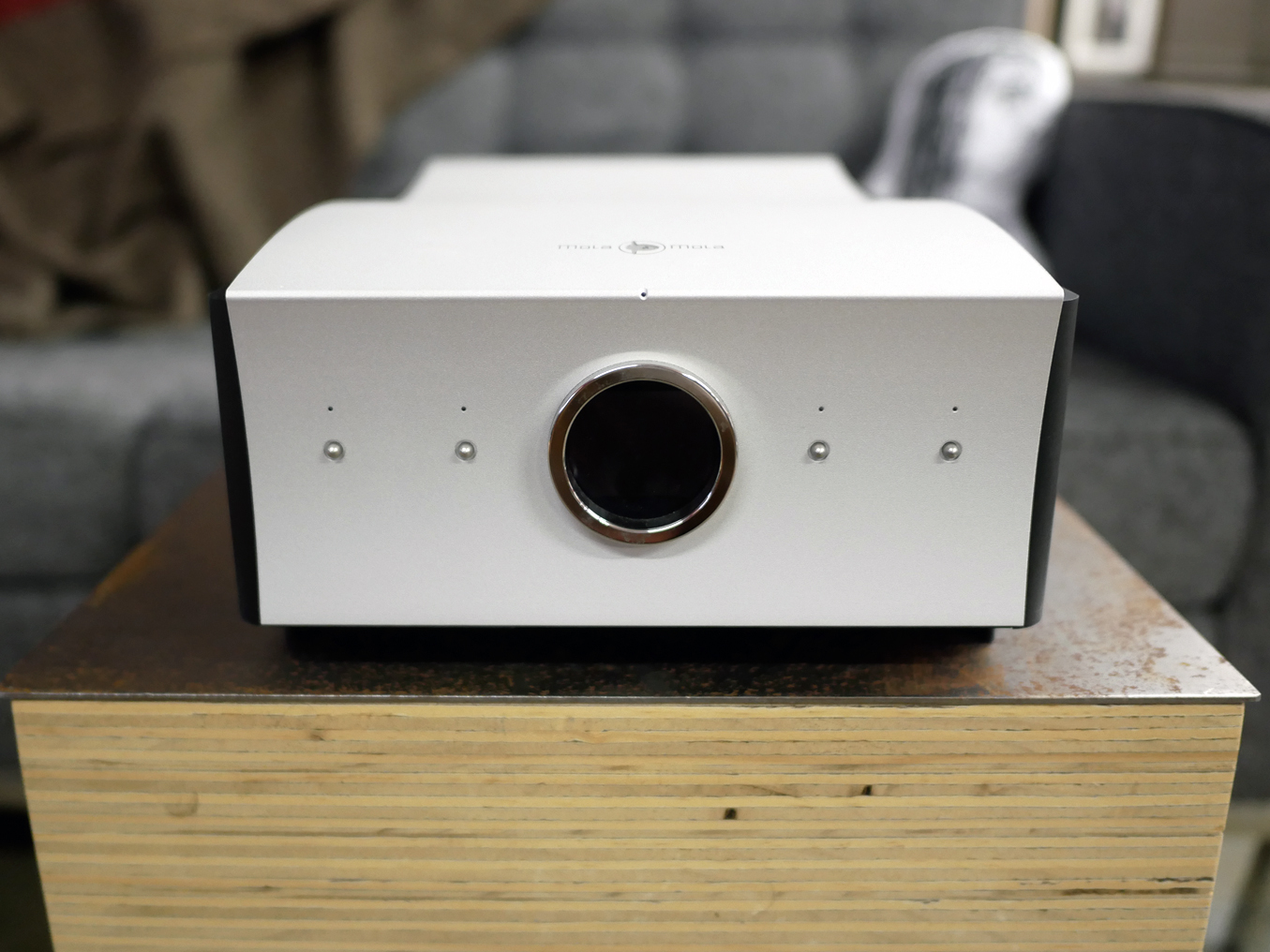
The Ear Written Review
 The Ear Editor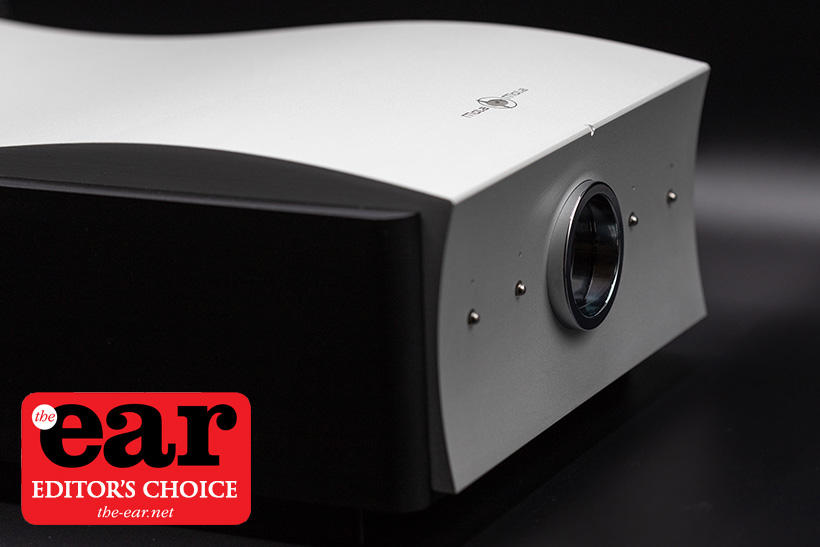
John Darko Write Up and Video Review
https://darko.audio/2020/08/mola-mola-tambaqui-video-review/
The Hans Beekhuyzen Channel Video Review -
The Absolute Sound Video Review
Owner feedback
On forums like Head-Fi and Audiophile Style, owners consistently report that the Tambaqui represents their endpoint in DAC exploration.
Common themes include:
- "Finally stopped searching for upgrades"
- "Makes expensive streamers largely irrelevant due to excellent jitter rejection"
- "The most natural, effortless digital sound I've experienced"
- "Combines measurement perfection with musicality"
One owner stated simply: "If I would buy blind any of these DACs based on what I have seen so far, particularly from seasoned reviewers, it would most definitely be the Tambaqui."
Comparison reports
Multiple reviewers have directly compared the Tambaqui to other flagship DACs:
vs. Chord Dave: Both are exceptional. The Dave has the distinctive Chord FPGA sound with exceptional resolution and rhythmic drive. The Tambaqui is more strictly neutral with denser imaging and more physical presentation.
vs. dCS Bartók: Herb Reichert found them "more alike than different" in overall excellence but noted: "The Tambaqui and the Bartók turn streaming music into a sophisticated, high-level pastime, but there is one thing the Tambaqui does that the Bartók does not do: intense, raw clarity."
vs. HoloAudio May: Reichert stated definitively: "Is the Tambaqui better than my forever-favorite HoloAudio May Level 3 DAC? The Mola Mola makes music bigger, clearer, more solid and rousing than the May. The Tambaqui encourages me to listen longer and more closely than I do with the May. That's what 'better' means to me, so yes, it's better."
vs. MSB and other ultra-high-end DACs: The Tambaqui delivers comparable or superior performance at significantly lower cost without requiring module matching or upgrade anxiety.
Comparisons: where the Tambaqui fits
Tambaqui vs Chord Dave
The Chord Dave (£10,000+) represents Chord's reference FPGA-based design with proprietary WTA filtering. It measures exceptionally and delivers the distinctive Chord sound: highly resolving, rhythmically engaging, slightly forward.
The Tambaqui is more neutral in character with denser, more physical imaging. Both are exceptional; the choice depends on whether you prefer Chord's enthusiastic presentation or the Tambaqui's strict neutrality with intense clarity.
Tambaqui vs dCS Bartók
The dCS Bartók (£13,000+) is a superb Ring DAC implementation with built-in headphone amplification and multiple upsampling options. It tends toward a slightly warmer, more romantic presentation.
The Tambaqui is more neutral and arguably more transparent. The Bartók offers more tonal flexibility through upsampling modes and includes excellent headphone amplification; the Tambaqui is preferred for pure line-level transparency and "raw clarity."
Tambaqui vs MSB Reference
MSB's Reference DAC (£30,000+) represents American discrete ladder design at the absolute pinnacle. It is modular and upgradeable with exceptional performance.
The Tambaqui delivers comparable performance at one-third the cost with no module matching required and no upgrade anxiety. For most systems, the Tambaqui is the more sensible choice unless you specifically require MSB's sonic character or modularity.
Tambaqui vs Denafrips or HoloAudio R2R DACs
R2R ladder DACs like the Denafrips Terminator Plus or HoloAudio May offer the classic multibit smoothness and organic character. They cannot match the Tambaqui's measured performance or ultimate transparency, though some listeners prefer their slightly warmer tonal balance.
The Tambaqui delivers R2R-like organic musicality while measuring better than any delta-sigma chip implementation.
Who should buy the Tambaqui
It is a great fit if you want:
- State-of-the-art digital conversion with revolutionary technology
- A DAC that combines perfect measurements with musical engagement
- Built-in streaming capability (Roon Ready) without external streamers
- Exceptional headphone amplification as a bonus
- A product engineered to remain relevant for decades
It is not ideal if you need unbalanced RCA outputs (adapters required), want tone controls or DSP features, or if your budget is under £10,000.
The Tambaqui is available through select high-end audio dealers worldwide, with UK pricing around £10,000.
Final Verdict
The Mola Mola Tambaqui delivers on its ambitious promise of combining measurable perfection with complete musical engagement. The discrete PWM conversion architecture with FPGA-based upsampling and 32-stage FIR DAC represents genuine innovation rather than incremental refinement.
Bruno Putzeys has created a DAC that proves the long-standing debate between measurements and musicality was based on a false premise. With sufficient engineering brilliance, a DAC can measure at the state-of-the-digital-art while sounding completely natural, organic, and alive.
You get revolutionary discrete PWM conversion, almost 22 bits of actual measured resolution, comprehensive connectivity including Roon Ready streaming, and build quality that will outlast your listening room — all for £10,000. If your goal is the absolute finest digital audio performance available, combining perfect measurements with genuine musicality, the Tambaqui deserves serious consideration.
This is not just another expensive DAC. This is a landmark achievement that redefines what digital audio can be.
Hifi Corner Link (To Buy) - https://www.hificorner.co.uk/product/mola-mola-tambaqui-dac/
The Audio Barn Link (To Buy) - https://theaudiobarn.co.uk/product/mola-mola-tambaqui-dac/
Analogue Seduction Link (To Buy) - https://www.analogueseduction.net/dacs/MOLAMOLAdac.html