SMSL D1 Review: A Tiny ROHM DAC That Punches Far Above Its Price

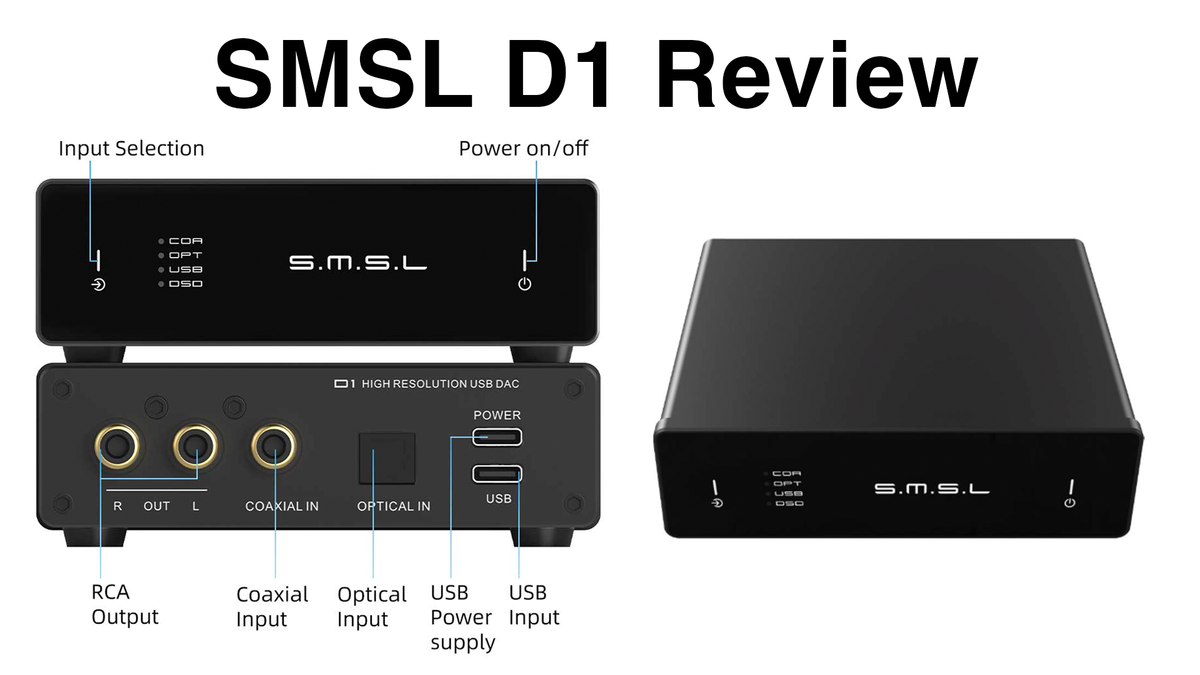
A miniature desktop DAC with a unique Japanese chip that delivers unexpectedly musical sound in a genuinely portable and very affordable package.
If you have ever looked at budget DACs and thought: I want something that sounds natural and musical without spending a fortune, and I could actually carry it with me, the SMSL D1 is exactly the kind of product that changes your expectations.
It is a truly portable, desktop-friendly DAC that combines five important things:
- A ROHM BD34352EKV DAC chip from Japan, rarely seen at this price
- Measured THD+N of just 0.00038% with a 126dB signal-to-noise ratio
- A full aluminum chassis at just 101×90×30mm that fits in your pocket
- USB, optical, and coaxial inputs in a package you can take anywhere
- Option to Externally power, via USB-C
All at a price that sits around £60 - £80 ($79.99 USD).
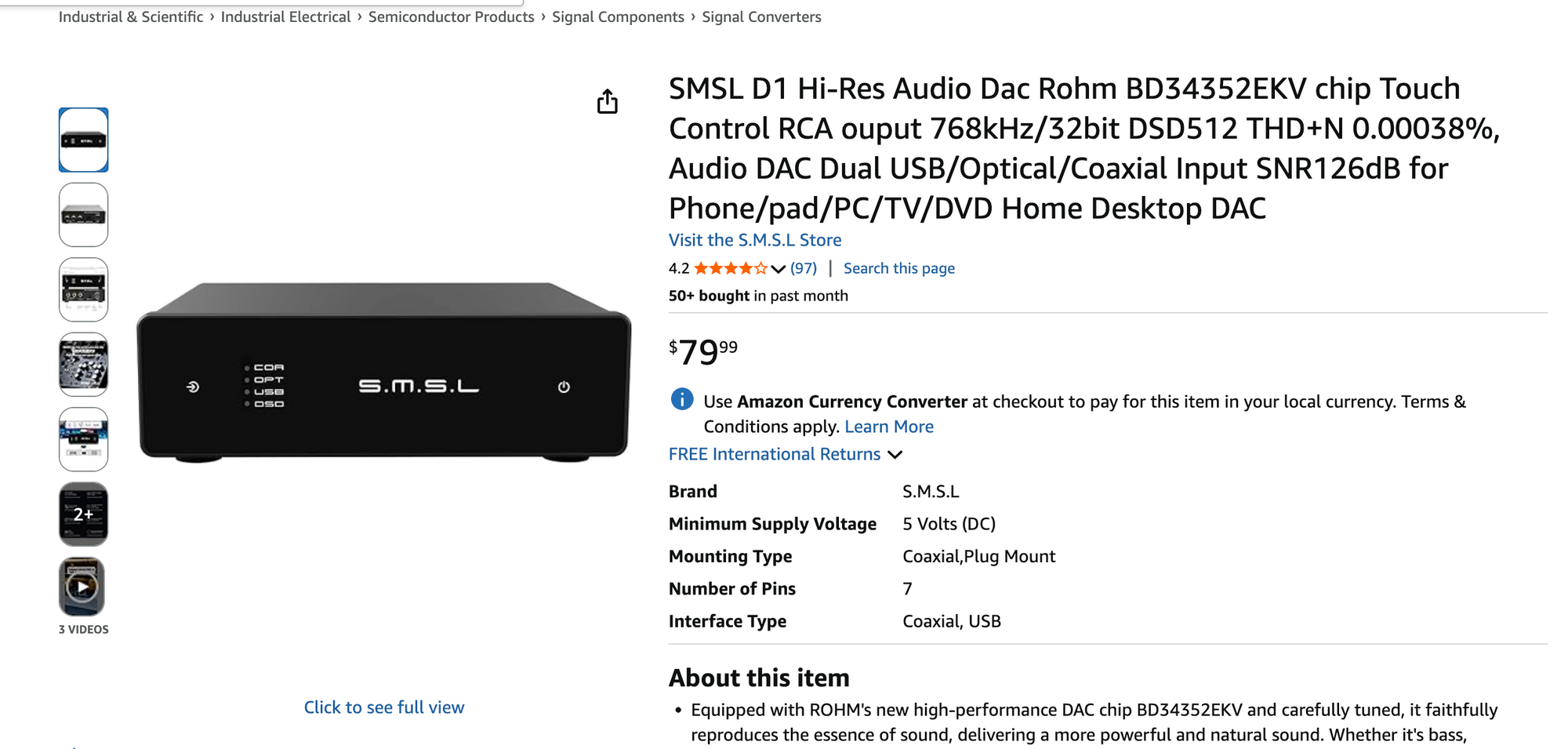
This post breaks down what the D1 is, how it is built, how it measures, how it sounds, what owners are saying, how it compares to popular alternatives, and who it makes the most sense for.
Quick Take:
The D1 is for you if you want a pure, portable DAC that delivers warm-neutral sound with exceptional measurements, multiple digital inputs, and a solid metal build you can throw in a bag and take anywhere.
It is not for you if you need a remote control, reliable on-body controls, a display, filter options, or you want a DAC with a headphone amp built in.
Reviews and resources
Video reviews
- Paul Wasabii Reviews - SMSL D1 DAC Review
- AV-Obsessed - SMSL D1 DAC Review
- Hifi Zone - SMSL D1 Review
What the D1 actually is...
The D1 is a standalone digital-to-analog converter that happens to be genuinely portable. In plain English: it sits between your digital source (computer, streamer, CD player, TV) and your amplifier or active speakers, converting digital audio to analog with exceptional accuracy.
It is not a “DAC/amp combo” or an all-in-one solution. It is a pure DAC with a laser focus on conversion quality, and that single-minded approach is the point
The tiny metal chassis means you can use it at home on your desk, pack it for travel, take it to a friend’s house, or move it between rooms without thinking twice.
DAC design and architecture
The ROHM BD34352EKV: an uncommon choice
Most budget DACs in this price range use AKM or ESS Sabre chips. The D1 instead uses a ROHM BD34352EKV, a Japanese DAC chip that is relatively uncommon in consumer audio products.
This is not a cost-cutting measure. ROHM chips typically cost more than equivalent AKM or ESS alternatives. SMSL specifically chose this chip for what they describe as its “natural, detailed and refined audio presentation.”
Why people care: ROHM chips have a reputation for offering a more natural, organic, and slightly warmer sound compared to the clinical neutrality of many ESS implementations or the smoother character of AKM chips. The BD34352EKV in particular is known for excellent linearity and low distortion while maintaining a musical character that avoids the “digital harshness” some cheaper DAC chips exhibit.
This chip choice is what makes the D1 different from the dozens of other budget DACs that all use the same handful of popular chips.
Measurements that matter
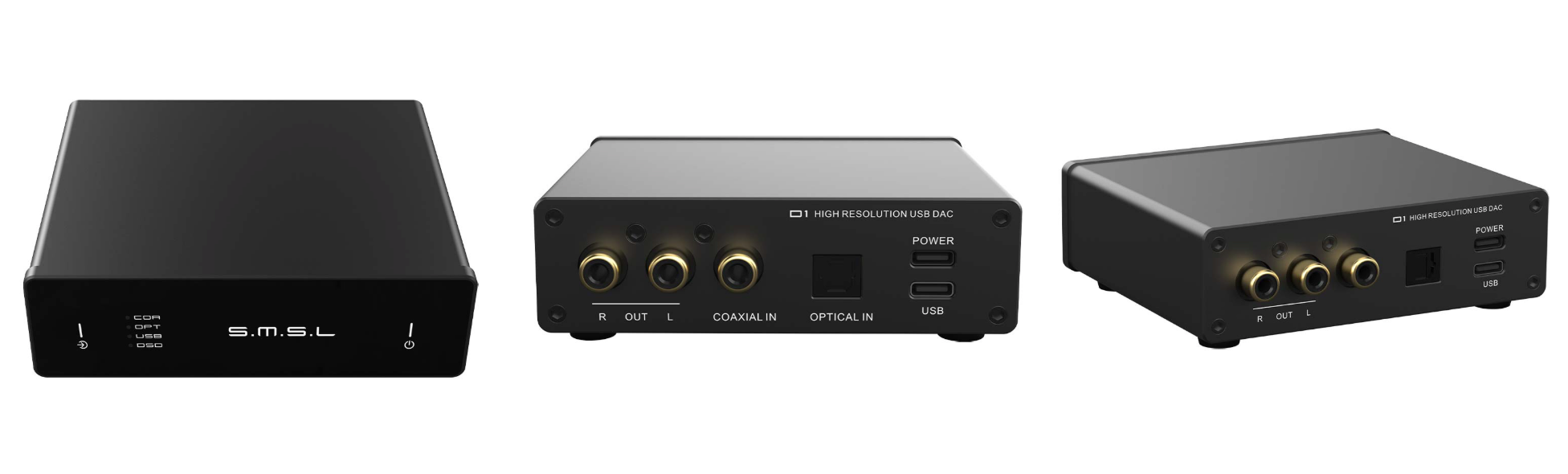
The D1 delivers measured performance that competes with DACs costing several times more:
THD+N: 0.00038% (Total Harmonic Distortion plus Noise)
This exceptionally low figure means the DAC adds virtually nothing to the signal. For context, anything below 0.001% is considered transparent to human hearing. The D1 measures more than twice as clean as that threshold.
Signal-to-Noise Ratio: 126dB
This translates to an exceptionally black background. Music emerges from complete silence with no audible noise floor, no hiss, and no hum. Even with sensitive equipment, the D1 is dead silent.
Dynamic Range: 124dB
The difference between the quietest and loudest sounds the D1 can reproduce is massive, preserving the full scale of your music from whispers to crescendos.
These are not just good measurements for a budget DAC. These are excellent measurements, period. The D1 measures better than many DACs costing £300-500.
Circuit design and component quality
SMSL has implemented several design choices that contribute to the D1’s measured and audible performance:
- Low-temperature coefficient resistors throughout the signal path maintain stable performance regardless of temperature fluctuations. This contributes to consistent sound quality during long listening sessions as the DAC warms up.
- High-performance power filtering system allows the D1 to achieve optimal performance even when powered from a basic USB port, though dedicated clean power improves things further.
- Optimised circuit layout with short signal paths and careful component placement minimises noise and interference.
Formats and connectivity: more inputs than expected
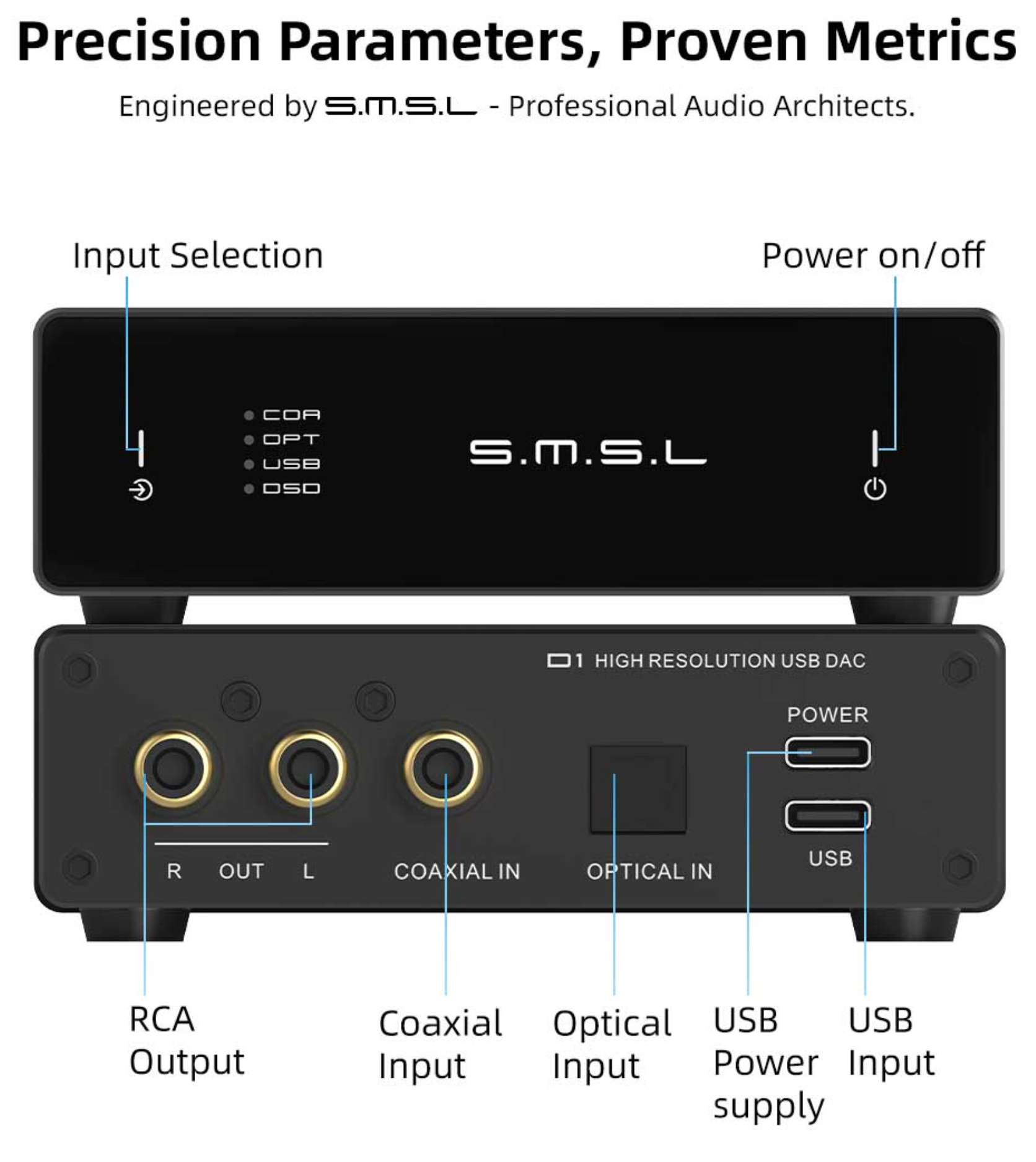
The D1 is surprisingly versatile for its tiny size, offering multiple digital inputs that make it genuinely useful in various scenarios.
High-resolution support
- PCM up to 768 kHz / 32-bit (USB only, requires driver for Windows)
- DSD up to DSD512
This level of format support is remarkable at this price. You can throw virtually any high-resolution file at the D1 and it will handle it without downsampling.
Three digital inputs
USB Type-C (data)
The primary input for computer audio. Supports the full 768kHz/32-bit and DSD512 capability. Works plug-and-play on macOS and Linux, requires the SMSL driver for full resolution on Windows.
Optical TOSLINK
Up to 24-bit/192kHz. Perfect for connecting TVs, game consoles, CD players, or any device with optical output. The bandwidth limitation is inherent to the optical standard, not the D1.
Coaxial SPDIF
Up to 24-bit/192kHz. Another widely compatible input that works with CD transports, DVD players, set-top boxes, and older audio equipment.
Having all three inputs on a device this small and affordable is unusual. Most budget DACs force you to choose one or two inputs. The D1 gives you flexibility to connect virtually any digital source.
Power: separate USB-C input
The D1 has two USB-C ports: one for data, one for power. This separation is clever.
It allows you to use a clean 5V USB power supply (like a phone charger) to power the DAC while keeping the data path isolated from potential noise sources. You can power the D1 from a wall adapter while taking USB audio from your computer, eliminating computer power supply noise from the equation.
Owners report improved sound quality when using a separate, clean 5V power supply compared to powering from the same USB port that carries data.
Outputs
RCA stereo (line level, 2Vrms)
That is it. No balanced XLR, no headphone jack, no volume control. The D1 is a pure line-level DAC, and that focus on doing one thing well is part of what allows it to sound this good at this price.
Build quality: real metal, genuinely portable
Full Aluminum Construction
The D1 features a complete aluminum chassis with CNC machining and anodized finish. This is not a plastic box with a metal faceplate. The entire housing is aluminum.
Why this matters: aluminum provides excellent electromagnetic shielding, helps dissipate heat from the internal components, feels premium in hand, and is genuinely durable. You can throw this in a bag without worrying about damaging it.
The build quality is exceptional for the price. No flex, no creaking, no rattles. It feels like a precision instrument.
Truly portable dimensions
At just 101mm × 90mm × 30mm and weighing barely anything, the D1 is genuinely pocket-portable. It is smaller than a smartphone, about the size of a thick wallet.
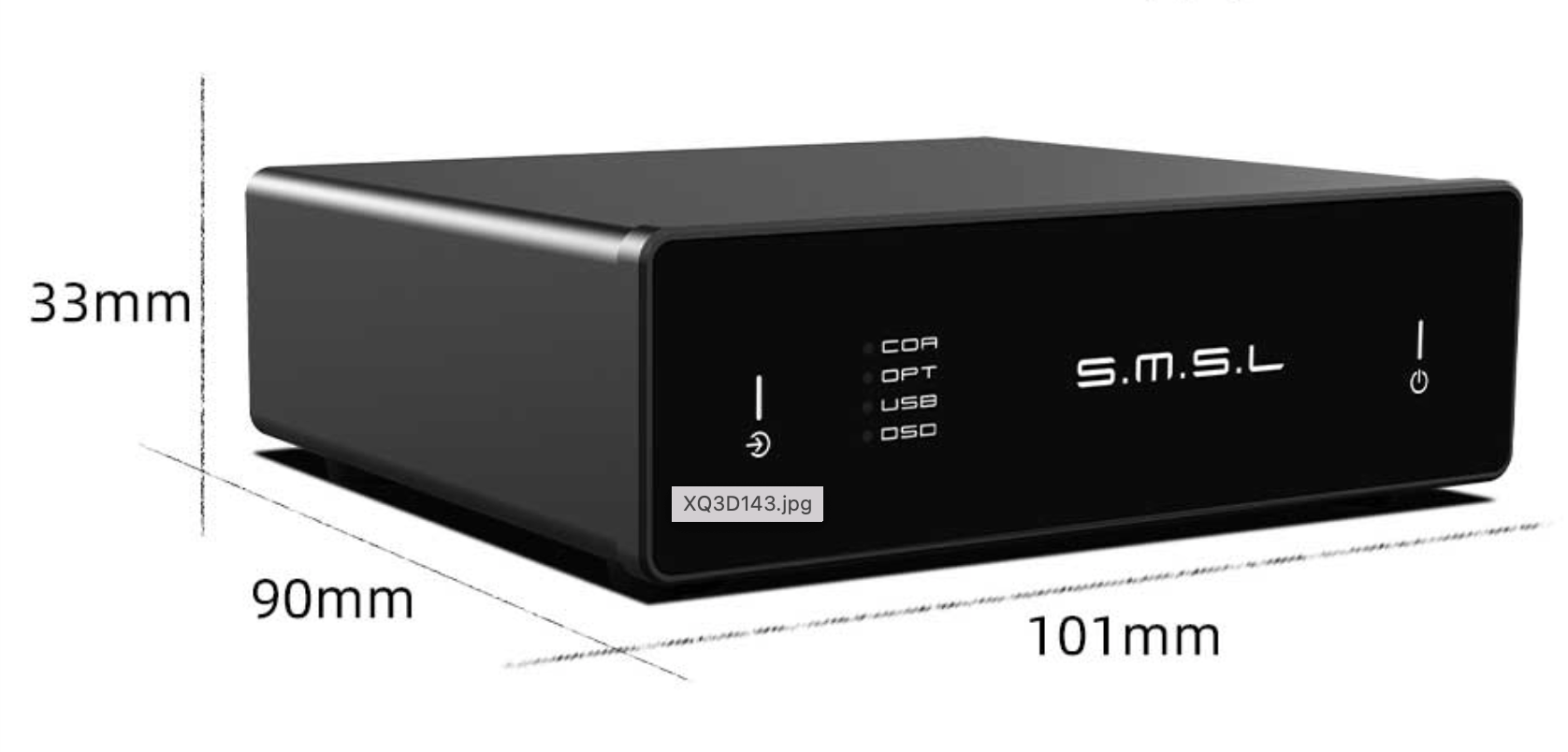
This is not “desktop-compact” like many small DACs. This is actually portable in a way that makes sense. You can:
- Keep it permanently on a crowded desk without it taking up valuable space
- Slip it into a laptop bag for travel
- Take it to a friend’s house to demonstrate how good their system could sound
- Move it between rooms without thinking about it
- Pack it for holidays to upgrade hotel TV audio
The portability is real and practical, not just a marketing claim.
Design and aesthetics
The front and rear panels feature glossy acrylic with the SMSL logo prominently displayed. This looks sleek in photos and gives a view of the internal PCB, though the glossy surface picks up fingerprints easily.
The overall aesthetic is modern and minimalist. It looks like a serious piece of audio equipment despite its tiny size.
Available in black or grey anodized finishes.
Interface and controls: The significant flaw
Touch-sensitive buttons: frustratingly inconsistent
The front panel features two touch-sensitive buttons: one for power, one for input selection. A vertical LED strip indicates which input is active.
This is the D1’s most significant and most commonly criticized flaw.
The reality of daily use:
Multiple owners report frustration with inconsistent touch sensor response. The buttons often require:
- Multiple touches to register
- Very firm pressure
- Hitting exactly the right spot on the glossy panel
- Repeated attempts to switch inputs
There is no tactile feedback, so you cannot tell if you have successfully pressed the button until the LED changes or the input switches, which can take a moment. This creates an annoying loop of “did I press it? Should I press again? Oh, now it switched twice.”
Some users report the touch sensors work acceptably. Many others describe them as genuinely frustrating, especially when trying to quickly switch between sources.
Why this matters more than usual:
Because the D1 has no remote control and no other way to interact with it, the touch buttons are your only option for input selection and power. If they worked perfectly, this would be fine. Because they do not, it becomes a daily annoyance for some users.
The practical workaround:
Most users set their primary input once and rarely change it, which minimizes interaction with the problematic controls. If you plan to use the D1 primarily with one source (like a computer via USB), the control issue becomes less relevant.
If you frequently switch between USB, optical, and coaxial inputs, be prepared for frustration.
No remote, no display
There is no remote control included or available. There is no screen showing sample rate, input, or any other information. The LED strip changes color to indicate the active input (blue for USB, green for optical, red for coaxial), but that is all the feedback you get.
For some, this extreme simplicity is a feature. For others, it is a limitation. SMSL clearly prioritised cost and portability over user interface refinement.
How it sounds...
This is where the D1 surprises people, because it sounds far better than its price and size suggest.
Tonality
The overall voicing is best described as warm-neutral with an organic character.
- Not coloured or overly warm
- Not clinical or analytical
- Not harsh or bright
- Natural and easy to listen to for hours
Multiple reviewers describe the D1 as having a “rich” sound with excellent spatial reconstruction. Vocals have body and presence. Acoustic instruments sound realistic. The presentation leans smooth and musical without sacrificing detail.
The ROHM character
The ROHM chip gives the D1 a slightly different character than ESS or AKM DACs. Where ESS chips can sometimes sound overly clean or slightly harsh in the upper mids, and AKM chips tend toward smoothness, the ROHM sits somewhere between: detailed and clear, but with a natural warmth that makes long listening sessions fatigue-free.
One reviewer compared the D1 directly to the internal Cirrus DAC in a £1300 Marantz SA8005 SACD player and found the D1 delivered richer sound with better spatial reconstruction and detail.
This is not just about measurements. The ROHM chip has a sonic signature that many listeners prefer to the more common alternatives.
Soundstage and imaging
The D1 presents a surprisingly wide soundstage with good depth and layering. Instrument separation is clean, centre imaging is solid, and there is good “air” between instruments.
This is not just good for the price. This is good, full stop.
Bass, mids, and treble
Bass is tight and controlled with good extension and no bloat. Mids are natural and present, with vocals that feel real rather than processed. Treble extends well without harshness or sibilance, though there is a hint of the ROHM character: clear and detailed with a touch of smoothness that avoids fatigue.
Background noise
Dead silent. No hiss with sensitive speakers or headphone amps. The measured 126dB SNR is not just a specification, it translates into real-world performance.
You can crank the volume on your amplifier with no music playing and hear nothing. This black background allows subtle details in recordings to emerge clearly.
Real-world user impressions (what people actually say)
Across forum discussions and owner reviews, the pattern is consistent:
- “This sounds way better than it has any right to at this price.”
- “The ROHM chip gives it a different, more organic character than my ESS DACs.”
- “Beats the built-in DAC in my much more expensive CD player.”
- “The touch buttons are genuinely frustrating, but I rarely need to change inputs anyway.”
- “As simple as it gets, just plug it in and forget about it.”
- “A sonic stunner that plays into the hands of those who think a good DAC does not have to be expensive.”
- “The measurements are incredible for under £100.”
- “I keep one at home and bought a second one for travel.”
The strongest praise is about musical engagement. People report listening to albums they have heard hundreds of times and hearing new details, not because the D1 is hyper-analytical, but because it presents music in a natural, coherent way.
Comparisons: Where the D1 fits
Here is the simplest way to think about it.
D1 vs SMSL SU-1
- The SU-1 uses a more common AKM AK4493S chip and costs slightly more
- The D1 has separate power and audio data USB-c inputs (works with power & audio data separated OR bus powered), whereas the SU-1 has just one usb-c input for both (bus powered only)
- Sound quality is comparable, with the D1 having a bit more natural, slightly more weighty character and the SU-1 leaning slightly brighter
Rick Ruiz Audio Sound Comparison
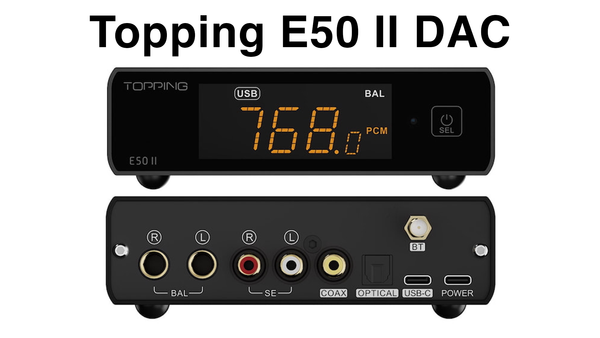
D1 vs Topping E30 II
- The E30 II uses an AKM AK4493SEQ chip and includes more features (remote, display, filters)
- It measures exceptionally well and sounds very neutral and clean
- The D1 has a warmer, more organic presentation and is far more portable
- The E30 II is larger and not travel-friendly
- The E30 II is the measurement king with better controls. The D1 is the musical, portable choice.
D1 vs SMSL PS100
- Older, more common DAC chip ES9023
- PS 100 has harder, sharper edge with more sibilance, whereas D1 has a more natural, organic character
- The D1 measures significantly better - over 10x lower distortion, 28dB better SNR, and superior dynamic range
- PS 100 is considerably cheaper at £20-35 and offers Bluetooth 5.0 (SDS codec only)
- PS 100 only offers PCM sample rates up to 48khz via USB input vs 768khz with the D1
- PS100 has a HDMI (ARC) input, the D1 does not
- The D1 has separate power and audio data USB-c inputs (works with power & audio data separated OR bus powered), whereas the PS100 has just one usb-c input for both (bus powered only)
Who should buy the D1
It is a great fit if you want:
- A pure DAC with exceptional measurements (0.00038% THD+N, 126dB SNR)
- The unique ROHM chip character: natural and organic rather than clinical
- Genuine portability in a metal chassis you can take anywhere
- Multiple digital inputs (USB, optical, coaxial) in a tiny package
- Something that “just works” without fussing with settings
- High-resolution support (DSD512, 768kHz PCM) at a budget price
It is not ideal if you need:
- A remote control
- Reliable, responsive on-body controls (the touch buttons are problematic)
- A display showing sample rate and input
- Built-in volume control or headphone amplification
- Multiple filter options or tone controls
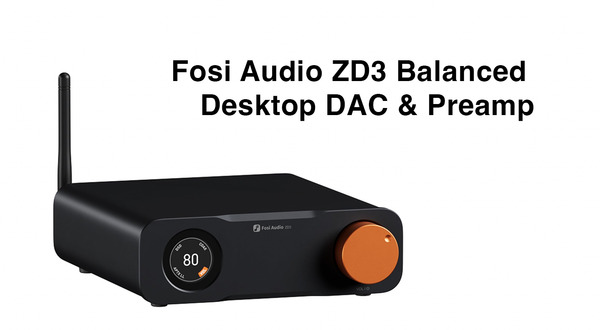
SMSL D1 vs Fiio Audio ZD3 & JD Labs Atom 2
Suggested system pairings
Desktop audio setup
D1 into a small integrated amp or powered monitors. Perfect for nearfield listening at a desk, where the tiny footprint is ideal and sound quality punches well above its weight.
Travel rig
The D1’s portability makes it perfect for improving audio quality on the road. Connect it to a hotel TV via optical, or use it with a laptop and portable speakers for dramatically better sound than built-in DACs.
Living room system upgrade
If you are using the built-in DAC in your AVR, CD player, or streaming device, the D1 is an affordable upgrade that can make a noticeable difference in sound quality. The optical and coaxial inputs make it easy to integrate.
Minimalist hi-fi system
Streamer (like a Raspberry Pi running Volumio) → D1 → integrated amplifier → speakers. Clean, simple, musical, and affordable. The metal body and small size look right at home in a minimal setup.
Power supply considerations
The D1 can be powered via USB from your computer, but owners consistently report better sound quality when using a clean 5V USB power supply separate from the data connection.
Any decent phone charger works well, ideally one with low electrical noise (Samsung or Apple chargers are commonly recommended). Some users go further with linear power supplies, though at that point you are spending more on the power supply than the DAC itself.
The separate power input is a thoughtful design choice that allows experimentation without risk. Start with a basic phone charger and upgrade if you want to explore further.
Final verdict!
The SMSL D1 is one of those rare products that delivers genuinely excellent sound quality at a budget price by focusing obsessively on doing one thing well, then making it portable enough to take anywhere.
You get a unique ROHM DAC chip with natural character, exceptional measured performance (0.00038% THD+N, 126dB SNR), a full aluminum chassis that fits in your pocket, and three digital inputs in a package that weighs almost nothing.
The trade-off is real: the on-body touch controls are genuinely problematic and frequently frustrating. There is no remote, no display, and no extra features.
But if your goal is the most musical, natural-sounding portable DAC you can get for under £100, with measurements that compete with devices costing five times more and build quality that feels premium in hand, the D1 is a seriously strong option.
For desktop systems, travel rigs, minimalist setups, or anyone who wants to upgrade from built-in DACs without spending a fortune or sacrificing portability, the D1 is exceptional value. Just be prepared to set your input once and leave it there to avoid the annoying touch controls.