SMSL PS200 Pro DAC Review

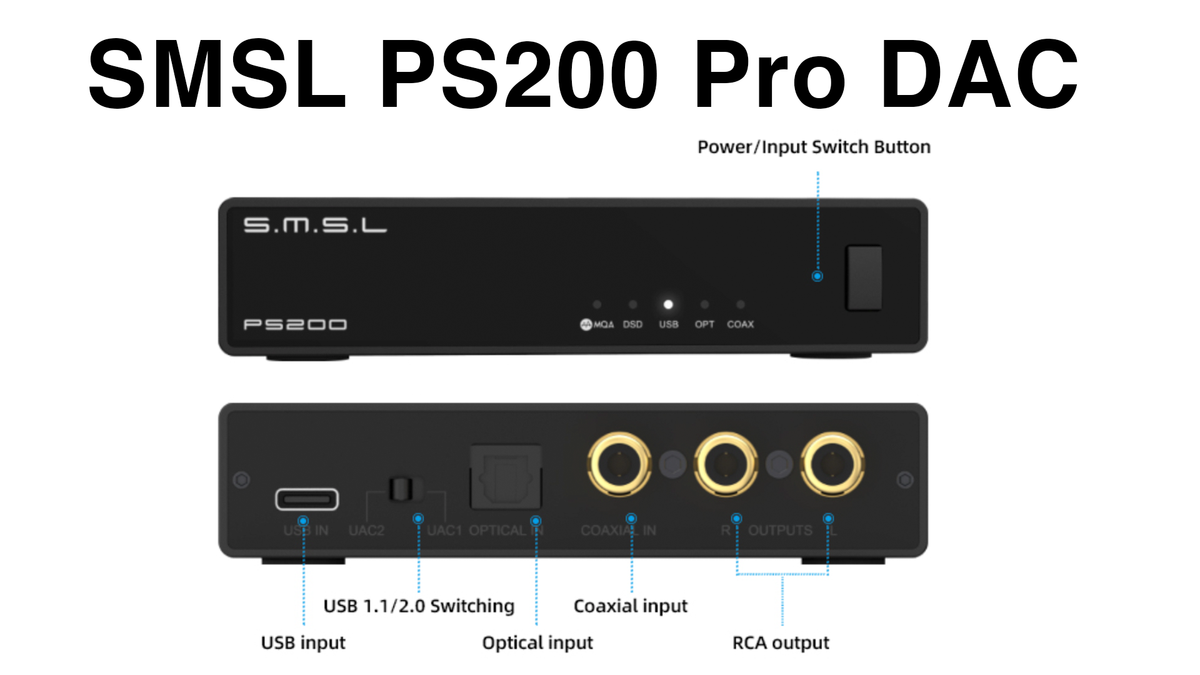
A desktop-friendly, modern ESS DAC that delivers surprising performance without the price shock.
If you have been watching budget DACs thinking: I want something that actually sounds good without requiring months of saving, the SMSL PS200 Pro might be exactly what you need.
It is a compact, metal-bodied DAC that delivers something increasingly rare in this price bracket:
- A very modern, cost effective but premium ESS ES9039Q2M DAC chip typically found in units costing at least twice as much
- 32-bit/768kHz PCM and DSD512 support that handles any audio format you can throw at it
- CNC aluminum chassis that provides proper shielding and a premium feel
- Measurements that compete with much more expensive DACs at a fraction of the price
All at a price point where most competitors are still using plastic enclosures and older chip designs.
This post covers what the PS200 Pro is, how it is built, what it sounds like, how it compares to common alternatives, and who it makes sense for.
Quick take
The PS200 Pro is for you if you want reference-class measurements and premium build quality at a budget price, support for every high-resolution format, and prefer a no-nonsense wired connection over wireless convenience (no bluetooth).
It is not for you if you need Bluetooth connectivity, built-in streaming, variable volume control, or you specifically want a warm, coloured presentation.
What the PS200 Pro actually is...
The PS200 Pro is a standalone digital-to-analog converter from SMSL. It sits between your source (streamer, computer, CD transport) and your amplification.
Unlike many budget DACs that use older chip designs or cut corners on implementation, the PS200 Pro uses current-generation components and a thoughtful circuit design.
This is not a jack-of-all-trades box with streaming and amplification. It is a dedicated converter focused entirely on doing one job properly: turning digital audio into analog voltage as cleanly and accurately as possible.
DAC design and architecture
ESS ES9039Q2M DAC chip
The headline component is the ES9039Q2M from ESS Technology. This, along with the implementation, is the key reason the PS200 Pro punches so far above its weight class.
This is a 32-bit mobile DAC chip that was designed for flagship portable applications, which means it delivers exceptional performance specifications while maintaining low power consumption and minimal heat generation. You typically find this chip in products costing two to three times what the PS200 Pro sells for.
The ES9039Q2M delivers a 123 dB signal-to-noise ratio and total harmonic distortion plus noise of just 0.0001 percent.
These are not budget DAC numbers. These are reference-grade measurements that compete directly with products in the £500-1000 range.
In practical terms, this means a dead-quiet background, vanishingly low distortion that stays completely out of the music’s way, and the ability to resolve micro-details that cheaper DAC chips simply cannot reproduce.
XMOS XU316 USB receiver
For USB input, SMSL has chosen the third-generation XMOS XU316 processor. This is a proven, reliable USB interface that handles high-resolution PCM and DSD without breaking a sweat. It also provides UAC1 and UAC2 mode switching, which is essential for compatibility with gaming consoles and other devices that do not support UAC2.
Four OPA1612A operational amplifiers
The output stage uses four Texas Instruments OPA1612A op-amps. These are high-performance dual op-amps known for low noise, low distortion, and good sonic characteristics. SMSL has used them in a balanced configuration to maximise signal quality.
CNC aluminum chassis
This is where the “Pro” designation becomes obvious. Unlike the plastic-bodied original SMSL PS200, the PS200 Pro features a fully CNC-machined aluminum chassis.
This is not cosmetic. The metal construction provides:
- Better electromagnetic shielding – Reduces interference from nearby devices
- Improved mechanical stability – The circuit board sits firmly without flexing
- Superior thermal management – Aluminum dissipates heat more effectively than plastic
- A genuinely premium feel – The kind of build quality you expect from products costing significantly mor
At this price point, most competitors are still using plastic enclosures. The PS200 Pro’s all-metal construction is a legitimate differentiator and provides tangible performance benefits, not just aesthetic ones.
The chassis measures just 105 x 80 x 22 mm and weighs approximately 90 grams, making it one of the most compact desktop DACs available without sacrificing build integrity.
Dedicated clock processing circuit
The PS200 Pro includes a dedicated clock circuit to minimise jitter and maintain timing accuracy. Clean clocking translates directly to better imaging, tighter bass, and more natural transient response.
USB Type-C power and connectivity
The PS200 Pro uses a single USB Type-C port that handles both data and power simultaneously when connected to a computer or streamer via USB.
If you are using the coaxial or optical inputs instead, the same USB-C port serves purely as a power input. You can connect it to any USB power source: a phone charger, power bank, laptop USB port, or dedicated USB power supply.
This dual-purpose design keeps the rear panel clean and simple while maintaining maximum flexibility. The unit draws less than 1 watt of power, making it suitable for desktop use, portable setups, or even car audio systems.
Important note: There is no Bluetooth connectivity. The PS200 Pro is a wired-only DAC. If you need wireless connectivity, you will need to add a separate Bluetooth receiver or choose a different DAC entirely. This keeps the signal path clean and the price down, but it does mean wireless convenience is off the table.
Formats and connectivity
The PS200 Pro covers all the essential bases without overwhelming you with options.
High-res support
This is where the PS200 Pro separates itself from budget contenders:
- PCM up to 768 kHz / 32-bit (USB)
- DSD up to DSD512 (native and DoP)
- PCM up to 192 kHz / 24-bit (on coaxial and optical inputs)
- MQA and MQA-CD decoding on all inputs (USB, optical, coaxial)
The 32-bit/768kHz PCM support means the PS200 Pro can handle any PCM file you are likely to encounter, now or in the foreseeable future. Most music is recorded and distributed at far lower resolutions, but having the headroom means the DAC will not become obsolete as formats continue to evolve.
The DSD512 capability is equally impressive. Native DSD playback up to DSD512 (22.5 MHz sampling rate) puts this firmly in high-end territory. Very few budget DACs handle DSD512 natively without converting to PCM first, and doing so preserves the character and texture that DSD enthusiasts value.
Between the extreme PCM and DSD capabilities, the PS200 Pro is effectively future-proof from a format support standpoint.
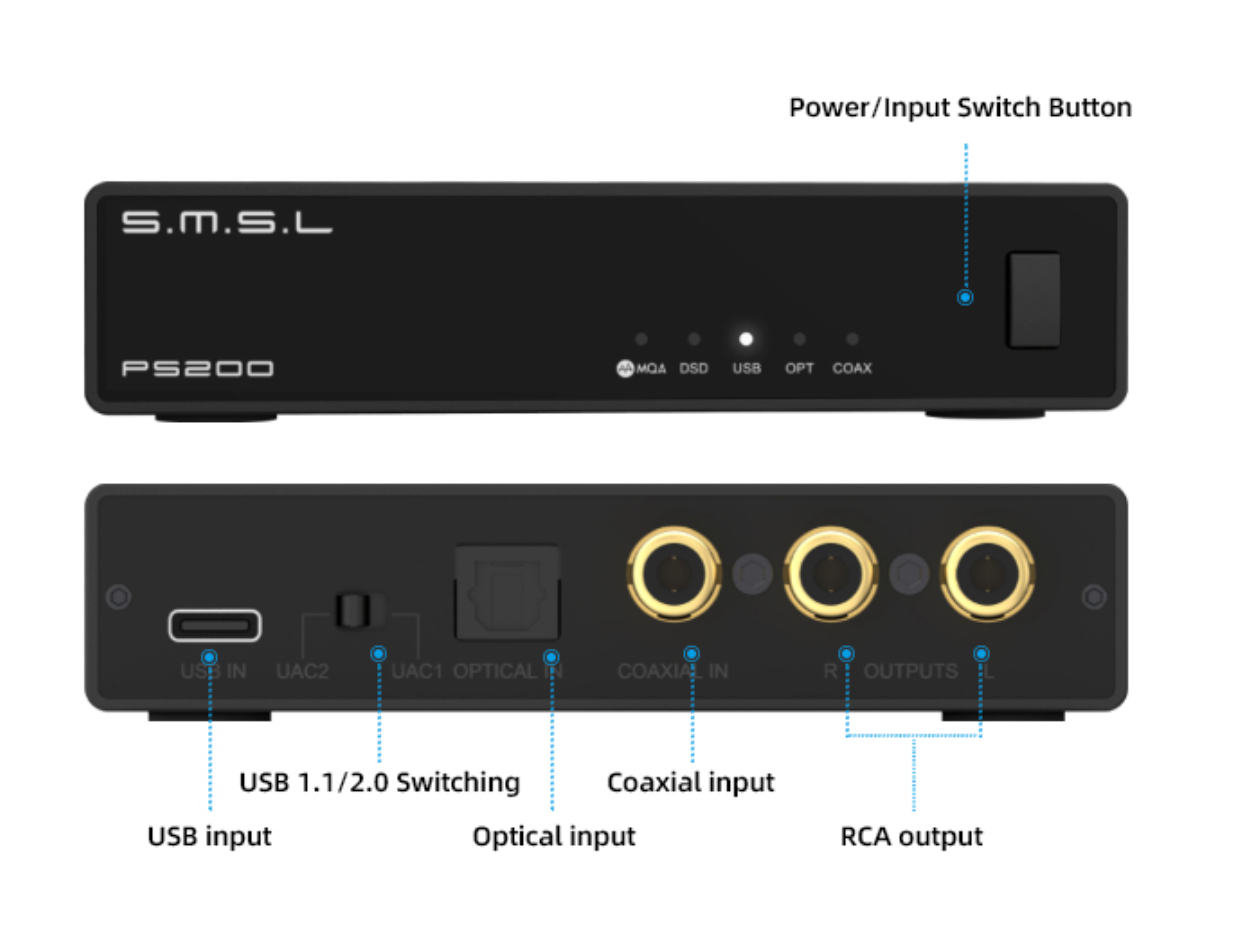
Inputs
- USB Type-C (data and power, or power-only when using digital inputs)
- Coaxial SPDIF
- Optical TOSLINK
- UAC1 / UAC2 mode switching (rear panel toggle)
No Bluetooth. If you need wireless connectivity, this is not the DAC for you. The PS200 Pro is deliberately designed as a wired-only device to maintain signal integrity and keep costs down.
The UAC mode switch is crucial for compatibility. UAC2 works with Windows PCs, Macs, and Linux systems for maximum resolution. UAC1 mode enables compatibility with Sony PS5, Nintendo Switch, and other devices that do not support UAC2.
Outputs
- Balanced XLR (line level, fixed output)
- Single-ended RCA (line level, fixed output)
Both outputs are active simultaneously. The output level is a standard 2 Vrms, which is appropriate for feeding integrated amps, preamps, or power amps.
Build, UI, and daily use
Physical design
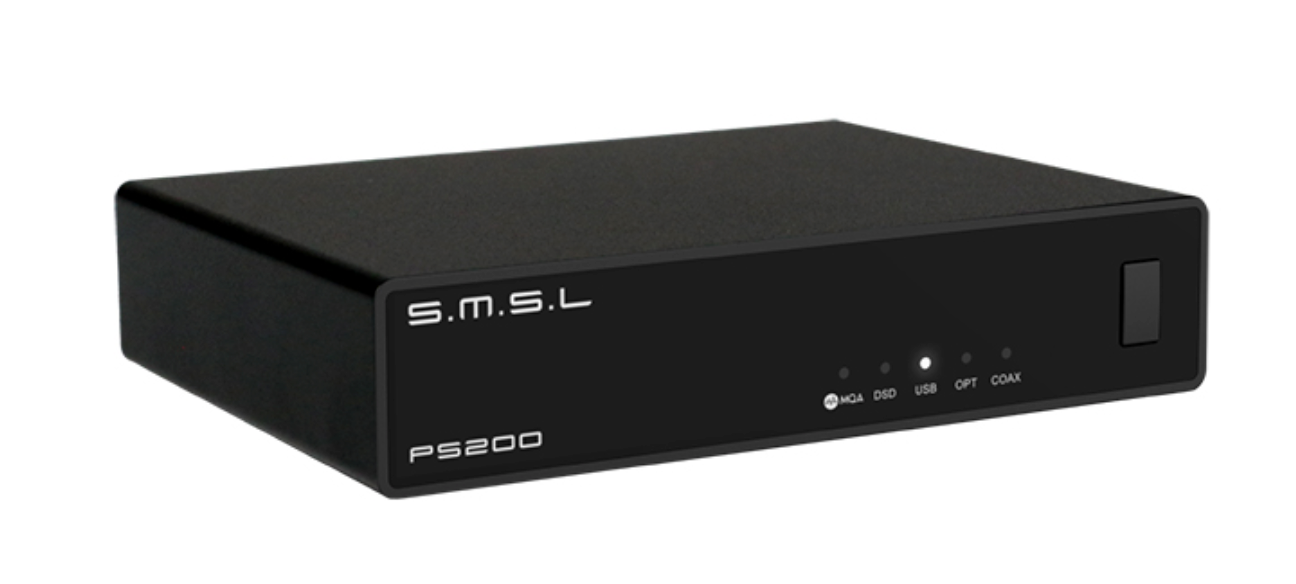
The PS200 Pro measures just 105 x 80 x 22 mm and weighs approximately 90 grams. This makes it one of the smallest desktop DACs available, yet the CNC aluminum construction gives it a reassuringly solid feel that completely belies its compact size.
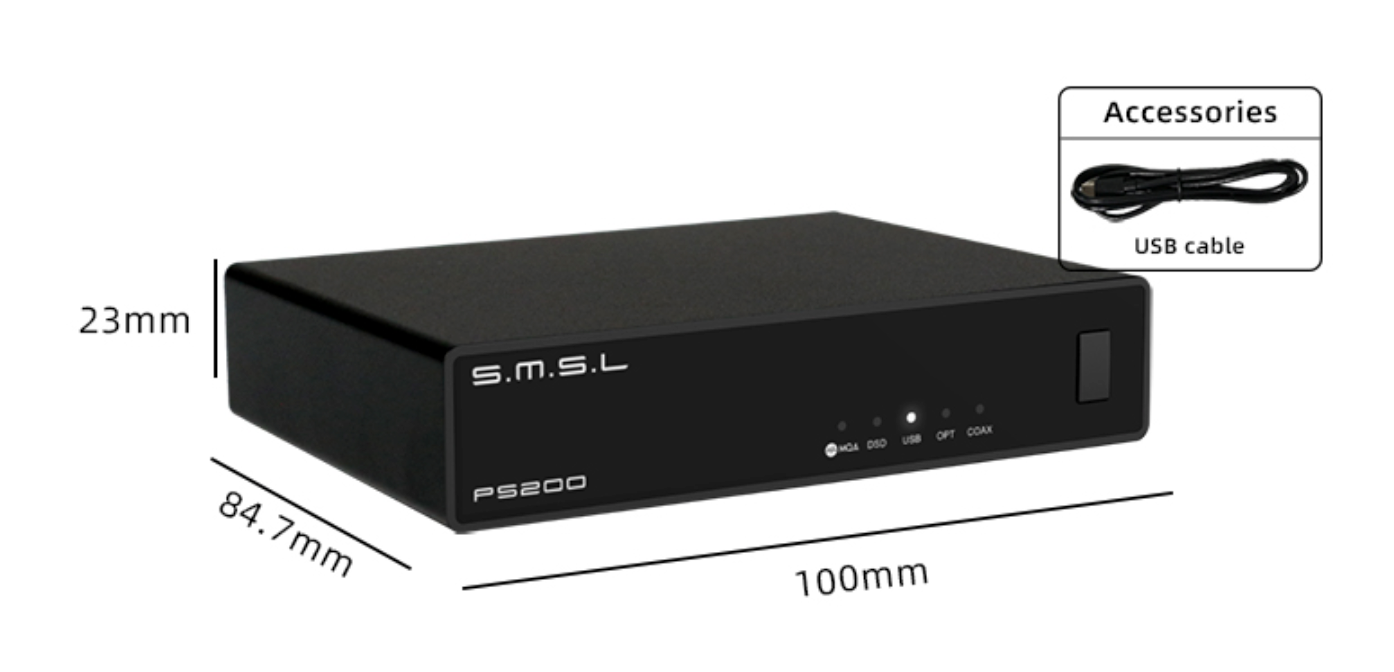
The metal chassis is not just for show. The rigid aluminum enclosure provides proper RF shielding, mechanical damping, and thermal management that plastic-bodied DACs simply cannot match. You can feel the quality the moment you pick it up.
The front panel features a small OLED display showing the current input (USB, coaxial, optical), sample rate, and format. The display is clear and easy to read at normal desktop viewing distances.
A single button on the front cycles through inputs. It is small but responsive, and input switching is instantaneous with no audible pops or clicks.
No volume control
This is a fixed-output DAC. There is no volume knob, no digital volume attenuation, and no preamp functionality. You control volume at your integrated amp, preamp, or active speakers.
This is intentional and correct. Digital volume control always degrades sound quality to some degree. By keeping the output fixed, SMSL ensures the signal path remains as clean as possible.
Setup and compatibility
Setup is plug-and-play on Mac and Linux. Windows users need to install drivers for full UAC2 functionality, but the installation is straightforward and the drivers are stable.
For gaming consoles, flip the rear switch to UAC1 mode and connect via USB. The PS5 and Switch recognize it immediately and route audio through without any configuration needed.
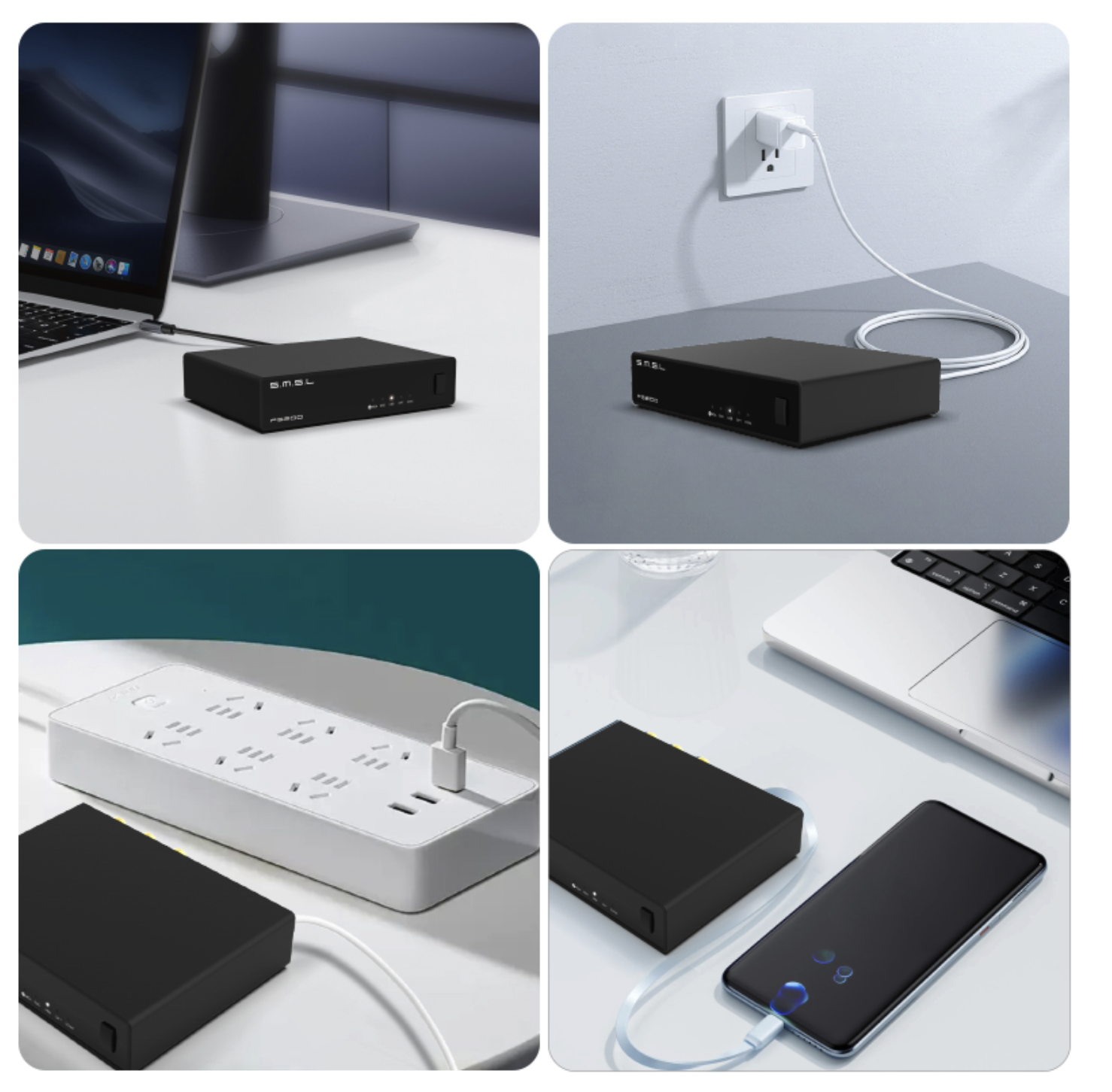
The PS200 Pro draws less than 1 watt of power and can be powered from any USB port, phone charger, or power bank. This makes it suitable for desktop use, portable setups, or even car audio systems. When using coaxial or optical inputs, the USB-C port only needs to provide power, not data.
How it sounds
This is where the PS200 Pro justifies its existence, because the measurements translate directly into audible performance.
The ES9039Q2M chip’s 123 dB SNR and 0.0001% THD+N are not just numbers on a spec sheet. They result in a presentation that is clean, detailed, and completely free of the noise, grain, and distortion artefacts that plague lesser DACs.
Tonality
The overall character is neutral and transparent. Not clinical. Not cold. Not coloured. Just clean, honest, and accurate.
The PS200 Pro does not add warmth or richness to the signal. It does not brighten the treble or emphasise bass. It does not smooth over rough edges or soften aggressive recordings. What you hear is what is in the recording, for better or worse.
This makes it an excellent choice if you want to hear what your music actually sounds like rather than what a designer thinks it should sound like. The exceptionally low measured distortion means the DAC stays completely invisible in the signal chain.
Background and noise floor
One of the most consistent observations across multiple reviews is how quiet the PS200 Pro is with regards to noise. The 123 dB signal-to-noise ratio is not theoretical. The noise floor is exceptionally low in practice, creating a black background that allows fine details to emerge naturally.
This is not about extracting details that are not there. It is about not burying them under a layer of hiss, hum, or circuit noise. The measured performance directly translates into an audibly cleaner, more transparent presentation than DACs with inferior specifications.
Bass
Bass is tight, controlled, and well-defined. The PS200 Pro does not add artificial weight or warmth to the low end, which means bass lines stay clean and articulate rather than becoming bloated or boomy.
Kick drums have impact without overhang. Bass guitars have texture and definition. Electronic sub-bass extends cleanly without losing control.
If your system tends toward leanness, the PS200 Pro will not fix that—it is neutral, not compensatory. Pair it with gear that complements its character.
Midrange
The midrange is clear and detailed without being forward or aggressive. Vocals sit naturally in the mix, neither recessed nor pushed forward. Acoustic instruments sound realistic and well-textured.
The PS200 Pro avoids the occasional hardness or glare that some ESS implementations can exhibit. The midrange is smooth and grain-free, which makes long listening sessions fatigue-free.
Treble
High frequencies are extended, detailed, and refined. Cymbals shimmer with realistic decay. Hi-hats have texture and air. String instruments have bite without harshness.
The treble is not rolled off or softened, but it is also not boosted or emphasised. It simply sounds clean and natural, which is exactly what you want from a transparent DAC.
Soundstage and imaging
The PS200 Pro throws a wide, well-layered soundstage with good depth and precise imaging. Instruments occupy specific positions in space rather than blending into a vague wall of sound.
Center image is solid and focused. Vocals lock in place. Left-right separation is clear without sounding artificially wide or detached.
Depth layering is impressive for the price, with clear distinction between front, middle, and rear elements in the soundstage.
Dynamics
Macro-dynamics are strong. The PS200 Pro can do quiet and loud convincingly, with good slam when the music demands it. Soft passages do not get lost, and loud sections do not compress or strain.
Micro-dynamics are also well-preserved. Subtle shifts in volume and intensity come through clearly, which contributes to the sense of realism and engagement.
Overall character
The PS200 Pro is a transparent, revealing source that gets out of the way and lets your music come through. It does not impose a sonic signature. It does not try to make every recording sound “nice.”
This means it will expose poor recordings for what they are, but it will also allow great recordings to shine without adding or subtracting anything. It is an honest DAC, and honesty is a rare quality at any price.
Real-world user impressions (what reviewers actually say)
Across multiple written reviews and video content from channels like Desktop HIFI, Rick Ruiz Audio, Hifi Zone, HIFI Daydreaming, Late Night Unboxing, and Paul Wasabii, several consistent themes emerge:
- “Exceptional value for the price” – The ES9039Q2M chip and metal chassis at this price point are repeatedly highlighted.
- “Measurements that compete with expensive DACs” – The 123 dB SNR and 0.0001% THD+N figures are praised as reference-grade.
- “Dead-quiet background” – The measured and audible noise floor is frequently highlighted as a standout characteristic.
- “Neutral and transparent” – Reviewers consistently describe the sound as clean and uncolored.
- “The metal chassis makes a difference” – The aluminum construction’s shielding and rigidity benefits are noted.
- “32-bit/768kHz and DSD512 support is impressive” – Format support that exceeds most competitors at twice the price.
- “No Bluetooth is fine for this use case” – Reviewers acknowledge the wired-only design as appropriate for desktop/component use.
- “Works perfectly with gaming consoles” – PS5 and Switch users report excellent plug-and-play functionality.
The most common praise centres on the PS200 Pro doing exactly what it is supposed to do—convert digital audio to analog cleanly and accurately—without adding distortion, coloration, or character. It is an invisible component in the best possible sense.
Comparisons: where the PS200 Pro fits
Here is how to position it against common alternatives.
PS200 Pro vs PS 200
- Bass slightly tighter, sound slightly less forward and slightly more tamed highs but not rolled off (smoother upper mids) vs original PS200
- Metal body on PS 200 Pro vs Plastic Body on PS200 (original)
- PS 200 slightly cheaper
PS200 Pro vs Topping E70 Velvet
The E70 Velvet offers more features: Bluetooth, remote control, and variable output.
It has a slightly warmer, more forgiving presentation compared to the PS200 Pro’s neutrality.
It costs nearly twice as much.
The PS200 Pro has better measured specifications (123 dB SNR vs 120 dB) despite costing less.
If you want maximum versatility and Bluetooth connectivity, the E70 Velvet is worth the extra money. If you want pure DAC performance with reference-grade measurements at the lowest possible price, the PS200 Pro is the clear winner.
PS200 Pro vs SMSL SU-6
The SU-6 uses an earlier ESS chip and has a brighter, more analytical presentation.
The PS200 Pro has superior measurements and the newer ES9039Q2M chip.
The PS200 Pro is more natural and less fatiguing for long listening sessions.
The SU-6 costs about £60-70 more and uses a plastic chassis.
The SU-6 is fine if you already own one, but the PS200 Pro is the better buy in every measurable way: newer chip, better measurements, metal chassis, lower price.
PS200 Pro vs FiiO D3 (or similar budget DACs)
The D3 has a pleasant, warmish tone but noticeably higher measured distortion and noise.
Bass is boomier and less controlled on the D3.
Instrument separation and detail retrieval are significantly better on the PS200 Pro.
The D3 uses a plastic chassis; the PS200 Pro uses CNC aluminum.
The PS200 Pro is a legitimate upgrade path from ultra-budget DACs. The improvement in measured performance and audible quality is not subtle.
PS200 Pro vs SMSL DO300
The DO300 is SMSL’s flagship delta-sigma DAC with more connectivity options.
It has a better display, more features, and Bluetooth connectivity.
It costs over twice as much as the PS200 Pro.
The measured performance difference is minimal – both use excellent ESS chips with similar specifications.
The DO300 is the better product if you need Bluetooth and premium features. But the PS200 Pro delivers nearly identical measured performance for less than half the price. It is the value pick.
PS200 Pro vs Schiit Modi 3+
The Modi 3+ has a slightly warmer, more musical presentation.
It includes a multibit filter mode that some prefer for older recordings.
Build quality is comparable, with the PS200 Pro having a slight edge in features (MQA support).
Both are excellent budget DACs. The Modi 3+ leans slightly warm and musical, while the PS200 Pro is more neutral and transparent. Choose based on system synergy and personal preference.
Who should buy the PS200 Pro
It is a great fit if you want:
- Your first serious DAC upgrade without spending three figures
- Reference-grade measurements (123 dB SNR, 0.0001% THD+N) at a budget price
- A CNC aluminum chassis with proper RF shielding and premium build quality
- 32-bit/768kHz PCM and DSD512 support that handles any format
- A neutral, transparent presentation that works with a wide range of gear
- ES9039Q2M chip performance without paying flagship prices
- MQA and MQA-CD decoding for Tidal or physical MQA discs
- Gaming console compatibility (PS5, Switch) with excellent audio quality
- A compact footprint for desktop or portable setups
It is not ideal if you need:
- Bluetooth connectivity – the PS200 Pro is wired-only
- Built-in streaming or wireless functionality
- Variable output for direct connection to power amps or active speakers
- A warm, coloured, or “musical” presentation that adds character
- Headphone amplification or preamp functionality
Suggested system pairings
Desktop system
PS200 Pro paired with a dedicated headphone amp or active monitors. Excellent for critical listening where transparency and detail matter.
Living room two-channel
PS200 Pro fed by a network streamer (like a WiiM Mini or Pro), into an integrated amp. Clean, straightforward, and highly effective
Gaming setup
PS200 Pro connected to PS5 or Switch via USB, feeding powered speakers or a gaming headphone amp. Massive upgrade over built-in DACs, especially for story-driven games with cinematic soundtracks.
MQA listening station
PS200 Pro fed by Tidal via USB, or connected to an MQA-compatible CD transport via coaxial. Full MQA decoding across all inputs makes this an affordable entry into high-resolution audio.
Video reviews
For visual demonstrations and listening impressions, check out these video reviews:
- Desktop HIFI
- Rick Ruiz Audio
- HIFI Daydreaming
- Late Night Unboxing
- Paul Wasabii
Final verdict
The SMSL PS200 Pro is one of those rare products that makes you wonder how they sell it for so little money.
You get a premium ES9039Q2M DAC chip with reference-grade measurements (123 dB SNR, 0.0001% THD+N), a CNC aluminum chassis with proper RF shielding, 32-bit/768kHz PCM and native DSD512 support, four high-performance op-amps, full MQA decoding, and balanced outputs. All at a price where most competitors are still using plstic enclosures and older chip designs.
The measured performance competes directly with DACs costing £500-1000, yet the PS200 Pro sells for a fraction of that. The 123 dB signal-to-noise ratio is not a theoretical number—it translates directly into an audibly cleaner, more transparent presentation than anything else at this price point.
The sound is clean, transparent, and revealing without being harsh or analytical. It does not flatter poor recordings, but it allows great recordings to shine. It does not add character, but it does not subtract anything either.
The metal chassis is not just cosmetic. The rigid aluminum construction provides electromagnetic shielding and mechanical stability that plastic-bodied competitors cannot match, and you can feel the quality the moment you pick it up.
One deliberate omission: there is no Bluetooth. If you need wireless connectivity, this is not the DAC for you. The PS200 Pro is designed for serious desktop and component use where wired connections deliver better performance and reliability.
If you want a neutral, capable DAC with flagship-level measurements that works with everything from gaming consoles to high-end separates, this is one of the smartest purchases you can make. It will not be the last DAC you ever buy, but it will serve you well until you are ready to spend significantly more money chasing smaller improvements.
For the price, it is hard to imagine what more you could reasonably ask for.
Amazon Listing here
HifiCat Listing here